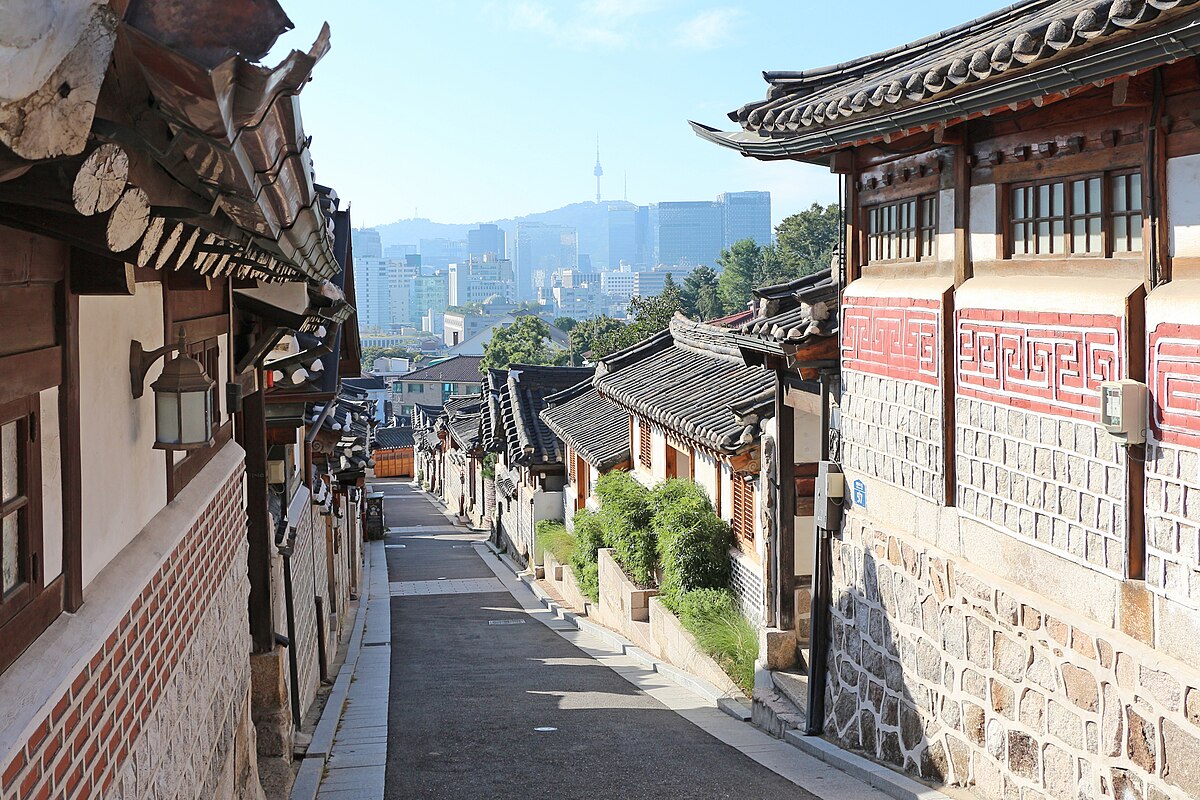
Bukchon Hanok Village: Traditional Seoul Between Two Palaces
Nestled between Gyeongbokgung and Changdeokgung palaces, Bukchon Hanok Village is a hillside neighborhood of traditional Korean houses offering stunning views of Seoul's modern skyline behind ancient rooftops.
Photo: Wikipedia Commons
What Is Bukchon Hanok Village?
Bukchon Hanok Village (북촌한옥마을), meaning 'North Village,' is a traditional residential neighborhood situated on a hillside between Gyeongbokgung Palace (to the west) and Changdeokgung Palace (to the east) in central Seoul. The name 'Bukchon' refers to its location north of Cheonggyecheon Stream and Jongno, historically the main east-west thoroughfare of the city. The neighborhood contains approximately 900 traditional hanok houses, making it the largest concentration of traditional architecture in Seoul. Unlike Jeonju's Hanok Village (which developed primarily in the 20th century), many of Bukchon's buildings date to the Joseon Dynasty, when the area was home to high-ranking government officials and aristocrats who chose to live close to the royal palaces. This proximity to power meant the area attracted wealthy, educated families who built the finest hanok. Today Bukchon sits in dramatic contrast with its surroundings — stand on any of the higher alleys and you can look down over the traditional tiled rooftops while modern Seoul's glass towers rise in every direction around and behind the village. This juxtaposition of the ancient and ultra-modern is one of Seoul's most striking visual experiences and has made Bukchon one of the most photographed neighborhoods in Asia.
History & Significance
Bukchon's character was shaped by centuries of use as the preferred residential district of the Joseon aristocracy (yangban) and government officials. Being close to both Gyeongbokgung and Changdeokgung meant that ministers, scholars, and court officials could reach the palaces quickly. The neighborhood's social prestige attracted ongoing investment in quality architecture throughout the Joseon period. In the early 20th century, Bukchon faced a housing crisis as Seoul's population grew. In the 1930s, developer Jeong Se-gwon built the current pattern of densely packed hanok housing in a regular grid pattern — replacing what had been larger, more spacious aristocratic compounds with smaller, more numerous houses for the middle class. These 1930s hanok, though smaller than their predecessors, are built with high craftsmanship and are the buildings visitors see today. The neighborhood faced demolition pressure in the 1970s and 1980s as Seoul modernized, but preservation activism and the cultural value of the area saved it. The Jongno-gu district government has since invested heavily in Bukchon's preservation and promotion, establishing it as a key cultural tourism destination and restricting development that would alter its traditional character.
What to See & Do
Exploring Bukchon's alleys is the primary activity — there are two main alley circuits (the upper alleys offering the best views) and a suggested walking route marked with signs throughout the neighborhood. The most photographed view is from Gahoe-dong Alley No. 11, which looks down a row of hanok rooftops toward the city below — this view appears in countless travel photographs and is genuinely spectacular. Many of Bukchon's hanok have been converted into cultural experience workshops, guesthouses, cafés, and galleries. Experiences available include making hanji paper, learning the gayageum (traditional zither), trying on hanbok, participating in traditional tea ceremonies, and learning Korean calligraphy. These are typically offered as short hourly experiences. Several small museums in the neighborhood include the Gahoe Museum (folk art and shamanic items), the Dongrim Knot Museum (traditional Korean knotting), and the Bukchon Cultural Center. The neighborhood also borders Insadong, Seoul's traditional arts and antiques district, making a combined visit natural.
- ·Walk to Gahoe-dong Alley No. 11 for the iconic rooftop panorama photograph
- ·Explore the upper alleys of the village for the best views and quietest atmosphere
- ·Try a traditional cultural experience workshop — tea ceremony, hanji, or calligraphy
- ·Visit on a quiet weekday morning for the most atmospheric experience
- ·Combine with a visit to nearby Insadong for traditional arts and antiques shopping
Visitor Tips
Bukchon Hanok Village is a residential neighborhood and free to access at all times. The nearest subway stations are Anguk Station (Line 3, Exit 3) and Gyeongbokgung Station (Line 3, Exit 5). The neighborhood is 10-15 minutes on foot from either. Bukchon has become one of Seoul's most heavily visited neighborhoods, and resident complaints about tourist noise have led to noise and crowd restrictions. Please be very quiet in the residential alleys, especially on weekends and mornings — signs throughout the village request this. Some alleys are now restricted at certain hours to protect residents. The most Instagram-famous alley (Gahoe-dong No. 11) can have long queues on weekends; arrive early morning for better conditions. Bukchon is best explored on foot and connects naturally to visits to the nearby palaces, Insadong, and Changdeokgung's Secret Garden.
Tips
- 💡Visit early on weekday mornings for quiet alleys and soft morning light perfect for photography
- 💡Be very quiet in the residential areas — residents live here and noise complaints have led to access restrictions
- 💡The view from Gahoe-dong Alley No. 11 is the most iconic — go early to avoid the queues
Last updated: March 30, 2026
قد يعجبك أيضًا
N Seoul Tower: Seoul's Most Iconic Landmark
Perched atop Namsan mountain, N Seoul Tower offers breathtaking 360-degree views of the city and has become a beloved symbol of Seoul's modern romance.
Hongdae: Seoul's Creative Youth Capital
Seoul's most vibrant arts and nightlife district, Hongdae pulses with indie music, street performances, quirky cafés, and the creative energy of Korea's top arts university.
Gyeongbokgung: Seoul's Grand Joseon Palace
The largest and most magnificent of Seoul's Five Grand Palaces, Gyeongbokgung served as the heart of the Joseon Dynasty for over 500 years.