Cold Noodles
냉면
Chilled noodles in clear broth or spicy sauce — a dish connecting Korean history, identity, and summer refreshment.
카테고리
면요리
📖 상세 정보
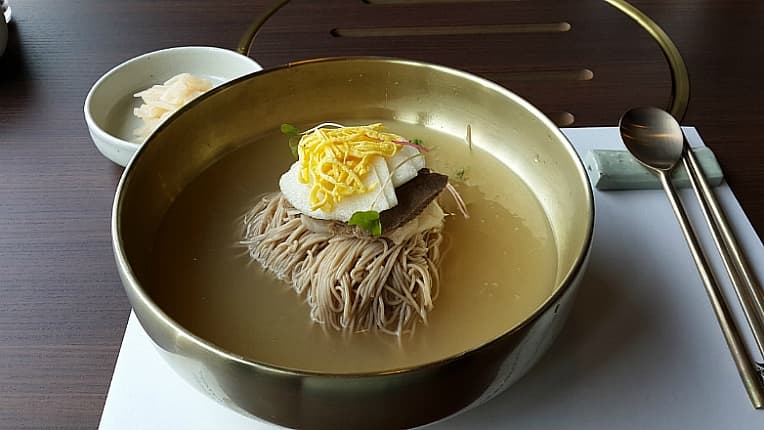
Naengmyeon (냉면) literally means 'cold noodles' — noodles served in an icy cold broth or dressed with a spicy sauce, topped with thin slices of beef or radish kimchi, a hard-boiled egg, and cucumber strips. The dish is one of the oldest noodle traditions in Korean cuisine, originating in the northern regions of the Korean peninsula during the Joseon dynasty. There are two primary styles that define the entire category. Mul-naengmyeon (물냉면, 'water cold noodles') features noodles submerged in a clear, ice-cold beef and radish broth. The flavor is mild and subtly sweet-sour, a style that requires a trained palate to fully appreciate. Bibim-naengmyeon (비빔냉면, 'mixed cold noodles') presents noodles without broth, tossed in a sweet-spicy-tangy gochujang-based sauce. The noodles themselves vary by style: Pyongyang naengmyeon uses buckwheat (meongmil) noodles that are slightly grayish and snap cleanly under the teeth; Hamhung naengmyeon uses tough potato starch (gamja jeonbun) noodles with an almost rubbery chewiness that is jarring the first time you encounter it.
💡 여행자 팁
For first-timers, bibim-naengmyeon (spicy mixed noodles) is more immediately satisfying than the subtle mul-naengmyeon broth style.
Always cut the noodles with scissors before eating — the full-length noodles are almost impossible to manage with chopsticks.
Add vinegar and mustard gradually rather than all at once — both condiments can overpower the delicate broth quickly.
Cold Noodles — Food
Read more on K-Atlas
From the blog
Recent stories that touch this topic.
- Nam Joo-hyuk Joins Disney+'s 'Code' for 2027Four leads locked for 'Code', a mystery crime thriller: a lawyer invited into a wish-granting app, the prosecutor chasing him, and a defector hacker.
- An Embassy for Gumiho: Lee Junho's New tvN DramaThe embassy manages Korea's non-human residents. Lee Junho plays an ambassador who is secretly a dragon; Hong Hwa-yeon, a rookie posted there by mistake.
- Taemin's August 31 Comeback and the [LiMiNaL] TourThe first Korean male soloist to play Coachella returns: 'PHASE 1 : SOFT VIOLENCE' drops 6pm KST on August 31, then a world tour. What both titles signal.
Found incorrect or missing information?