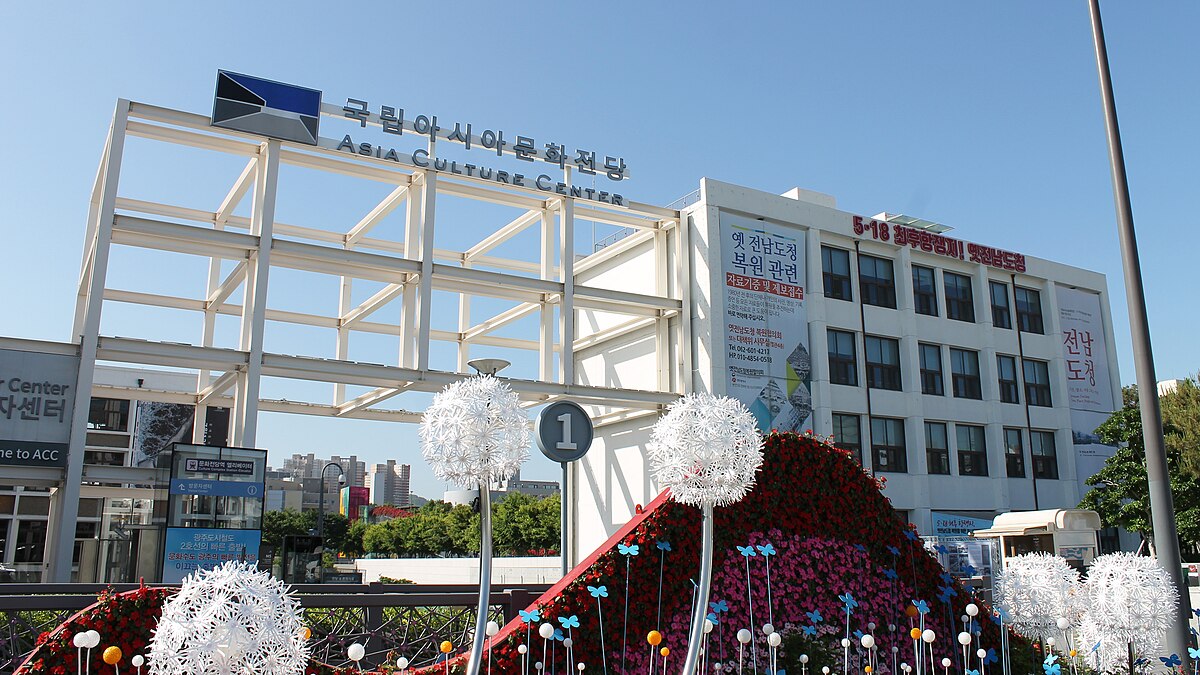
Asia Culture Center: Gwangju's Hub of Contemporary Arts
The National Asia Culture Center (ACC) in Gwangju is one of the largest cultural complexes in Asia, housed in a striking underground structure around the historic former Provincial Hall. It presents contemporary art, performance, and cultural exchange from across Asia.
Photo: Wikipedia Commons
What Is the Asia Culture Center?
The National Asia Culture Center (국립아시아문화전당, ACC) is a vast arts and cultural institution in central Gwangju, opened in 2015. The complex is built largely underground to preserve the historic former South Jeolla Provincial Hall above ground — the very building where civilians sheltered during the 1980 uprising. Five divisions cover children's culture, arts, information, creation, and cultural exchange, spread across 160,000 square metres of floor space.
History & Significance
The site was chosen deliberately: the old Provincial Hall witnessed pivotal moments in the May 18th Uprising. Rather than demolish the building, architects buried the new complex underground, leaving the historic structure as a visible reminder. The ACC opened in 2015 as part of Gwangju's ambition to become a leading city of arts and culture in Asia. It anchors the Gwangju Biennale, one of the oldest and most prestigious contemporary art biennales in Asia.
What to See & Do
The ACC hosts rotating exhibitions of contemporary Asian art, immersive media installations, live performance, and international cultural festivals. The Children's Culture Center is highly interactive and popular with families. The sunken open-air garden at the heart of the complex is a peaceful public space used for outdoor events. The old Provincial Hall is preserved and open for viewing as part of the historical narrative.
Visitor Tips
Admission to the grounds is free; individual exhibitions or performances may require tickets. Check the ACC website for current programming as exhibits rotate frequently. The complex is a short walk from Gwangju's central business district. Allow at least 2–3 hours to cover the main spaces. The underground layout means the complex is comfortable to visit even in summer heat or rain.
Tips
- 💡Check the schedule for the Gwangju Biennale, held every two years at the ACC.
- 💡The underground garden is a great spot for a break between exhibition halls.
- 💡The preserved Provincial Hall is historically significant — take time to read the on-site interpretation panels.
Обновлено: 1 сентября 2026 г.
Вам также может понравиться
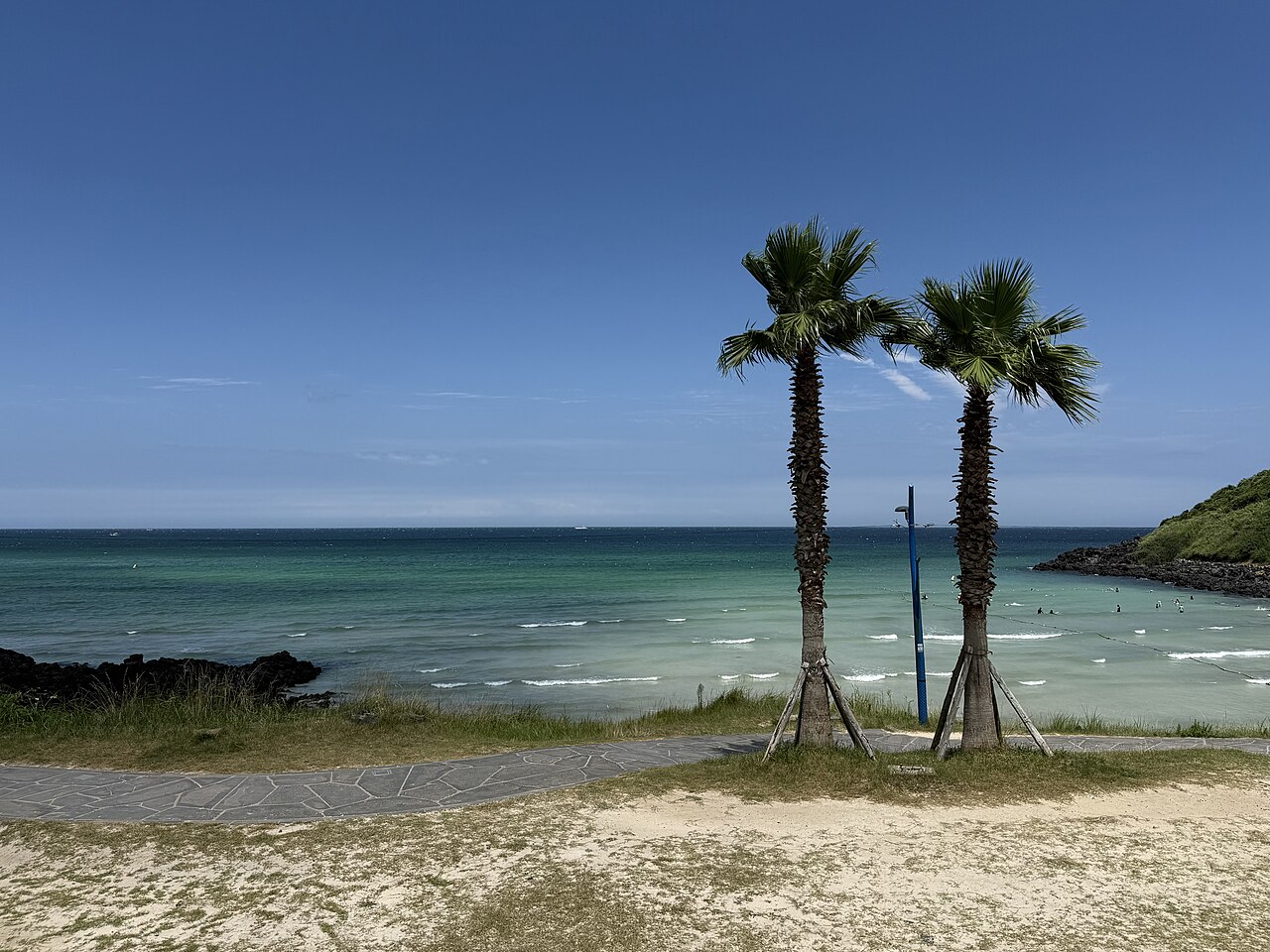
Hamdeok Beach: Jeju's Turquoise Gem
Located on the north coast of Jeju Island, Hamdeok Beach is famous for its unusually clear, turquoise water and gentle, shallow reef — making it arguably the most picturesque swimming beach in Korea.
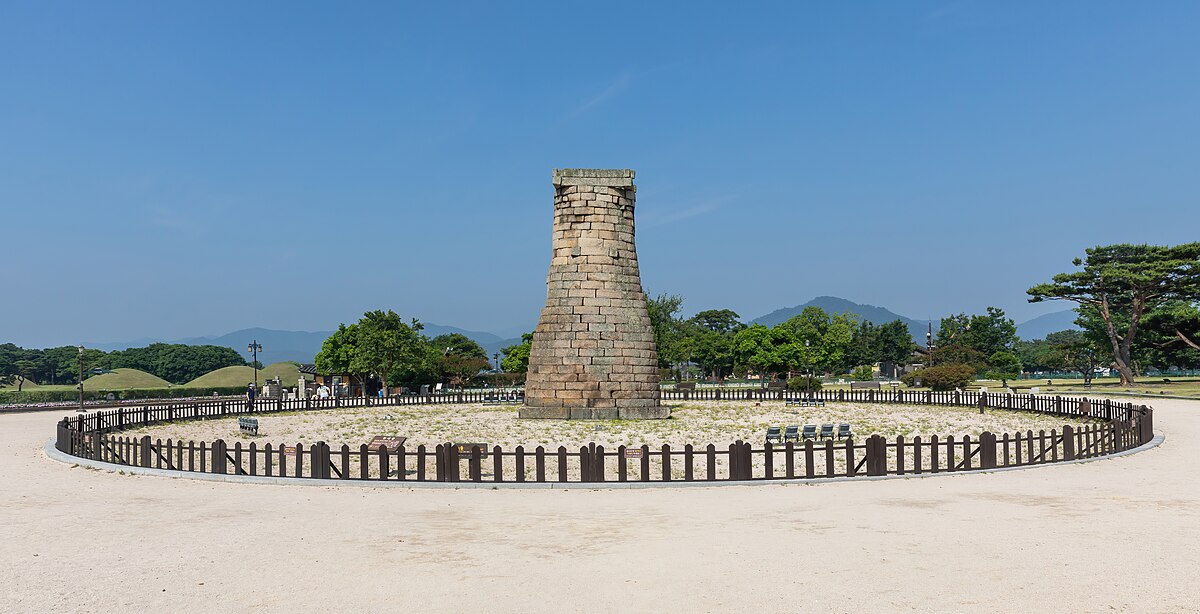
Cheomseongdae: Asia's Oldest Surviving Observatory
Built in the 7th century during the Silla Kingdom, Cheomseongdae is Asia's oldest surviving astronomical observatory. Its 362 stones — one for each day of the lunar year — encode the calendar in architecture.
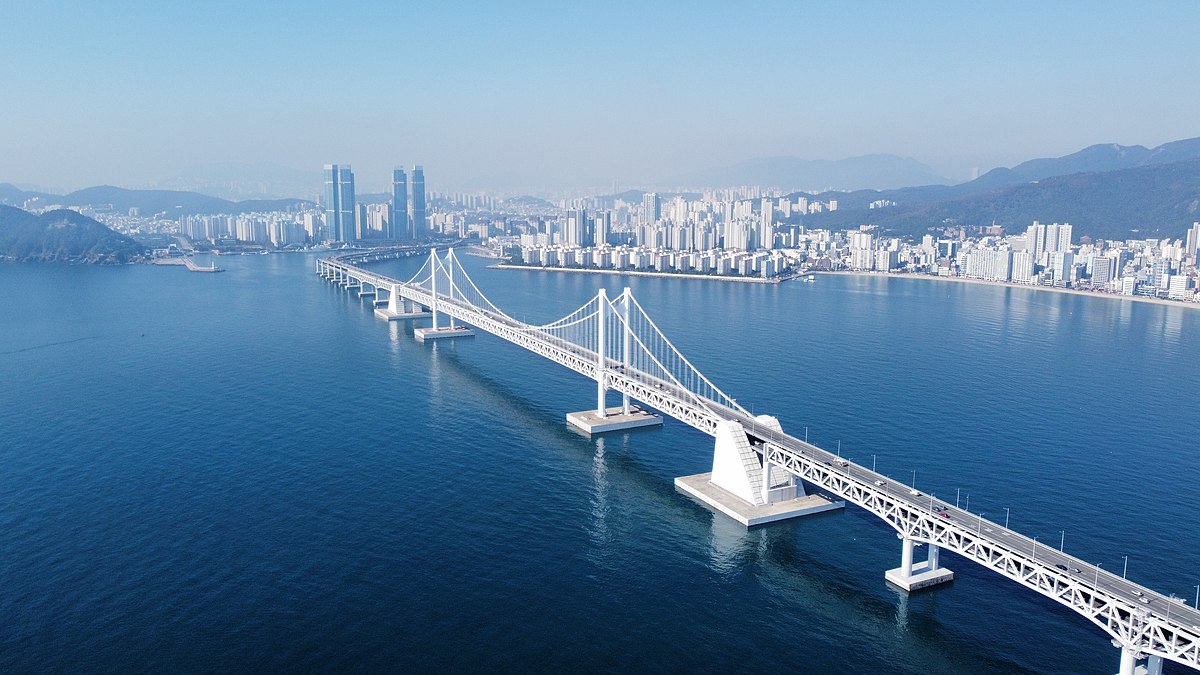
Gwangan Bridge: Busan's Glittering Bay Landmark
Stretching 7.4 km across Suyeong Bay, Gwangan Bridge is Korea's second-longest bridge and Busan's most iconic nocturnal spectacle. Its nightly LED light shows have made it a symbol of the city.