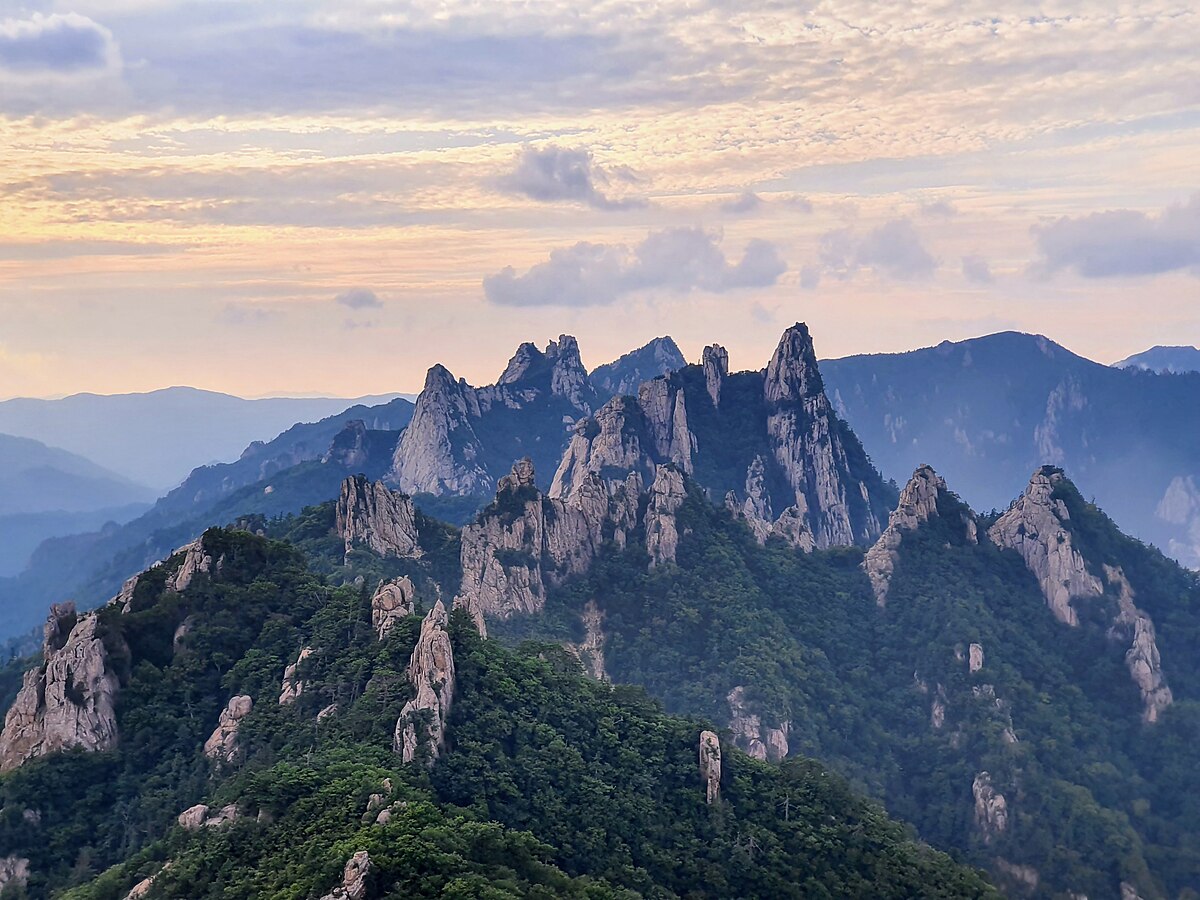
Seoraksan: Korea's Most Dramatic Mountain Landscape
Seoraksan National Park in Gangwon Province is Korea's most dramatic and awe-inspiring mountain, with jagged granite peaks, Buddhist temples, and autumn foliage that draws millions of visitors each year.
Photo: Wikipedia Commons
What Is Seoraksan?
Seoraksan (설악산), whose name translates as 'Snow Peak Mountain,' is South Korea's third-highest mountain (highest peak: Daecheongbong at 1,708m) and the most visually dramatic mountain landscape in the country. Located in Gangwon Province near the East Sea coast, it forms the backbone of the Taebaek Mountain Range along Korea's northeastern spine and is accessible from the coastal city of Sokcho. The mountain's character is defined by its extraordinary geology — massive granite formations thrust skyward, creating jagged peaks, dramatic cliffs, deep gorges, and fantastical rock shapes. The most iconic formation is Ulsanbawi Rock, a vast six-peak granite massif that rises abruptly from the forested valley, its bare rock faces visible from dozens of kilometers away. Towering waterfalls, crystal-clear streams, and ancient Buddhist temples complete a landscape of exceptional scenic power. Seoraksan National Park encompasses both Outer Seoraksan (Oeseorak) near Sokcho, which receives the most visitors and contains the main cable car and major temples, and Inner Seoraksan (Naeseraksan) to the west, which requires longer approaches but rewards with wilder scenery and fewer crowds. Together they cover 398 square kilometers of protected mountain landscape.
History & Significance
Seoraksan has been a place of human significance since prehistoric times, with evidence of Buddhist activity on the mountain dating to the Three Kingdoms period (57 BCE - 668 CE). The mountain's combination of physical grandeur and spiritual atmosphere made it a natural site for temple construction and hermitage. Several important Buddhist temples and hermitages remain active on the mountain today. Seoraksan was designated a National Park in 1970 and is the third-largest national park in South Korea. In 1982, UNESCO recognized it as a Biosphere Reserve due to its exceptional ecological value — the mountain protects habitat for numerous endangered species including the Amur leopard cat, the Asiatic black bear, and diverse endemic plant communities. For Koreans, Seoraksan is iconic for its autumn foliage (단풍, danpung). Each October, as the leaves turn from green to gold, orange, and red, the mountain's granite peaks provide a dramatic backdrop that makes the fall color display particularly spectacular. Weather forecasters announce the 'arrival of danpung' at Seoraksan with the seriousness of a national event, and millions of Koreans visit during the few weeks of peak color.
What to See & Do
The cable car from Seoraksan National Park's main entrance area rises to a viewing platform near Gwongeumseong Fortress, offering spectacular panoramic views with minimal hiking effort. From here, a short scramble reaches the fortress ruins and even better views. This is the most accessible way to experience the mountain's drama. Hiking Ulsanbawi Rock requires a 6km round trip from the park entrance with about 800 steps of steep ascent, rewarded by extraordinary views from atop the granite dome. The Biryong Falls and Yukdam Falls trail is beautiful and more gentle, passing through forest to a series of waterfalls. For serious hikers, trails to the highest peaks (Daecheongbong requires a full day or overnight stay in the mountain shelter) offer complete wilderness experiences. Shinheungsa Temple near the park entrance is one of Korea's oldest Buddhist temples with a history of over 1,400 years. The enormous bronze seated Buddha visible from the road near the entrance is 14.6 meters tall and was completed in 1997. Osingyegok Valley with its clear mountain stream and dramatic rock formations is a beautiful, less-crowded alternative to the main trail areas.
- ·Take the cable car to the Gwongeumseong area for panoramic views with minimal effort
- ·Hike to Ulsanbawi Rock (6km round trip) for the iconic Seoraksan view from above
- ·Walk the Biryong Falls trail through the forest for a beautiful and accessible trail experience
- ·Visit in October for Korea's most spectacular autumn foliage display
- ·Explore Shinheungsa Temple for ancient Buddhist history at the mountain's base
Visitor Tips
Seoraksan National Park charges an entrance fee of 3,500 KRW for adults (Outer Seoraksan main entrance). The cable car costs approximately 13,000 KRW round trip. The park is accessible from Sokcho Intercity Bus Terminal, with regular buses to the park entrance (Bus 7 or 7-1). From Seoul, express buses to Sokcho take approximately 2.5 hours. October (autumn foliage) is the busiest time by far — trails and parking can be overwhelmingly crowded, and accommodation in Sokcho books out months in advance. Early morning arrivals and weekday visits help in peak season. Spring (April-May) offers beautiful rhododendron and azalea blooms with far smaller crowds. Winter visits after snowfall transform the mountain into a spectacular white landscape. Some upper trails may be closed during peak summer heat and in winter ice conditions — check the park website for current information.
Tips
- 💡Visit in October for autumn foliage but book accommodation months in advance
- 💡Take the cable car for views if time is limited, but hike Ulsanbawi if you're fit enough
- 💡Spring (April-May) offers azalea blooms, pleasant temperatures, and far fewer crowds than autumn
Last updated: March 30, 2026
คุณอาจชอบเรื่องนี้ด้วย
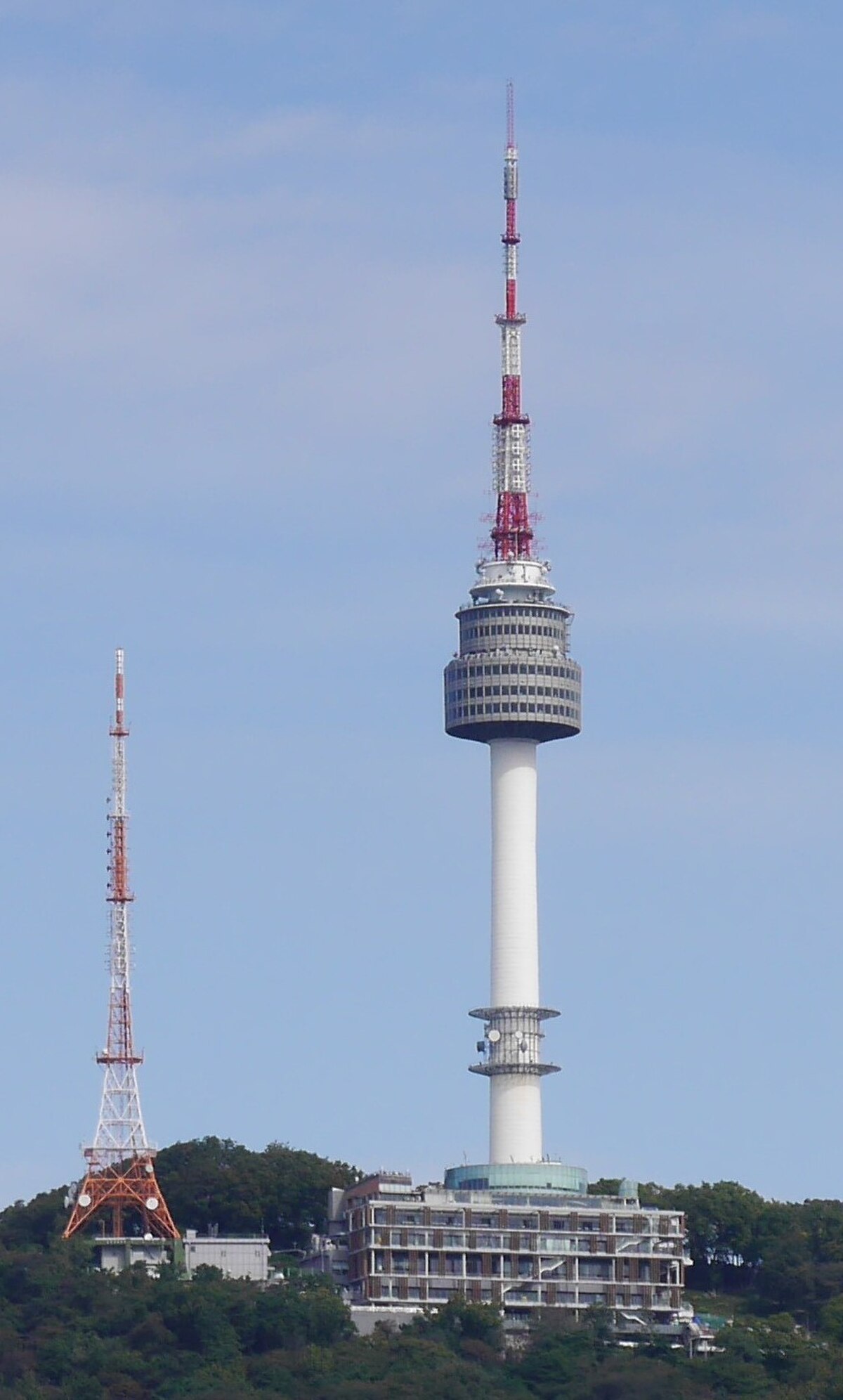
N Seoul Tower: Seoul's Most Iconic Landmark
Perched atop Namsan mountain, N Seoul Tower offers breathtaking 360-degree views of the city and has become a beloved symbol of Seoul's modern romance.
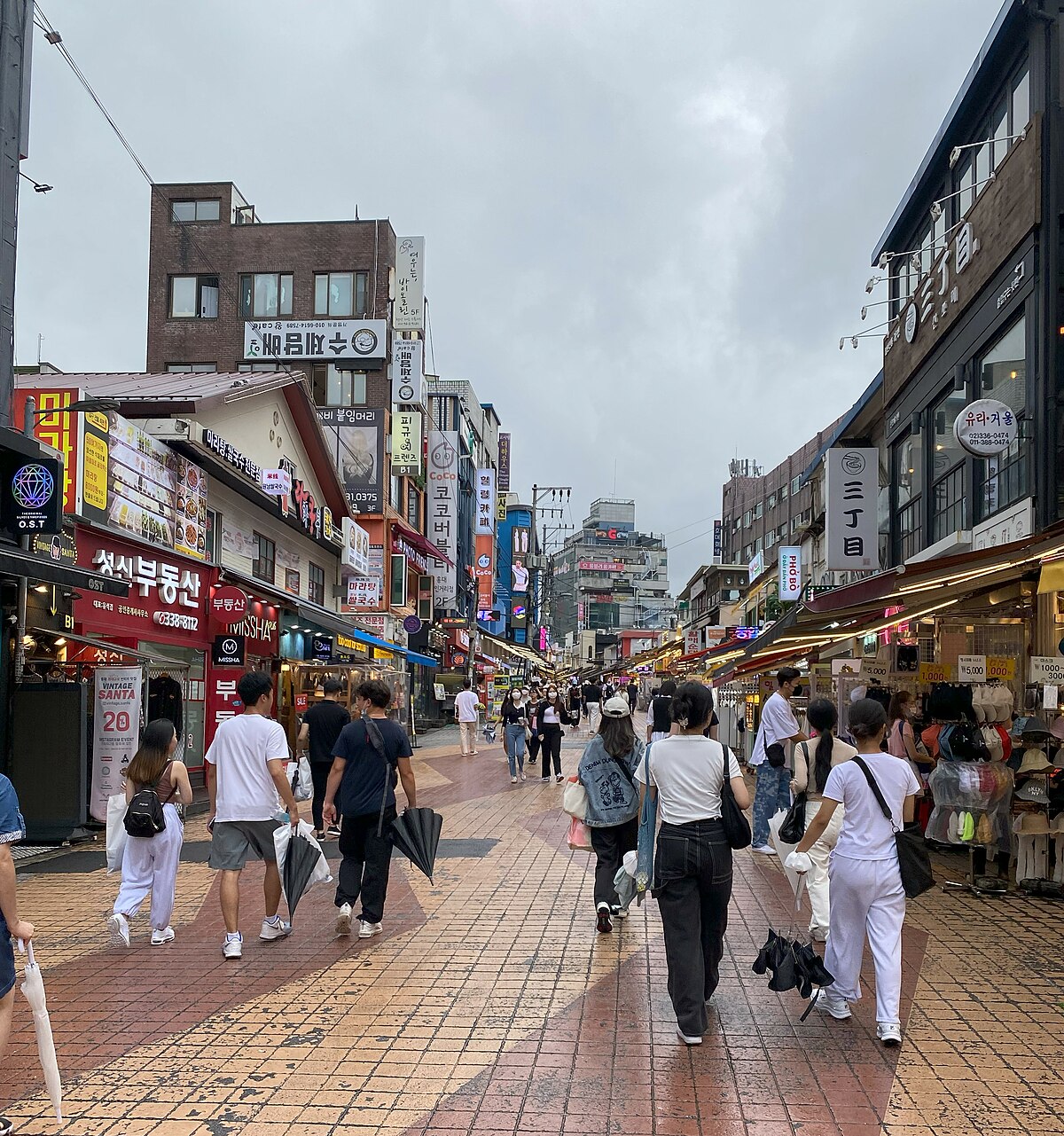
Hongdae: Seoul's Creative Youth Capital
Seoul's most vibrant arts and nightlife district, Hongdae pulses with indie music, street performances, quirky cafés, and the creative energy of Korea's top arts university.
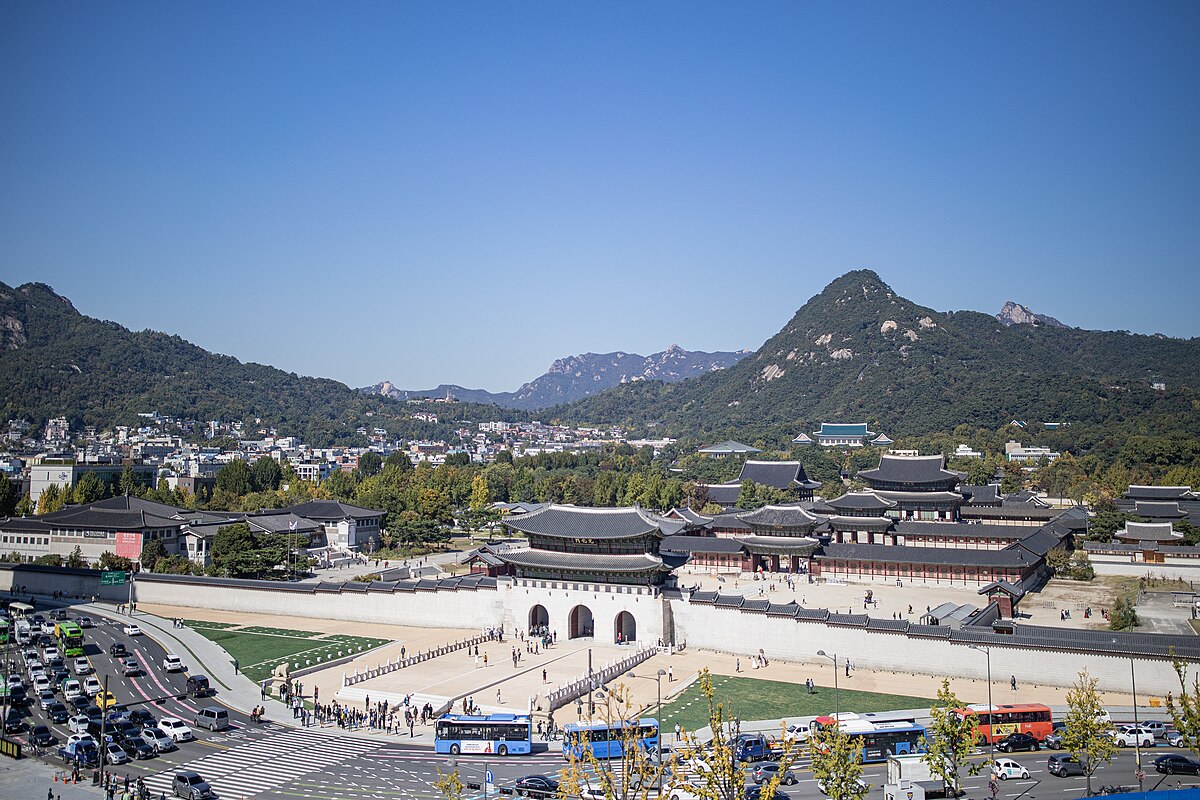
Gyeongbokgung: Seoul's Grand Joseon Palace
The largest and most magnificent of Seoul's Five Grand Palaces, Gyeongbokgung served as the heart of the Joseon Dynasty for over 500 years.