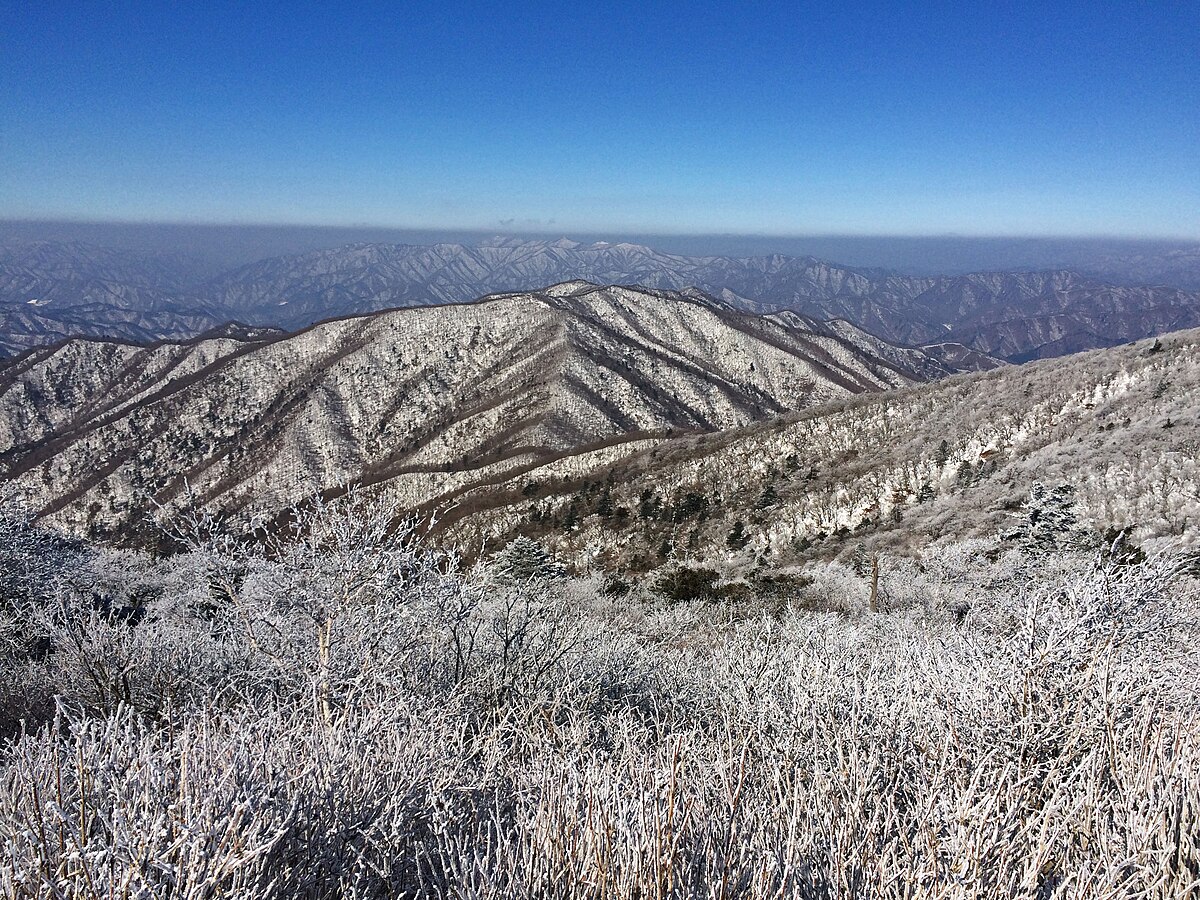
Odaesan National Park: Pyeongchang's Sacred Buddhist Mountain
Odaesan National Park in Pyeongchang is one of Korea's most revered Buddhist mountains, home to Woljeongsa Temple and Sangwonsa Temple — two of the oldest surviving temple complexes in the country — surrounded by dense forest and five sacred peaks.
Photo: Wikipedia Commons
What Is Odaesan National Park?
Odaesan National Park (오대산국립공원) covers 298 square kilometres of the Taebaek Mountain range in Pyeongchang and Hongcheon Counties, Gangwon Province. The park's name — "Five Plateau Mountain" — refers to five distinct summits, each associated in Buddhist cosmology with the five directions and the five bodhisattvas. The highest peak, Birobong (1,563 m), is accessible by a half-day hiking trail from the main valley. The park's streams are classified among Korea's cleanest and the primary valley is lined with fir trees of unusual density, creating a cathedral-like approach to the temples.
History & Significance
Odaesan has been a centre of Korean Buddhism since the seventh century, when the monk Jajang returned from Tang Dynasty China with sacred relics of the historical Buddha and established a hermitage on the mountain. His disciple Uisang later founded Woljeongsa Temple in 643 CE. The mountain is considered one of Korea's five sacred Buddhist mountains and has been a pilgrimage destination for over 1,300 years. Sangwonsa Temple at the upper valley holds a National Treasure bronze bell cast in 725 CE — the oldest surviving large bell in Korea.
What to See & Do
The most popular visit combines the fir-tree approach road to Woljeongsa Temple (a 1-kilometre walk through towering Korean fir) with a further 9-kilometre hike up the valley to Sangwonsa Temple. Woljeongsa's nine-tier stone pagoda is one of the finest Goryeo-era structures in the country. Sangwonsa offers templestay programmes allowing visitors to experience monastic life, meditation, and a 4 AM morning bell ceremony.
Visitor Tips
The park is 40 kilometres from the Alpensia Resort area and can be combined with a Pyeongchang ski trip in winter. The fir forest path is walkable in winter with micro-spikes but can be icy — exercise caution. Spring and autumn are the most popular seasons; summer offers lush greenery and the valley stream creates natural cooling. Templestay bookings must be made through the Korea Templestay programme website.
Tips
- 💡Book a Sangwonsa Templestay at least two weeks in advance through the official Korea Templestay website.
- 💡The fir tree approach road to Woljeongsa is one of Korea's most serene one-kilometre walks.
- 💡Autumn foliage peaks in mid-October and makes the valley exceptionally photogenic.
最后更新:2026年9月1日
你可能也喜欢
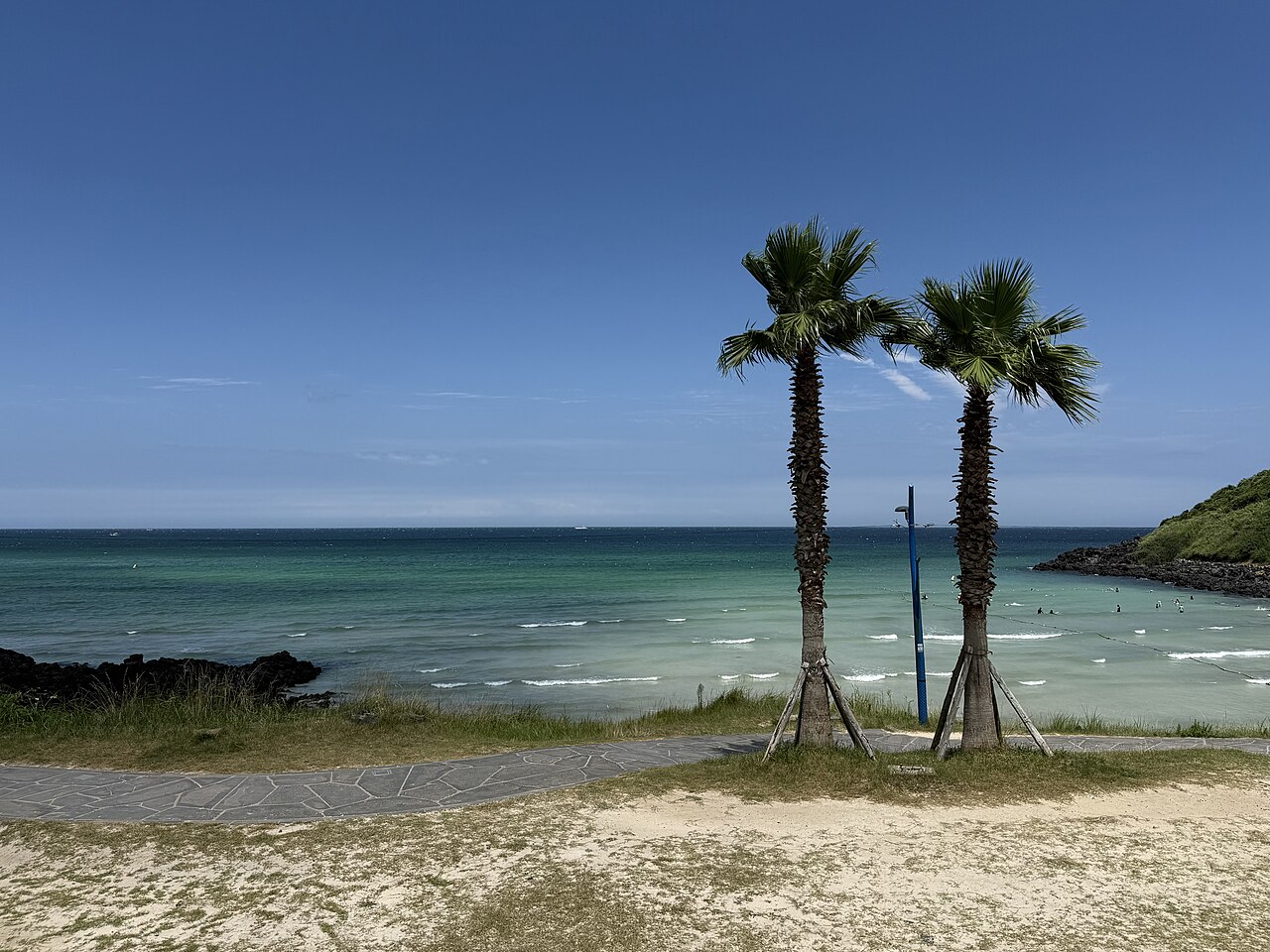
Hamdeok Beach: Jeju's Turquoise Gem
Located on the north coast of Jeju Island, Hamdeok Beach is famous for its unusually clear, turquoise water and gentle, shallow reef — making it arguably the most picturesque swimming beach in Korea.
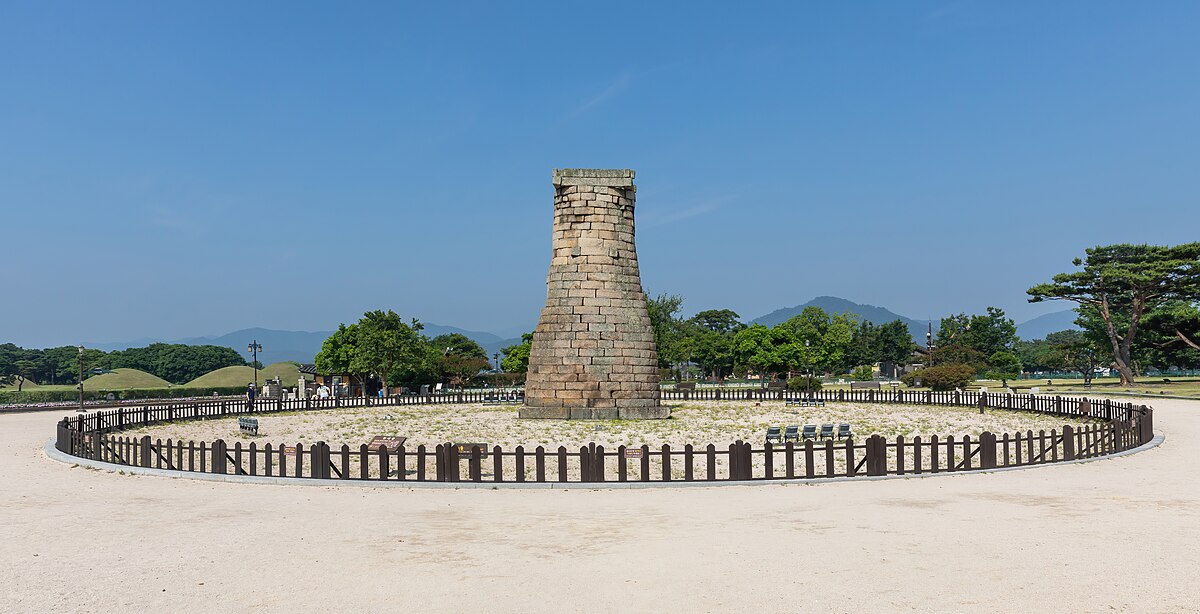
Cheomseongdae: Asia's Oldest Surviving Observatory
Built in the 7th century during the Silla Kingdom, Cheomseongdae is Asia's oldest surviving astronomical observatory. Its 362 stones — one for each day of the lunar year — encode the calendar in architecture.
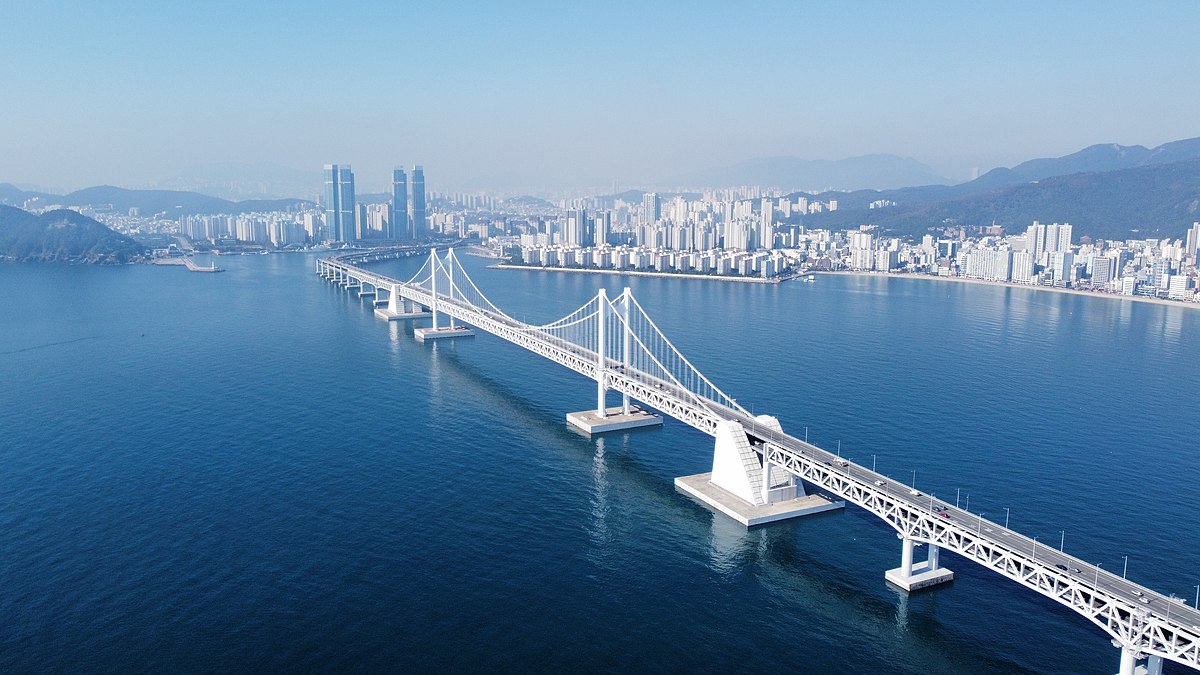
Gwangan Bridge: Busan's Glittering Bay Landmark
Stretching 7.4 km across Suyeong Bay, Gwangan Bridge is Korea's second-longest bridge and Busan's most iconic nocturnal spectacle. Its nightly LED light shows have made it a symbol of the city.