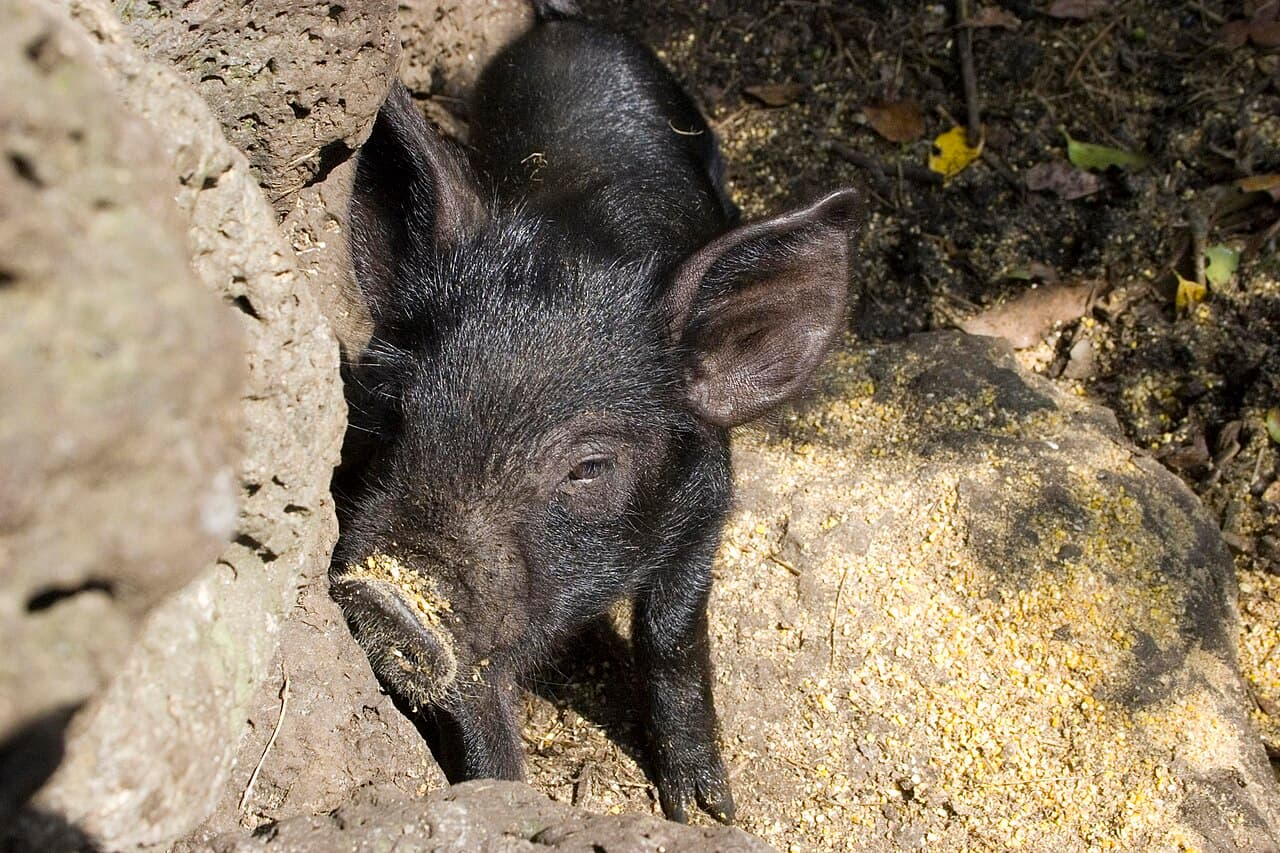
Jeju Black Pork
제주 흑돼지
Jeju Island's prized black-haired native pig, grilled over charcoal — the island's most celebrated culinary treasure.
카테고리
고기구이
📖 상세 정보
Heukdwaeji (흑돼지) means 'black pig' — specifically the native Jeju Island pig breed, a compact, short-legged animal with coarse black hair that is genetically distinct from mainland Korean pig breeds. It has been raised on Jeju Island for at least a millennium, kept in traditional stone-walled enclosures and fed on a diet of grains, vegetables, and the by-products of the island's citrus orchards. The meat from Jeju black pigs is markedly different from mainland pork in several respects. The fat distribution is finer and more marbled throughout the muscle tissue, producing a juicier, more flavorful result. The fat itself has a higher concentration of oleic acid (the same beneficial fatty acid prominent in olive oil), giving it a cleaner, less greasy quality than standard pork fat. The meat has a deeper, more complex flavor — firmer in texture and more intensely savory — with virtually no 'off' smell even when eaten without heavy seasoning. The most common way to eat heukdwaeji is as samgyeopsal (grilled pork belly) or moksal (neck/shoulder), cut thickly, grilled over charcoal or wood, and eaten simply with salt, sesame oil dipping sauce, and fermented seafood condiments unique to Jeju.
💡 여행자 팁
The Yeon-dong Black Pork Street (연동 흑돼지 거리) in Jeju City is the most concentrated area for heukdwaeji restaurants — book in advance for dinner.
Ask specifically for 'injeung heukdwaeji' (인증 흑돼지) — certified native breed pork — to ensure you are getting the genuine Jeju breed rather than a mainland black pig.
Order both samgyeopsal (belly) and moksal (neck) to taste the contrast — the neck is often preferred by those who find the pure belly too fatty.
Jeju Black Pork — Food
Read more on K-Atlas
From the blog
Recent stories that touch this topic.
- Nam Joo-hyuk Joins Disney+'s 'Code' for 2027Four leads locked for 'Code', a mystery crime thriller: a lawyer invited into a wish-granting app, the prosecutor chasing him, and a defector hacker.
- An Embassy for Gumiho: Lee Junho's New tvN DramaThe embassy manages Korea's non-human residents. Lee Junho plays an ambassador who is secretly a dragon; Hong Hwa-yeon, a rookie posted there by mistake.
- Taemin's August 31 Comeback and the [LiMiNaL] TourThe first Korean male soloist to play Coachella returns: 'PHASE 1 : SOFT VIOLENCE' drops 6pm KST on August 31, then a world tour. What both titles signal.
Found incorrect or missing information?