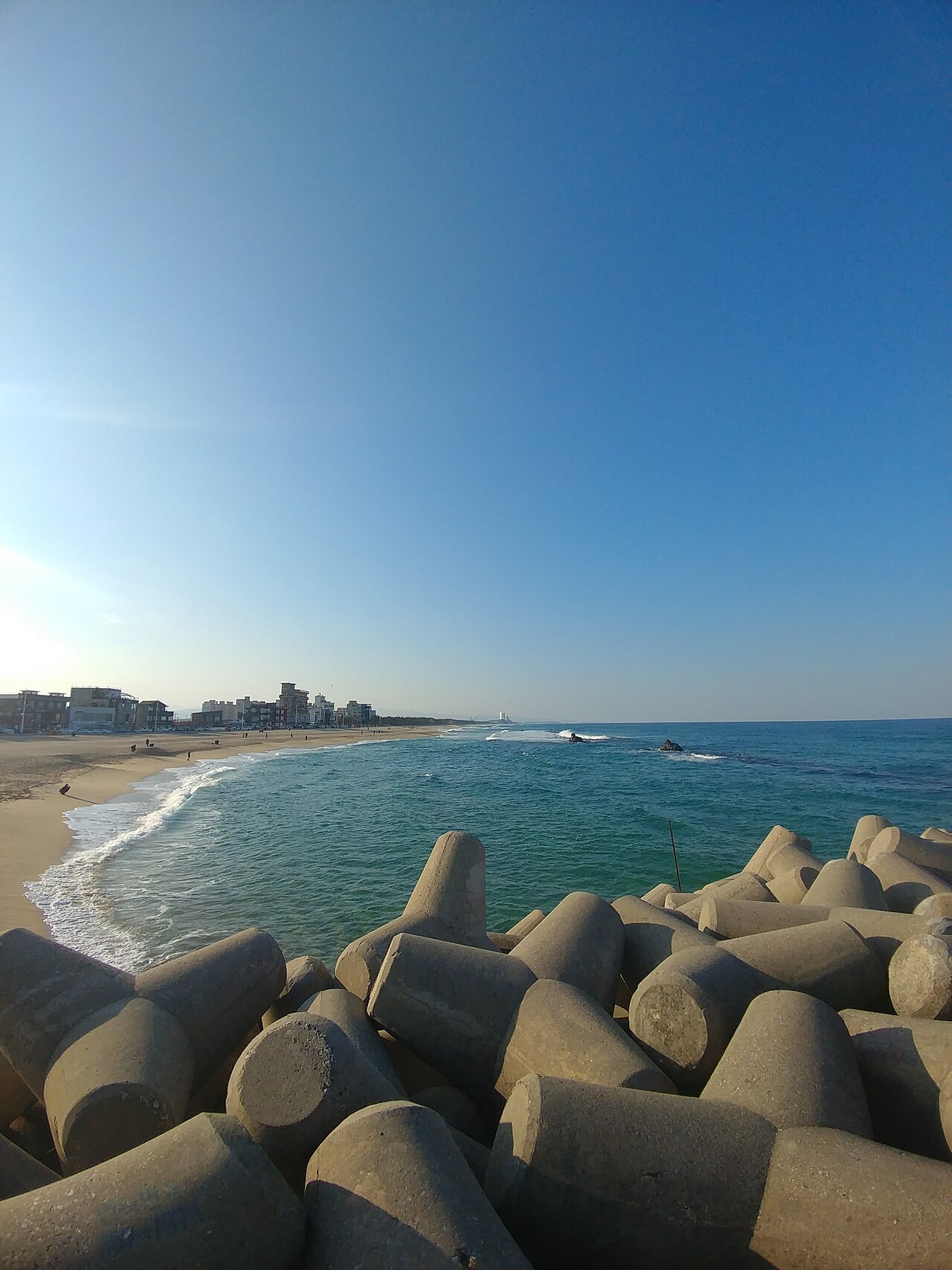
Anmok Coffee Street: Where Korean Coffee Culture Was Born
A seaside strip in Gangneung where vending machine coffee culture in the 1980s evolved into Korea's most celebrated artisan café district. More than 40 cafes face the East Sea along a single stretch of coast.
Photo: Wikipedia Commons
What Is Anmok Coffee Street?
Anmok Coffee Street (안목커피거리) is a 500-metre stretch of road along the East Sea coastline in Gangneung, South Korea, lined with over 40 cafes all facing the ocean. It is widely regarded as the birthplace of modern Korean coffee culture. The street runs along the shore near Anmok Beach and Anmok Port, with cafes designed to maximise ocean views — floor-to-ceiling windows, rooftop terraces, and outdoor seating with unobstructed sea vistas. Each café has its own distinct personality, ranging from single-origin pour-over specialists to Korean tea houses and dessert-focused establishments.
History & Significance
The origins of Anmok Coffee Street trace back to the 1980s when automatic coffee vending machines were installed near the Anmok fishing port. Fishermen, truck drivers, and travellers would stop for a cup while watching the sea — a simple ritual that proved irresistible. Word spread that the combination of instant coffee and ocean air created something greater than the sum of its parts, and the stretch became famous across Korea. As coffee culture evolved in the 1990s and 2000s, independent cafés replaced the vending machines, and Gangneung invested in the coffee identity that had naturally emerged. Today, Gangneung hosts the annual Coffee Festival (강릉커피축제) every October, drawing tens of thousands of coffee enthusiasts.
What to See & Do
The experience is deliberately slow: pick a café, order carefully, and sit with the East Sea in front of you. Many cafes specialise in pour-over coffee brewed to order, and the barista culture is serious — you can have detailed conversations about origin and roast if interested. Beyond the cafes, Anmok Port (안목항) is a working fishing harbour directly adjacent, where fishing boats unload catches each morning and afternoon. Fresh seafood restaurants around the port serve the day's haul. The nearby Anmok Beach is a quieter alternative to the more famous Gyeongpo Beach, with a fishing village character that has been mostly preserved despite the café development.
Visitor Tips
The street is best experienced on a weekday morning in the shoulder season (April–June or September–October) when the cafes are calm and the sea light is spectacular. Weekend afternoons in summer can be very crowded — parking becomes difficult and queues form at the most popular cafes. A takeaway cup from any café, taken to the rocks at the water's edge, recreates the original vending-machine ritual in a much better form. The annual Gangneung Coffee Festival runs in October and includes tastings, competitions, and events across the whole street. Allow at least 2 hours if you plan to café-hop across three or four establishments.
Tips
- 💡Get a takeaway cup and sit on the coastal rocks — this is how Korean coffee culture started.
- 💡Weekday mornings are ideal; weekend afternoons in summer bring heavy crowds.
- 💡Visit during the Gangneung Coffee Festival in October for a full immersion in Korean café culture.
Last updated: April 1, 2026
You might also like
N Seoul Tower: Seoul's Most Iconic Landmark
Perched atop Namsan mountain, N Seoul Tower offers breathtaking 360-degree views of the city and has become a beloved symbol of Seoul's modern romance.
Hongdae: Seoul's Creative Youth Capital
Seoul's most vibrant arts and nightlife district, Hongdae pulses with indie music, street performances, quirky cafés, and the creative energy of Korea's top arts university.
Gyeongbokgung: Seoul's Grand Joseon Palace
The largest and most magnificent of Seoul's Five Grand Palaces, Gyeongbokgung served as the heart of the Joseon Dynasty for over 500 years.