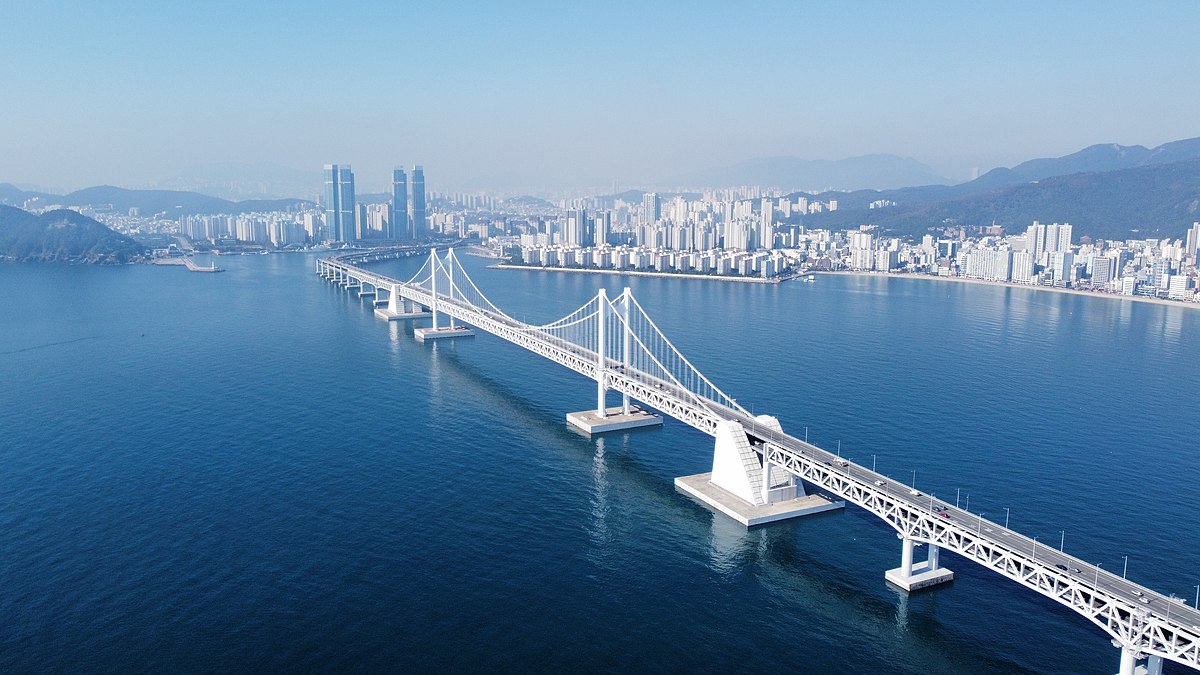
Gwangan Bridge: Busan's Glittering Bay Landmark
Stretching 7.4 km across Suyeong Bay, Gwangan Bridge is Korea's second-longest bridge and Busan's most iconic nocturnal spectacle. Its nightly LED light shows have made it a symbol of the city.
Photo: Wikipedia Commons
What Is Gwangan Bridge?
Gwangan Bridge (광안대교), also known as Diamond Bridge, is a 7.4-kilometre double-decker suspension bridge spanning Suyeong Bay in Busan, South Korea. Completed in 2003, it connects the Suyeong and Haeundae districts, carrying over 100,000 vehicles daily on its upper deck while a lower deck serves as a road tunnel. The bridge was engineered to withstand typhoon-force winds and the seismic conditions of the Korean peninsula. Its steel framework was designed with aesthetics in mind — the asymmetric cable arrangement creates a distinctive silhouette that reads differently from every viewing angle. From Gwangalli Beach, the full 7.4 km span appears as a glittering necklace draped across the bay.
History & Significance
Construction on Gwangan Bridge began in 1994 and was completed after nine years, opening to traffic in January 2003. The project was part of Busan's large-scale urban infrastructure program following its growth into Korea's second-largest city. At the time of completion, the bridge was the longest cable-stayed bridge in Korea and a major feat of civil engineering. It has since become synonymous with Busan's modern identity, appearing on the city's official promotional materials and in countless Korean films and dramas. The bridge's night lighting system uses over 1,000,000 LED lights and runs programmed colour shows that synchronise with music during major events.
What to See & Do
The best way to experience Gwangan Bridge is from Gwangalli Beach, the 1.4-kilometre sandy stretch that faces the bridge directly. The beach is lined with restaurants, bars, and cafes, all with unobstructed bridge views — the reflection of the illuminated bridge on calm water is one of Busan's signature images. During the annual Busan Fireworks Festival (typically October), the bridge serves as a backdrop for one of Asia's largest fireworks displays. Visitors can also drive across the bridge itself; the upper deck offers glimpses of the bay and the city skyline. The viewing area at Igidae Coastal Park on the eastern end provides an elevated perspective of the full span.
Visitor Tips
Arrive at Gwangalli Beach around sunset for golden-hour views that transition directly into the night lighting display. The LED show begins at dusk and runs until midnight. Weekends draw crowds, but the atmosphere is festive rather than overwhelming — local vendors set up along the beach, and the bars along the main street (광안해변로) stay lively until 2am. If you want a quieter viewing spot, head to the rocks at the northern end of the beach or walk up to Minrak-dong for a bird's-eye perspective. Parking near the beach is difficult on weekends; arrive by subway (Gwangan Station, Line 2) or taxi.
Tips
- 💡Watch from Gwangalli Beach bars with a local craft beer — the reflection on calm nights doubles the visual impact.
- 💡The annual Busan Fireworks Festival (October) uses the bridge as its centrepiece backdrop.
- 💡Driving across the upper deck after dark gives a surprisingly intimate sense of the bridge's scale.
Last updated: April 1, 2026
You might also like
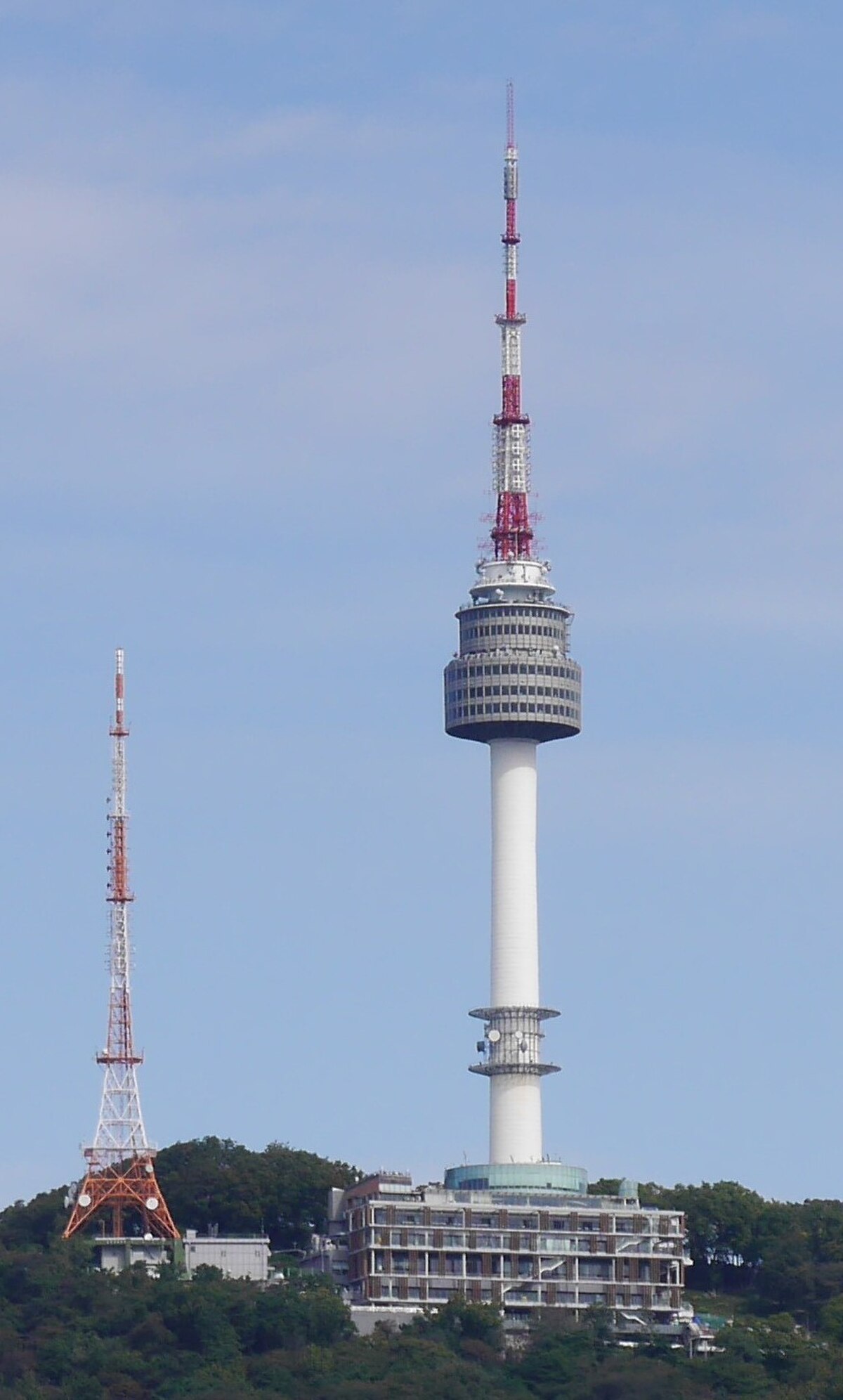
N Seoul Tower: Seoul's Most Iconic Landmark
Perched atop Namsan mountain, N Seoul Tower offers breathtaking 360-degree views of the city and has become a beloved symbol of Seoul's modern romance.
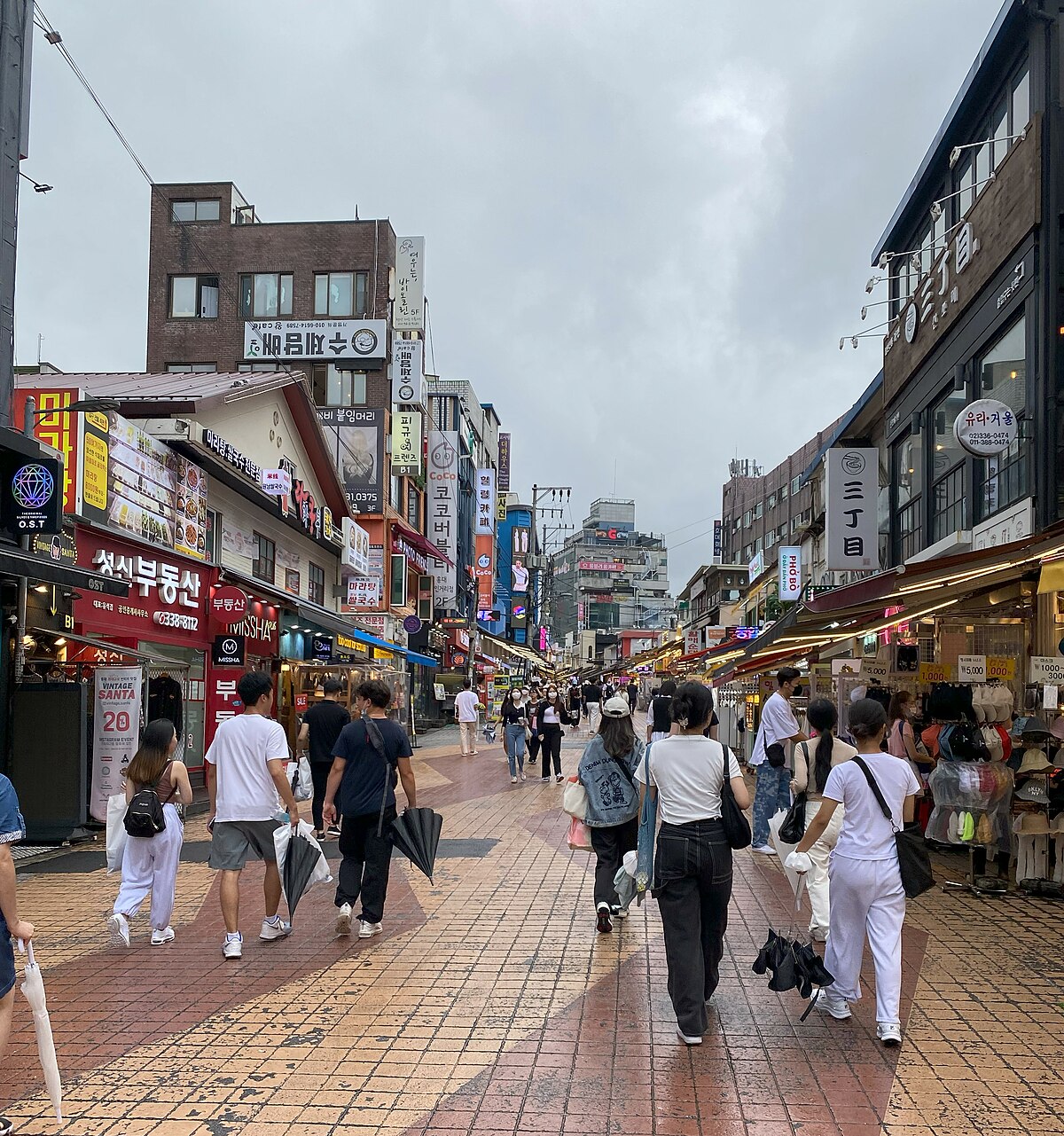
Hongdae: Seoul's Creative Youth Capital
Seoul's most vibrant arts and nightlife district, Hongdae pulses with indie music, street performances, quirky cafés, and the creative energy of Korea's top arts university.
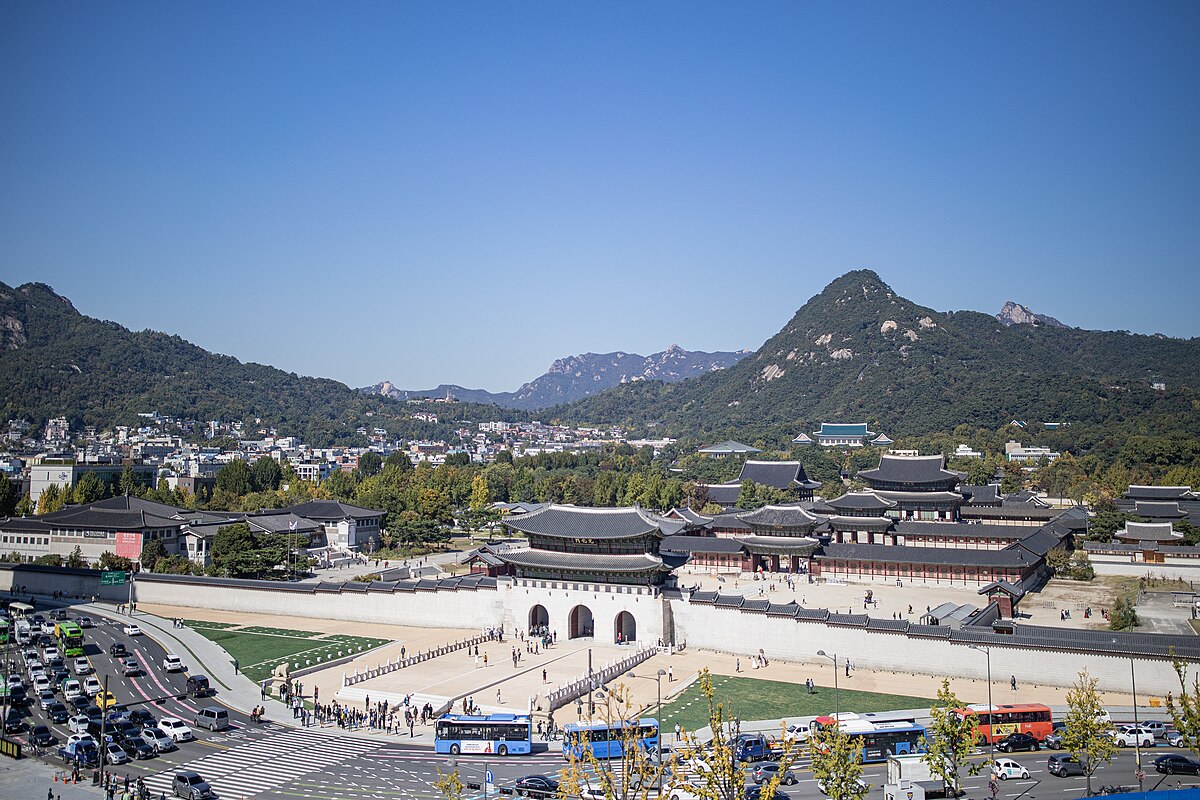
Gyeongbokgung: Seoul's Grand Joseon Palace
The largest and most magnificent of Seoul's Five Grand Palaces, Gyeongbokgung served as the heart of the Joseon Dynasty for over 500 years.