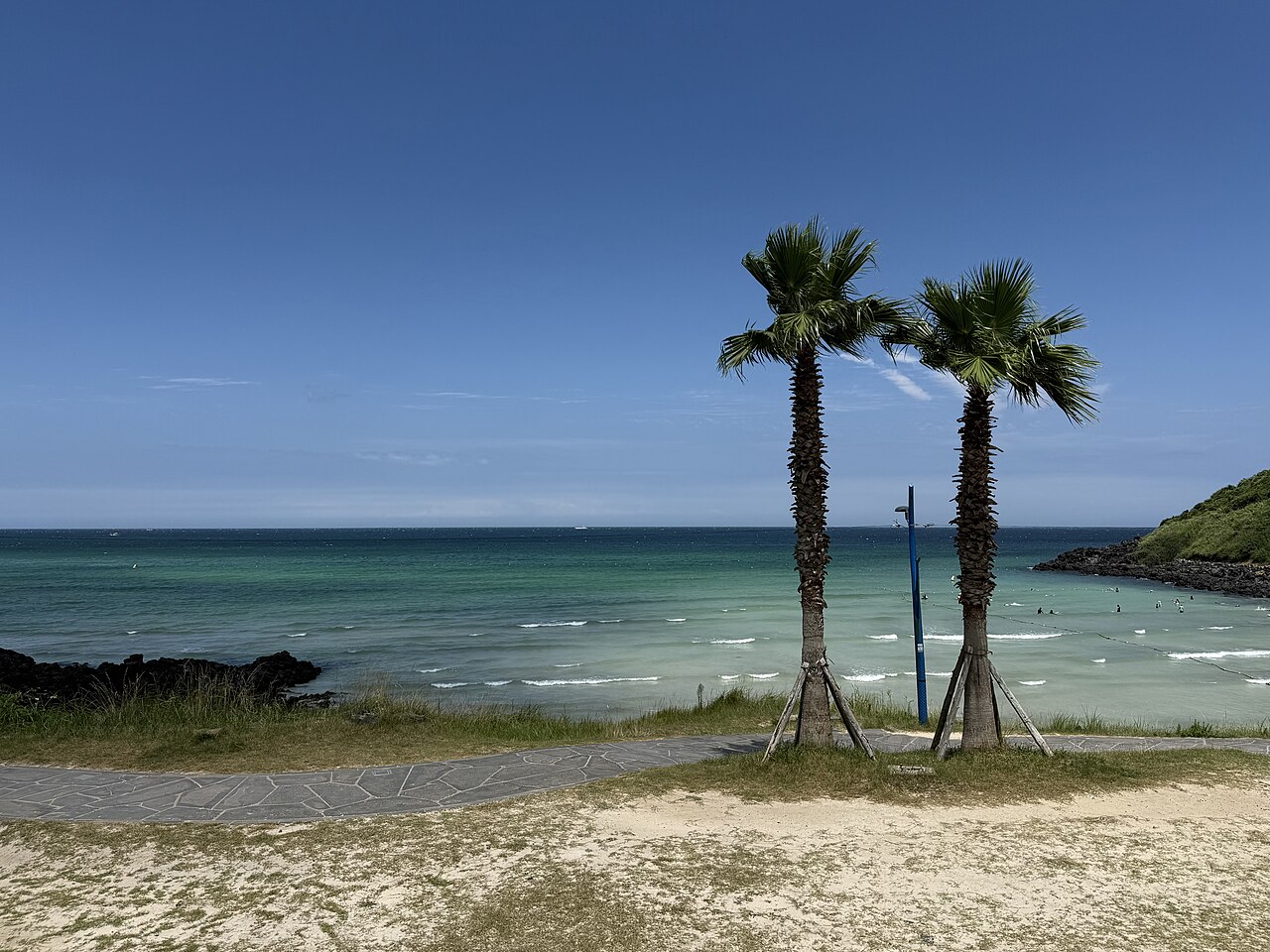
Hamdeok Beach: Jeju's Turquoise Gem
Located on the north coast of Jeju Island, Hamdeok Beach is famous for its unusually clear, turquoise water and gentle, shallow reef — making it arguably the most picturesque swimming beach in Korea.
Photo: Wikipedia Commons
What Is Hamdeok Beach?
Hamdeok Beach (함덕해수욕장) is a 350-metre white-sand beach on the northeastern coast of Jeju Island, about 20 kilometres east of Jeju City. What sets it apart from other Korean beaches is its extraordinary water clarity — the shallow reef creates a natural lagoon-like effect that turns the water an intense Caribbean blue-green. The beach is flanked by Seoubong Peak, a coastal volcanic cone, which adds a dramatic backdrop. The water depth stays shallow for a considerable distance from shore, making it particularly safe for families and swimming beginners. During summer, the beach is one of the most visited on the island.
History & Significance
Hamdeok Beach has been a gathering place for Jeju residents for centuries, though it only became a formal tourist destination in the latter half of the 20th century. The volcanic geology of Jeju — including the lava rock outcroppings that frame the beach — was formed over millions of years of eruption from Hallasan, Korea's highest mountain. Jeju Island as a whole was designated a UNESCO World Natural Heritage Site in 2007, and the coastline around Hamdeok reflects the extraordinary natural environment that earned that recognition. The Haenyeo (해녀, female divers) have traditionally worked the waters around this stretch of coast for generations, free-diving for abalone, sea urchin, and shellfish.
What to See & Do
Swimming is the primary attraction, and the calm, clear water lives up to its reputation. Snorkelling is excellent along the rocky reef edges where fish congregate around the volcanic formations. Seoubong Peak, the small volcanic cone at the beach's edge, can be climbed in 20 minutes and offers panoramic views of the coastline and the East China Sea. The beachside café strip serves Jeju specialities including hallabong juice and black sesame soft-serve ice cream. At low tide, tide pools form along the lava rock shelf, revealing sea anemones, crabs, and small fish. The Hamdeok Olle Trail (Jeju Olle Route 19) passes through the area, connecting the beach to nearby coastal scenery.
Visitor Tips
Come in May or early June before peak summer crowds arrive — the water is already warm enough for swimming and the beach has a fraction of the July-August congestion. On weekday mornings during peak season, the beach is still manageable. Facilities include changing rooms, showers, and umbrella-sunbed rentals (July–August only). The beach faces north, so afternoon light is best for photography. From Jeju City, buses run regularly to Hamdeok (Bus 701, about 40 minutes). Bring reef shoes if you plan to explore the lava rock areas — the surfaces are sharp. Sunscreen is essential; the Jeju sun is significantly stronger than on the mainland.
Tips
- 💡Visit in May or early June for warm water with a fraction of the summer crowds.
- 💡Snorkel along the reef edges at the beach margins where the volcanic rock meets the sand.
- 💡Climb Seoubong Peak for a panoramic view — the full turquoise arc of the beach from above is stunning.
Last updated: April 1, 2026
You might also like
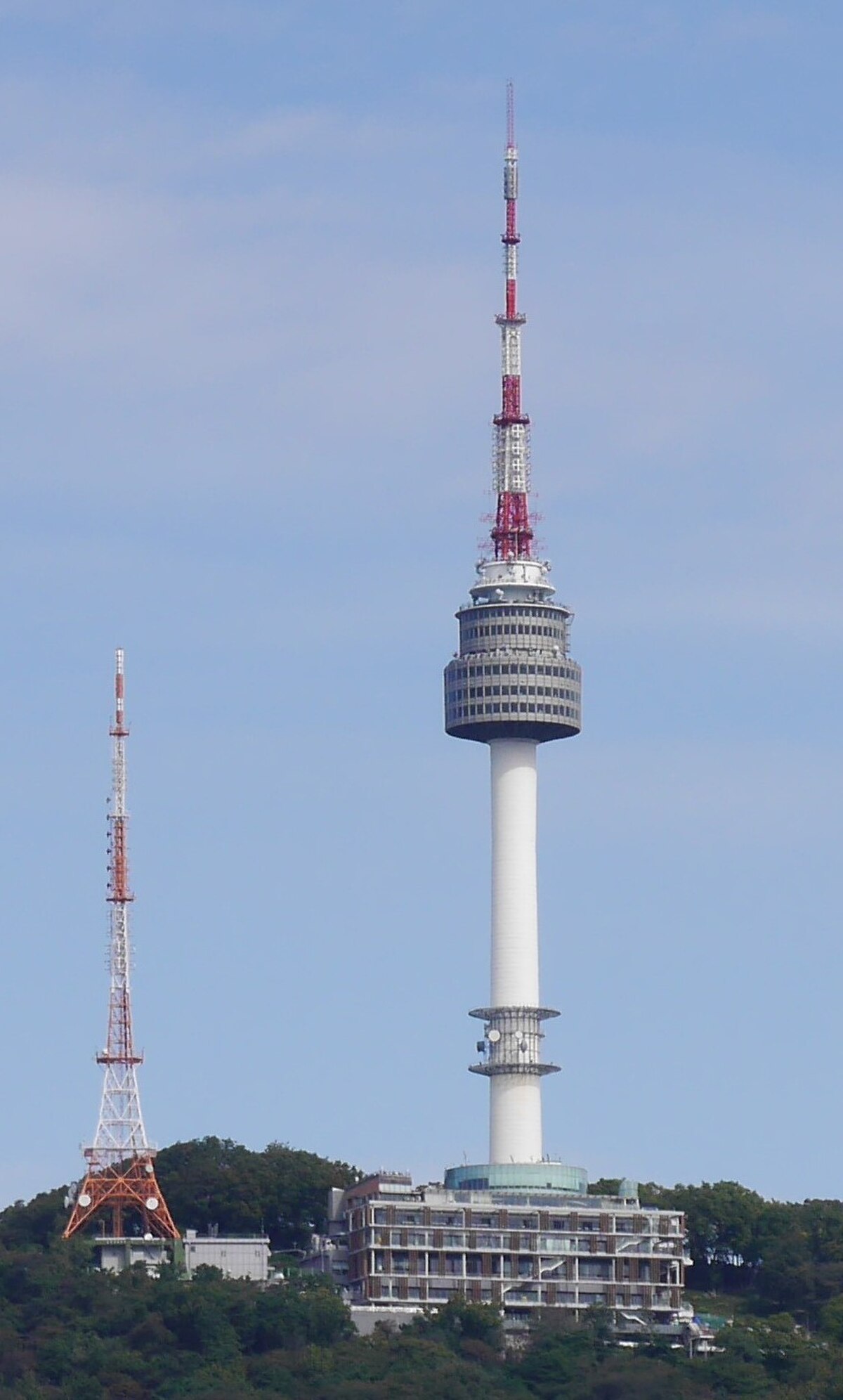
N Seoul Tower: Seoul's Most Iconic Landmark
Perched atop Namsan mountain, N Seoul Tower offers breathtaking 360-degree views of the city and has become a beloved symbol of Seoul's modern romance.
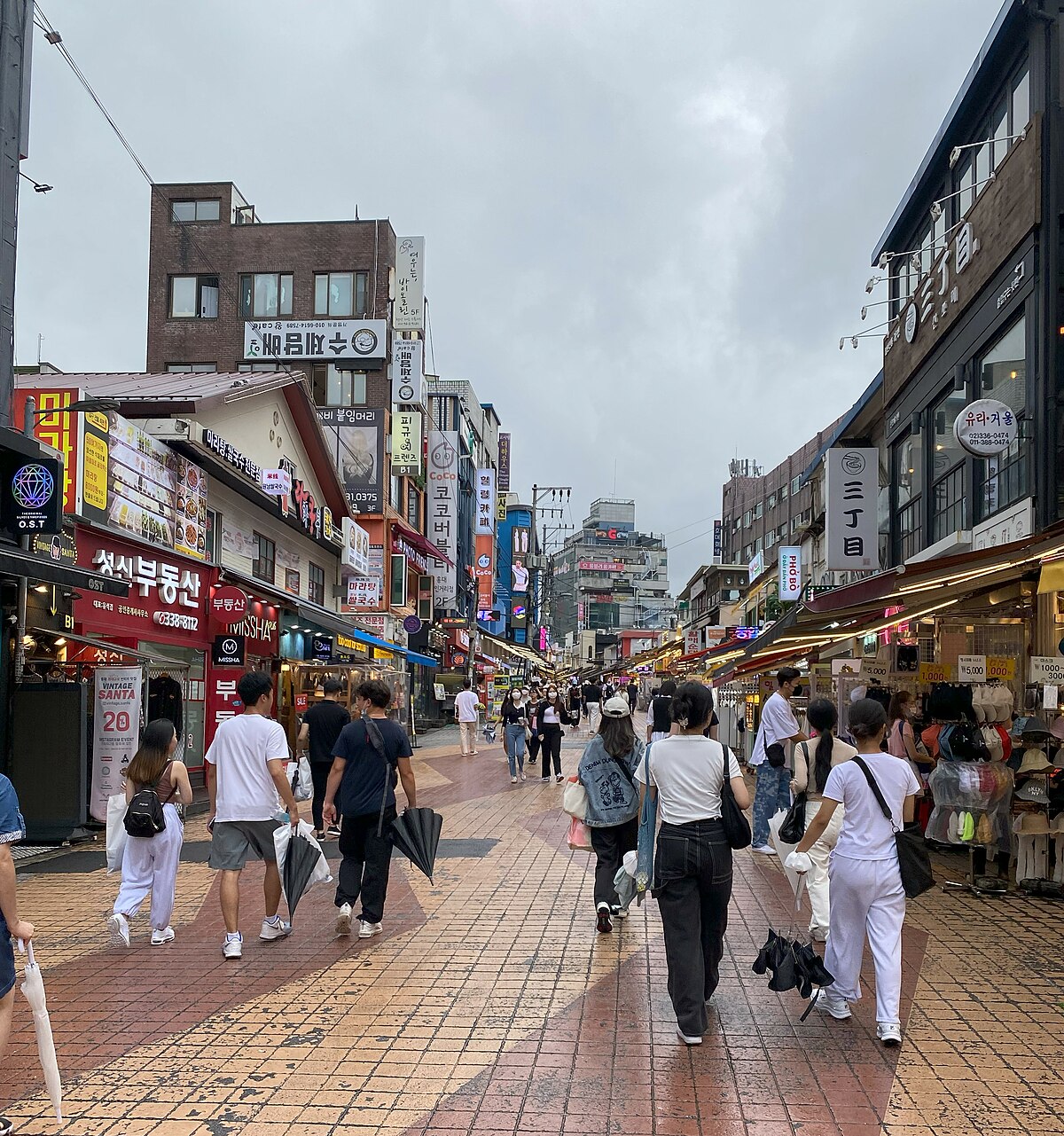
Hongdae: Seoul's Creative Youth Capital
Seoul's most vibrant arts and nightlife district, Hongdae pulses with indie music, street performances, quirky cafés, and the creative energy of Korea's top arts university.
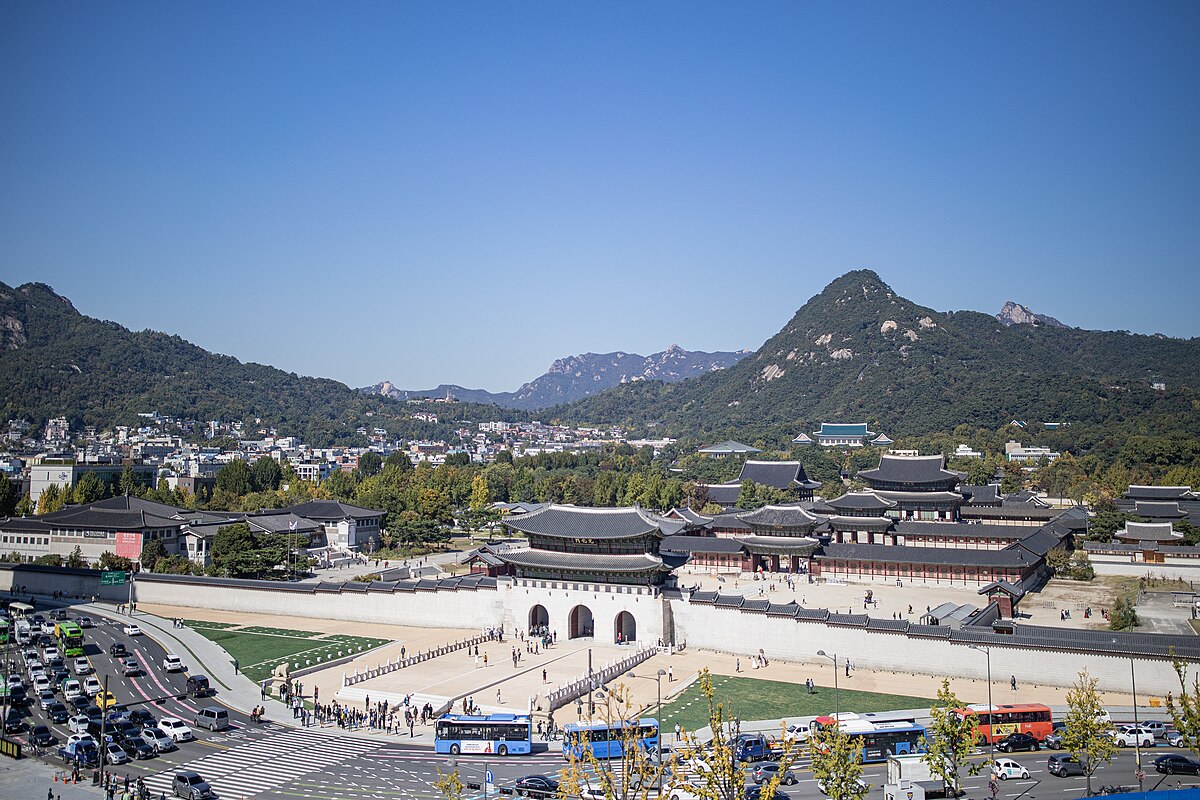
Gyeongbokgung: Seoul's Grand Joseon Palace
The largest and most magnificent of Seoul's Five Grand Palaces, Gyeongbokgung served as the heart of the Joseon Dynasty for over 500 years.