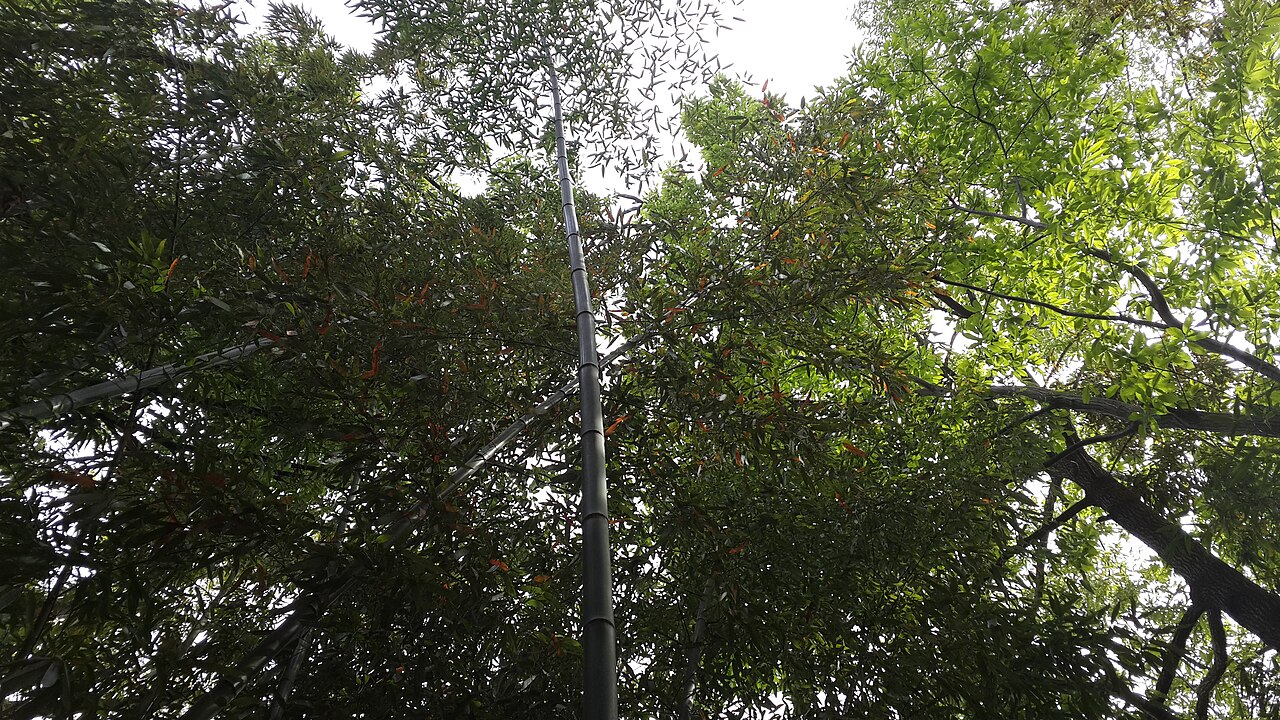
Juknokwon: Damyang's Enchanting Bamboo Garden
Juknokwon is a magnificent bamboo garden in Damyang with towering groves of giant bamboo creating cathedral-like corridors of green light, cool shade, and the whispering sound of wind through bamboo.
Photo: Wikipedia Commons
What Is Juknokwon?
Juknokwon (죽녹원, pronounced 'Jung-nok-won'), meaning 'Bamboo Garden,' is a large bamboo garden located on the edge of Damyang town in South Jeolla Province, approximately 25 kilometers north of Gwangju. Covering approximately 310,000 square meters on the slopes of Dansan Mountain above the Yeongsan River, it contains a network of walking paths through dense groves of moso bamboo (孟宗竹, maengjong-juk) that tower 10-15 meters overhead. Entering Juknokwon is an immediate sensory transformation. The density of the bamboo creates a dim, green light environment where the outside world almost disappears. The sound of wind in bamboo — a soft, continuous rustling — fills the air. The temperature drops several degrees compared to outside. The straight bamboo stalks create natural columns that evoke the nave of a cathedral, and the paths wind through variations of density and openness that reveal new perspectives at every turn. Juknokwon is widely considered the most beautiful bamboo garden in Korea and one of the finest in East Asia. It is particularly associated with the concept of natural healing (치유, chiyu) — many Koreans visit specifically for the therapeutic experience of walking in the bamboo, and medical studies have indeed measured benefits of phytoncide (a natural chemical released by bamboo and other plants) on human health.
History & Significance
Damyang has been the center of Korean bamboo culture for centuries. The region's climate and soil conditions are ideal for moso bamboo cultivation, and the town has historically produced bamboo products including furniture, utensils, baskets, curtains, and fans that were traded throughout Korea. Damyang bamboo products were famous enough to be included in goods sent as tributes to the Chinese imperial court during the Joseon Dynasty. The current Juknokwon garden was formally established and opened to the public in 2003, with the walking paths, entry facilities, and viewing structures installed at that time. However, the bamboo groves themselves are much older — generations of Damyang residents maintained and expanded the bamboo plantations that became the garden's core. The establishment of the garden formalized public access to what had been a semi-private natural resource. Since its opening, Juknokwon has become one of the most visited sites in the Honam region (South Jeolla Province) and has helped establish Damyang as a major tourist destination. The garden's success also helped revive and promote Damyang's traditional bamboo craft industries, which benefit from increased visitor interest in bamboo products and culture.
What to See & Do
There are eight walking paths through the garden, ranging from approximately 300 meters to over 2km in length, with names evocative of the bamboo experience: 'Sound of Wind in Bamboo,' 'Song of Birds in Bamboo,' 'Love Under Bamboo.' Most visitors follow a 1-2 hour loop through the main sections, but the garden rewards slower exploration. The best experiences are found by stopping frequently — listening to the bamboo in wind, observing how light filters through the canopy at different times of day, touching the smooth cool surface of the bamboo stalks, and noticing the subtle variations in color, density, and spacing throughout the garden. Early morning offers the most peaceful conditions and the best light. Nearby the garden entrance are small shops selling Damyang bamboo products — bamboo-handled fans, baskets, furniture, and the famous Damyang tteok galbi (떡갈비, grilled minced meat patty on bamboo skewers). The local specialty sikhye (rice punch) and various bamboo shoot (죽순) dishes are also worth trying in the restaurants near the garden.
- ·Walk slowly and listen to the bamboo in the wind — the sound is uniquely meditative
- ·Visit early morning for the best light and most peaceful atmosphere
- ·Try the different path circuits to find varying densities and atmospheres of bamboo
- ·Look up frequently — the bamboo canopy creates cathedral-like perspectives
- ·Try Damyang tteok galbi and bamboo shoot dishes at nearby restaurants
Visitor Tips
Juknokwon is open daily from 9 AM to 7 PM (summer) or 9 AM to 6 PM (winter). Admission is 3,000 KRW for adults. The garden is located near the center of Damyang town, Jeollanam-do. From Gwangju, take an express or intercity bus to Damyang (approximately 30-40 minutes), then walk or take a short taxi to the garden. Damyang is easily reached from Gwangju (one of Korea's major cities) and makes an excellent half-day or day trip. Combine Juknokwon with the nearby Metasequoia Road (also in Damyang) for a full day of spectacular tree-lined scenery. The town also has the Gwanbangjerim riparian forest (a traditional riverside forest) and several bamboo experience workshops. Summer is the most popular season (the green bamboo and cool shade are especially welcome in heat), but spring and autumn are also beautiful. The bamboo retains its color year-round, making it a worthwhile visit in any season.
Tips
- 💡Combine with Metasequoia Road in the same town for a full day of atmospheric tree scenery
- 💡Visit early morning for the most peaceful bamboo experience — the garden is quiet and the light is perfect
- 💡Walk slowly and stop often — Juknokwon rewards contemplation rather than rushed sightseeing
Last updated: March 30, 2026
You might also like
N Seoul Tower: Seoul's Most Iconic Landmark
Perched atop Namsan mountain, N Seoul Tower offers breathtaking 360-degree views of the city and has become a beloved symbol of Seoul's modern romance.
Hongdae: Seoul's Creative Youth Capital
Seoul's most vibrant arts and nightlife district, Hongdae pulses with indie music, street performances, quirky cafés, and the creative energy of Korea's top arts university.
Gyeongbokgung: Seoul's Grand Joseon Palace
The largest and most magnificent of Seoul's Five Grand Palaces, Gyeongbokgung served as the heart of the Joseon Dynasty for over 500 years.