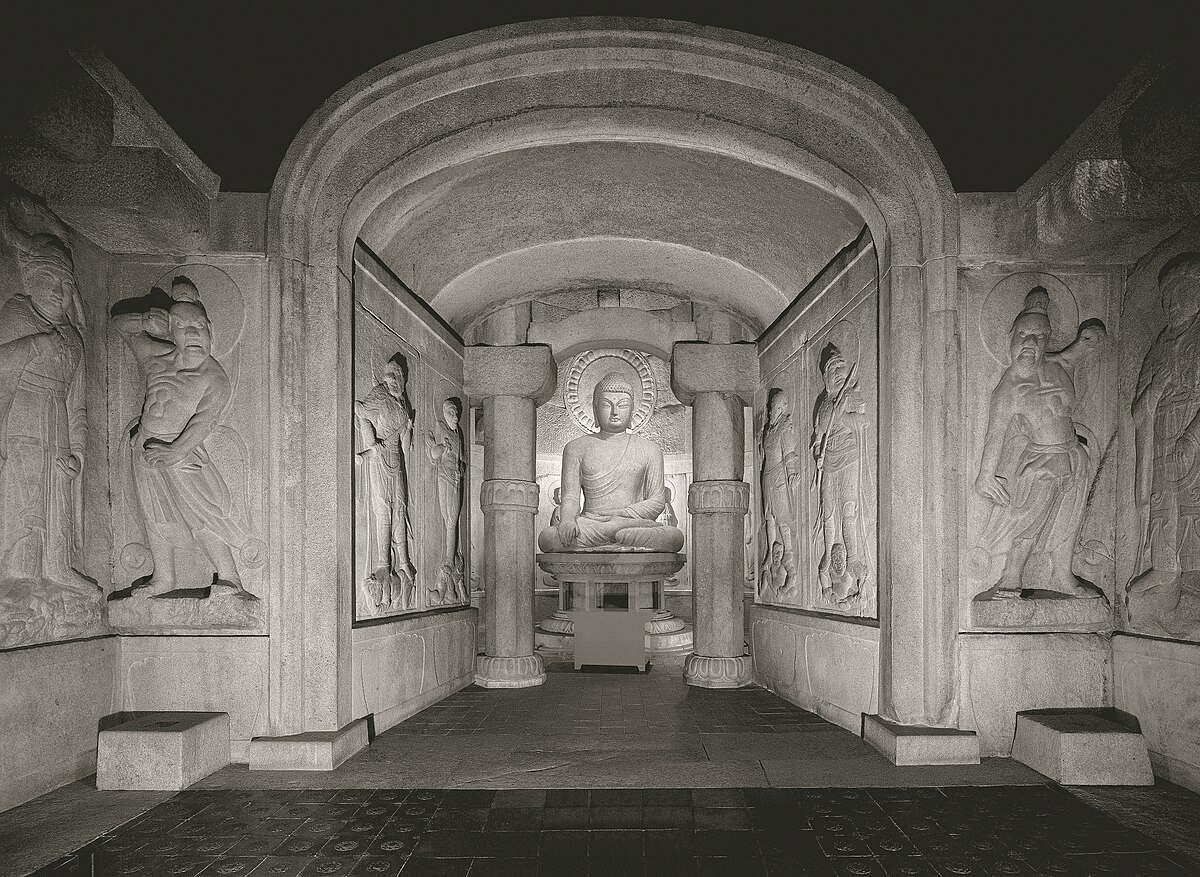
Seokguram Grotto: Korea's Most Sacred Buddhist Sculpture
A UNESCO World Heritage Site, Seokguram Grotto houses a masterwork of Buddhist sculpture — an 8th-century granite Buddha of perfect proportions overlooking the East Sea from Tohamsan mountain.
Photo: Wikipedia Commons
What Is Seokguram?
Seokguram (석굴암), meaning 'Stone Cave Hermitage,' is a man-made grotto built into the slopes of Tohamsan mountain near Gyeongju, housing one of the greatest achievements of Buddhist art in all of Asia. Constructed in the 8th century CE during the Silla Dynasty, it represents the pinnacle of Silla artistic and architectural achievement and is considered the finest example of East Asian Buddhist cave temple construction. The grotto consists of a rectangular antechamber leading to a circular main chamber through a short passageway. The circular chamber, 6.58 meters in diameter and built from precisely carved granite blocks without mortar, creates a domed rotunda that serves as the setting for the central Buddha statue. The entire structure was originally covered by an earthen mound, creating the appearance of a natural hill while protecting the interior. At the center of the circular chamber sits the Main Buddha (본존불) — a seated Sakyamuni Buddha of white granite, 3.5 meters high, of extraordinary beauty and precision. The Buddha's features — the serene facial expression, the perfectly proportioned body, the subtle modeling of the robes — represent a level of sculptural mastery that has rarely been surpassed. The Buddha faces east toward the sea, positioned so that the first rays of the winter solstice sunrise illuminate the stone directly through the entrance.
History & Significance
Seokguram was built between 751 and 774 CE by Kim Dae-seong, the same minister who built Bulguksa Temple below on the mountain. According to the Samguk Yusa (Memorabilia of the Three Kingdoms), Kim built Bulguksa to honor his parents in his current life and Seokguram to honor his parents from a previous life — demonstrating the depth of Buddhist faith in Silla culture. The grotto was lost and forgotten for centuries after the fall of the Silla Dynasty. It was rediscovered by chance in 1909 during the Japanese colonial period when a postal worker sheltered from rain in what appeared to be an old stone building. The colonial authorities had the structure partially dismantled and reconstructed, unfortunately in ways that disrupted the original ventilation and drainage systems, causing condensation damage to the sculptures. Major restoration work was undertaken in the 1960s, and a glass enclosure was installed to protect the interior from humidity while allowing viewing. Though the glass barrier is disappointing for visitors who wish to see the Buddha without this separation, it has been essential for preserving the sculptures. Seokguram was designated a UNESCO World Heritage Site in 1995 alongside Bulguksa as part of the Gyeongju Historic Areas.
What to See & Do
The approach to Seokguram is itself meaningful — a walk through the forests of Tohamsan mountain, either from the shuttle bus stop or from Bulguksa below, prepares visitors for the sacred space. The trail through pine and deciduous forest takes 15-20 minutes and gradually transitions from tourism to pilgrimage. The grotto chamber is viewed through the glass barrier, which allows a clear view of the Main Buddha and the relief sculptures of Buddhist deities and guardians that cover the walls of the antechamber and rotunda. Despite the glass, the power and beauty of the central Buddha is overwhelming. The serene expression, the precise proportions, and the quality of the stone carving speak directly across 1,300 years. The hilltop location of Seokguram, at approximately 750 meters elevation, provides remarkable views east over the mountains to the sea on clear days. The area around the entrance pavilion is beautiful and worth spending time in after visiting the grotto.
- ·Spend time with the Main Buddha statue — observe the proportions, facial expression, and stone carving quality
- ·Study the relief sculptures in the antechamber — each figure is an individual masterwork
- ·Walk the forest path from the shuttle bus stop for a gradual, meditative approach
- ·Look for the view east toward the sea from the pavilion area on clear days
- ·Visit at dawn on winter solstice for the traditional alignment of sunrise light with the Buddha (if access is possible)
Visitor Tips
Seokguram is open daily from 6 AM to 6 PM. Admission is 6,000 KRW for adults. The site is located on Tohamsan mountain, 4km above Bulguksa Temple. Shuttle buses run between Bulguksa's parking area and Seokguram from early morning; walking the path (approximately 30-40 minutes one way) is also a beautiful option for the fit and unhurried. Photography inside the grotto is not permitted (out of respect and to reduce tourist pressure on the sacred space). Photography is freely permitted on the approach paths and exterior areas. The site is less crowded than Bulguksa and has a quieter, more contemplative atmosphere. Allow at least an hour at the site itself. The combination ticket for Bulguksa and Seokguram offers a small discount over buying separately.
Tips
- 💡Photography is not allowed inside the grotto — be present with the experience rather than photographing it
- 💡Visit early morning for the most peaceful atmosphere and the most devout crowd of Buddhist visitors
- 💡Walk rather than take the shuttle from Bulguksa — the mountain path is beautiful and part of the experience
Last updated: March 30, 2026
You might also like
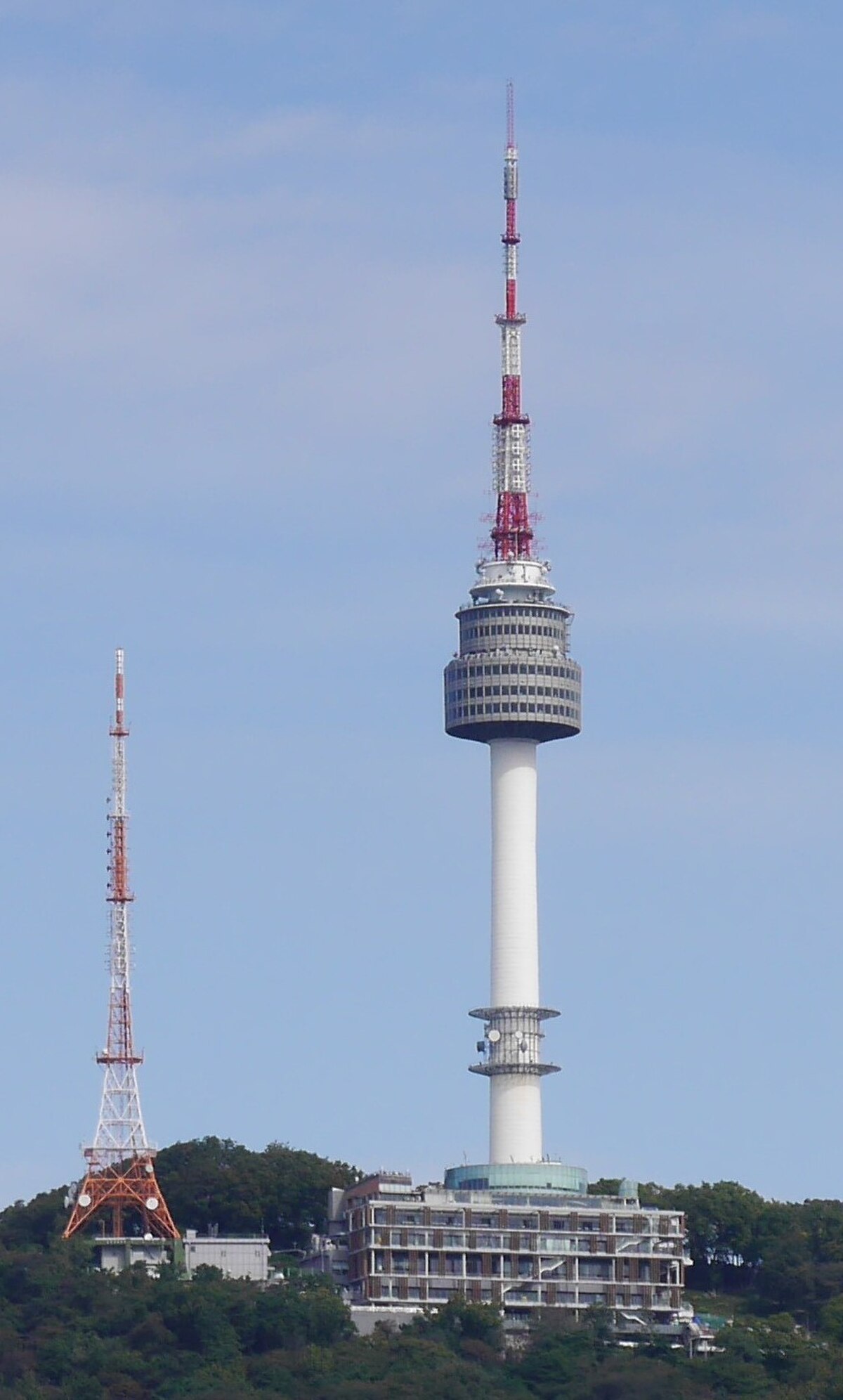
N Seoul Tower: Seoul's Most Iconic Landmark
Perched atop Namsan mountain, N Seoul Tower offers breathtaking 360-degree views of the city and has become a beloved symbol of Seoul's modern romance.
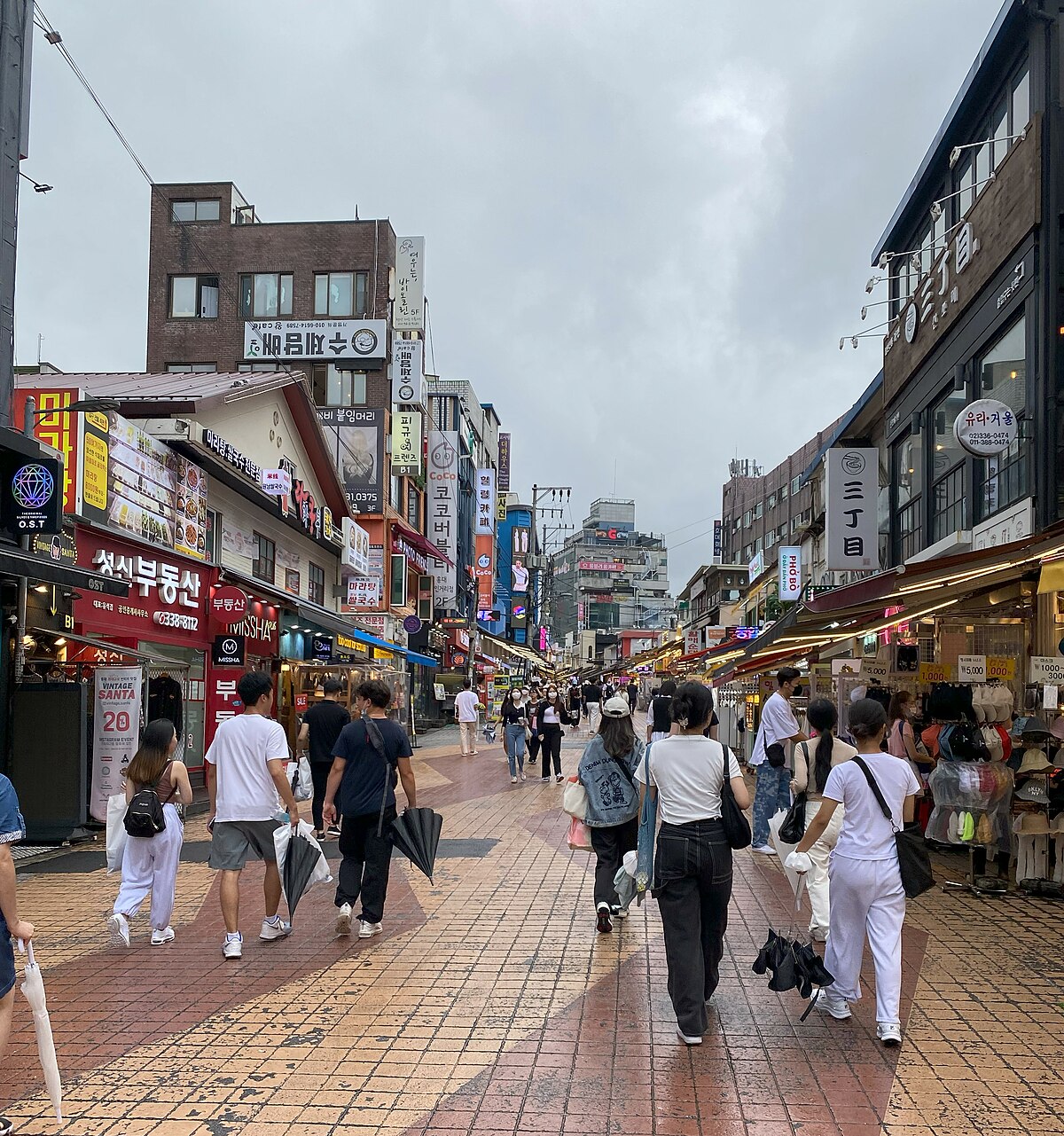
Hongdae: Seoul's Creative Youth Capital
Seoul's most vibrant arts and nightlife district, Hongdae pulses with indie music, street performances, quirky cafés, and the creative energy of Korea's top arts university.
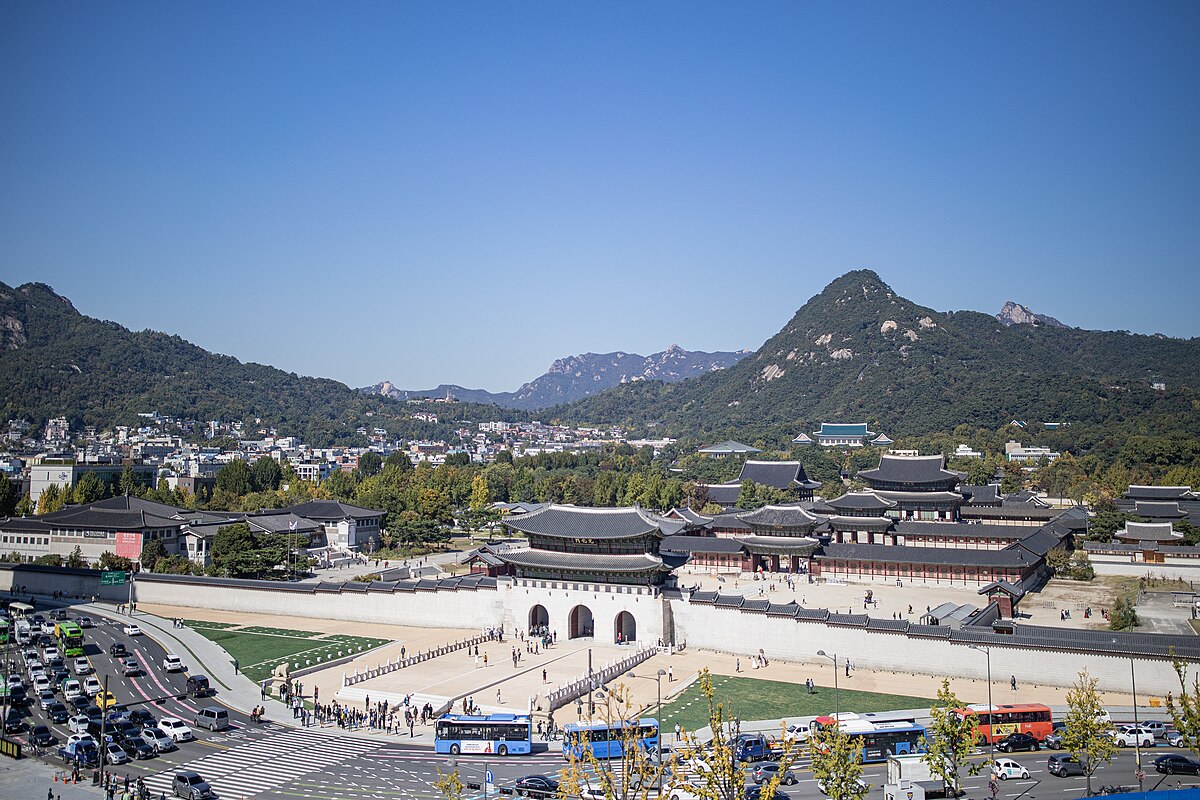
Gyeongbokgung: Seoul's Grand Joseon Palace
The largest and most magnificent of Seoul's Five Grand Palaces, Gyeongbokgung served as the heart of the Joseon Dynasty for over 500 years.