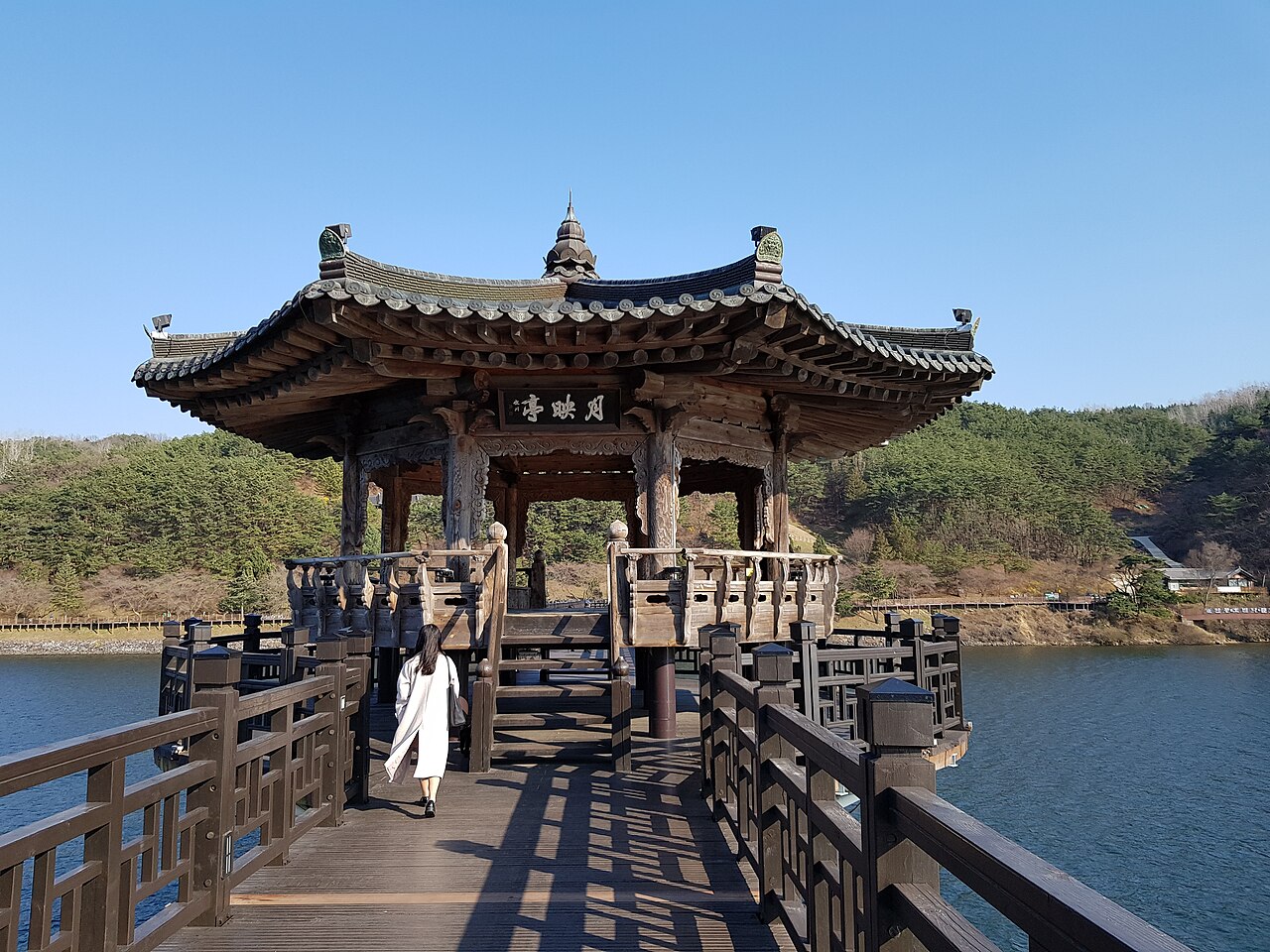
Woryeonggyo Bridge: Andong's 387-Metre Love Story
Korea's longest wooden pedestrian bridge, spanning 387 metres across the Nakdong River in Andong, was built to commemorate a Joseon-era love story — a wife who wove her own hair into shoes for her dead husband.
Photo: Wikipedia Commons
What Is Woryeonggyo Bridge?
Woryeonggyo (월영교, 'Moon Shadow Bridge') is a 387-metre-long wooden pedestrian bridge spanning the Andong Dam Lake on the Nakdong River in Andong, North Gyeongsang Province. Completed in 2003, it is the longest traditional wooden pedestrian bridge in Korea. The bridge is constructed with curved wooden planks and traditional wooden railing designs, incorporating a small octagonal pavilion (월영정) at its midpoint. The bridge crosses near the site where a remarkable Joseon-era love letter was discovered during excavation work in 1998 — a letter written by a wife to her dead husband, using her own hair woven into hemp shoes as a funerary offering.
History & Significance
The bridge takes its form and emotional resonance from one of the most moving historical artefacts ever found in Korea. In 1998, excavation of a 16th-century burial mound near this site uncovered a letter written by a woman named Won (원씨) to her husband, who had died unexpectedly. The letter, preserved for 400 years in the sealed tomb, was written in classical Korean and described her grief and her gift of hemp shoes woven using her own hair. The letter ends: 'You always told me we would grow old together — how can you leave me behind?' The discovery moved the entire country; the letter was published in newspapers and read on national television. The bridge was built in 2003 to honour this love story and the couple.
What to See & Do
Walking the full 387 metres across the bridge and back is the essential activity — a peaceful 30-minute stroll over the calm reservoir water, particularly beautiful at dusk when the bridge lights reflect on the surface. The mid-bridge pavilion (월영정) is a rest stop with views up and down the reservoir toward the forested hills. The Andong Folklife Museum is located directly at the base of the bridge and contains an exhibit about the love letter discovery, along with extensive displays on Andong's folk culture, traditional industries, and daily life across the centuries. The surrounding lakeside park has walking paths, a boat rental area, and cherry blossom trees that bloom in early April.
Visitor Tips
The bridge is freely accessible at all times. Night lighting begins at dusk and runs until around 10pm — the reflection of the illuminated bridge on still water is the most photographed version of the structure. Walk across at dusk as the sun drops and stay for the lights coming on. The Andong Folklife Museum at the bridge entrance is free to enter and worth 30–60 minutes. From central Andong, the bridge is about 2 km east along the river (20-minute walk or short taxi). Pairing the bridge walk with the folk museum and a meal at one of the riverside restaurants provides a complete 3-hour evening itinerary. Spring (cherry blossoms) and autumn (foliage) are the most beautiful seasons.
Tips
- 💡Beautiful at dusk when the bridge lights reflect on the still reservoir — walk across and back as the sun drops.
- 💡Visit the Andong Folklife Museum at the base of the bridge for the story of the 400-year-old love letter.
- 💡Cherry blossoms in early April frame the bridge approach in pink.
Last updated: April 1, 2026
You might also like
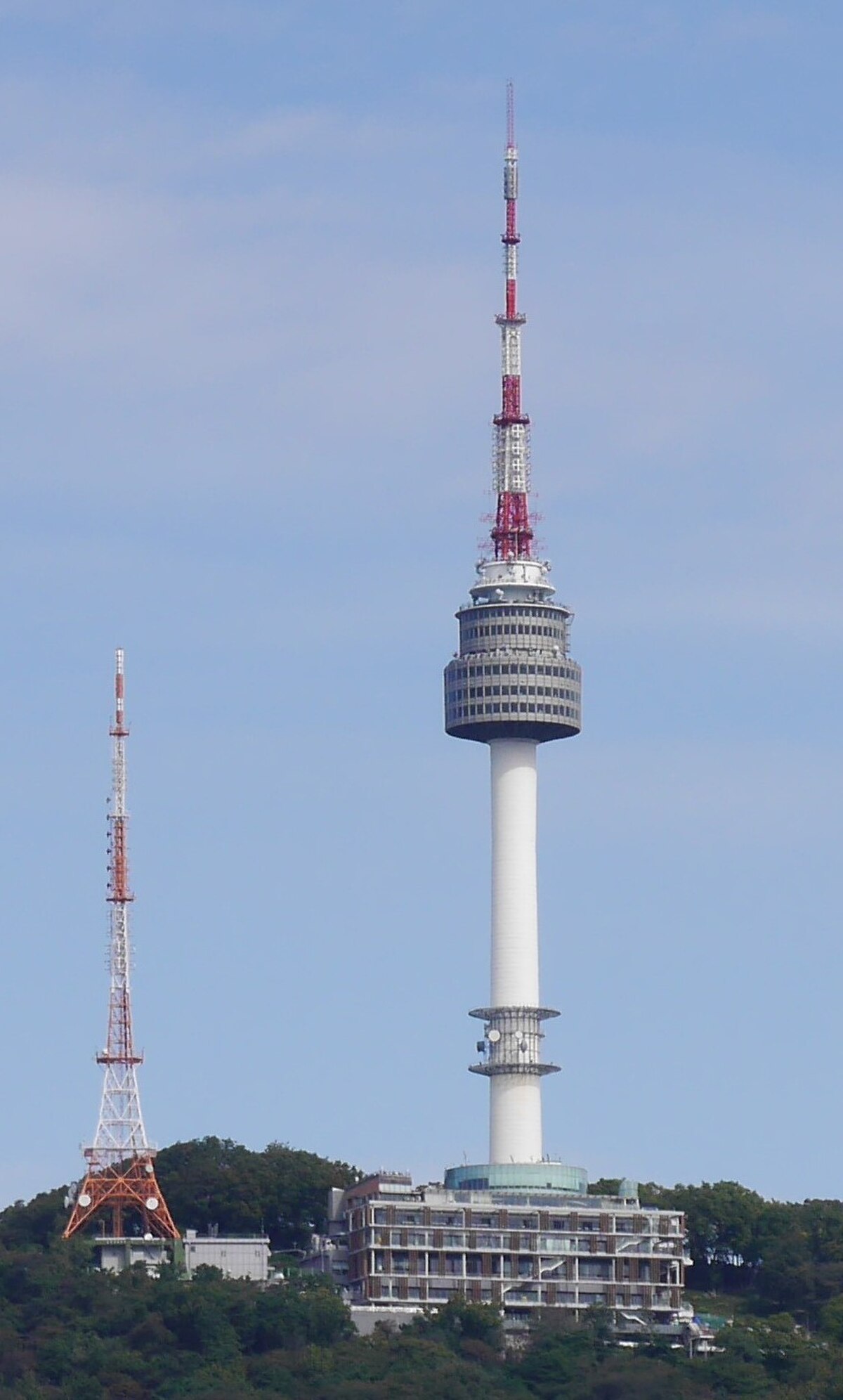
N Seoul Tower: Seoul's Most Iconic Landmark
Perched atop Namsan mountain, N Seoul Tower offers breathtaking 360-degree views of the city and has become a beloved symbol of Seoul's modern romance.
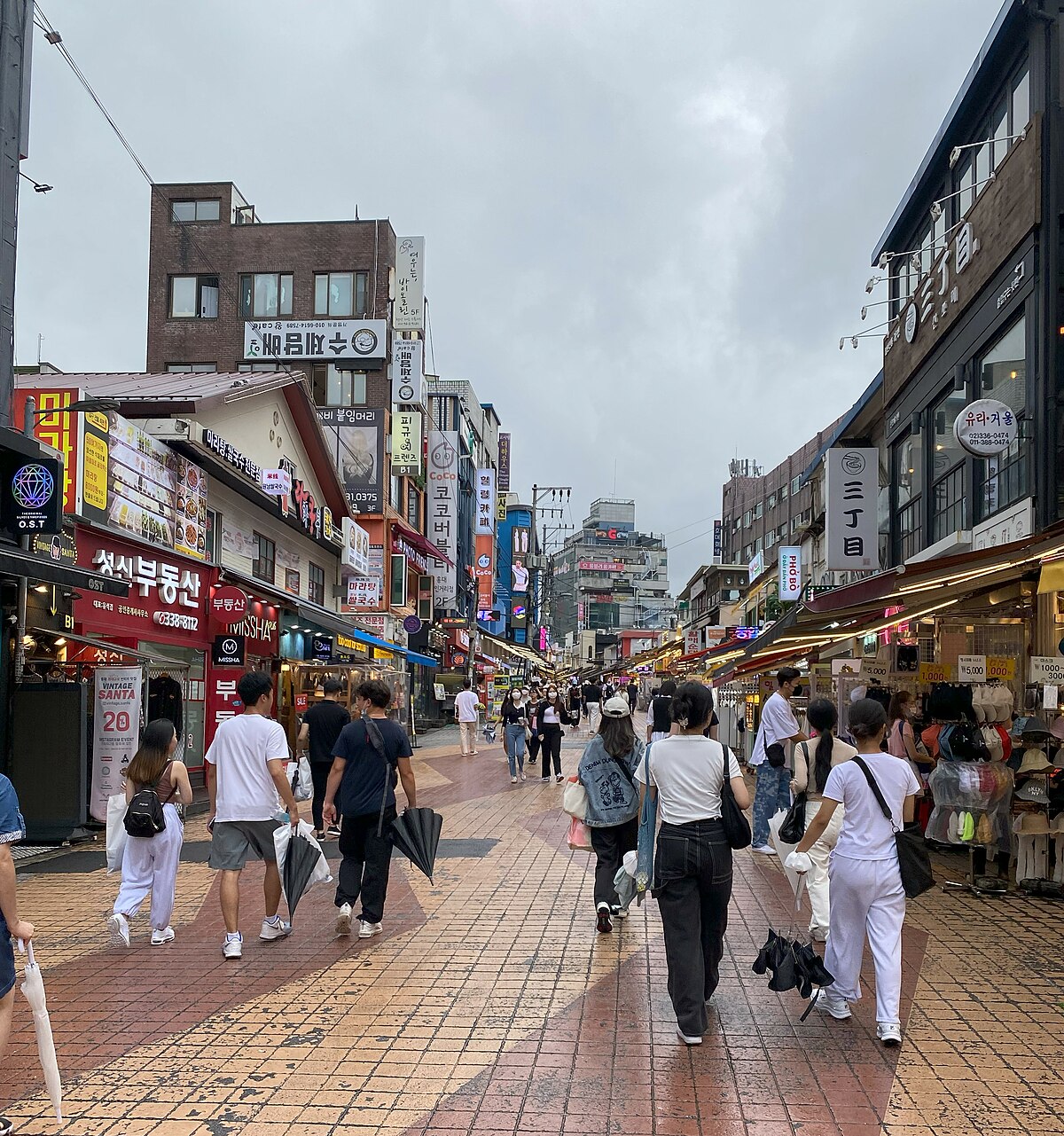
Hongdae: Seoul's Creative Youth Capital
Seoul's most vibrant arts and nightlife district, Hongdae pulses with indie music, street performances, quirky cafés, and the creative energy of Korea's top arts university.
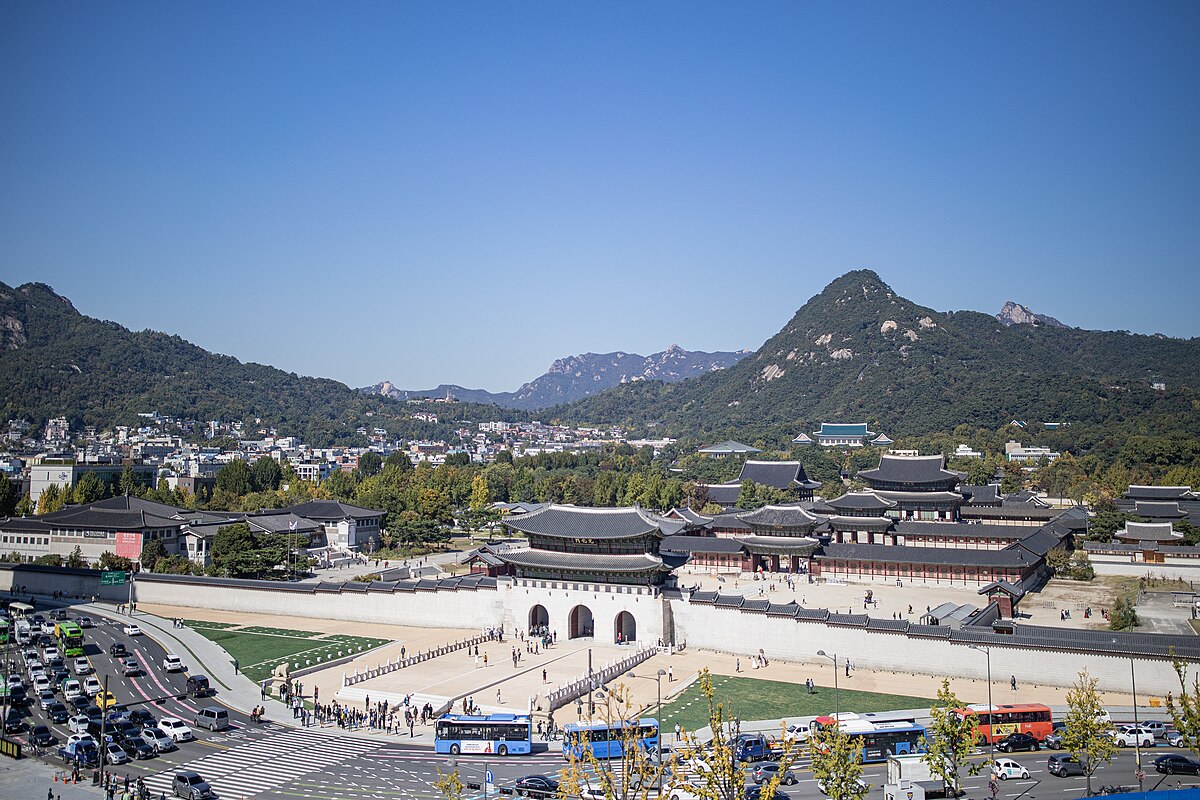
Gyeongbokgung: Seoul's Grand Joseon Palace
The largest and most magnificent of Seoul's Five Grand Palaces, Gyeongbokgung served as the heart of the Joseon Dynasty for over 500 years.