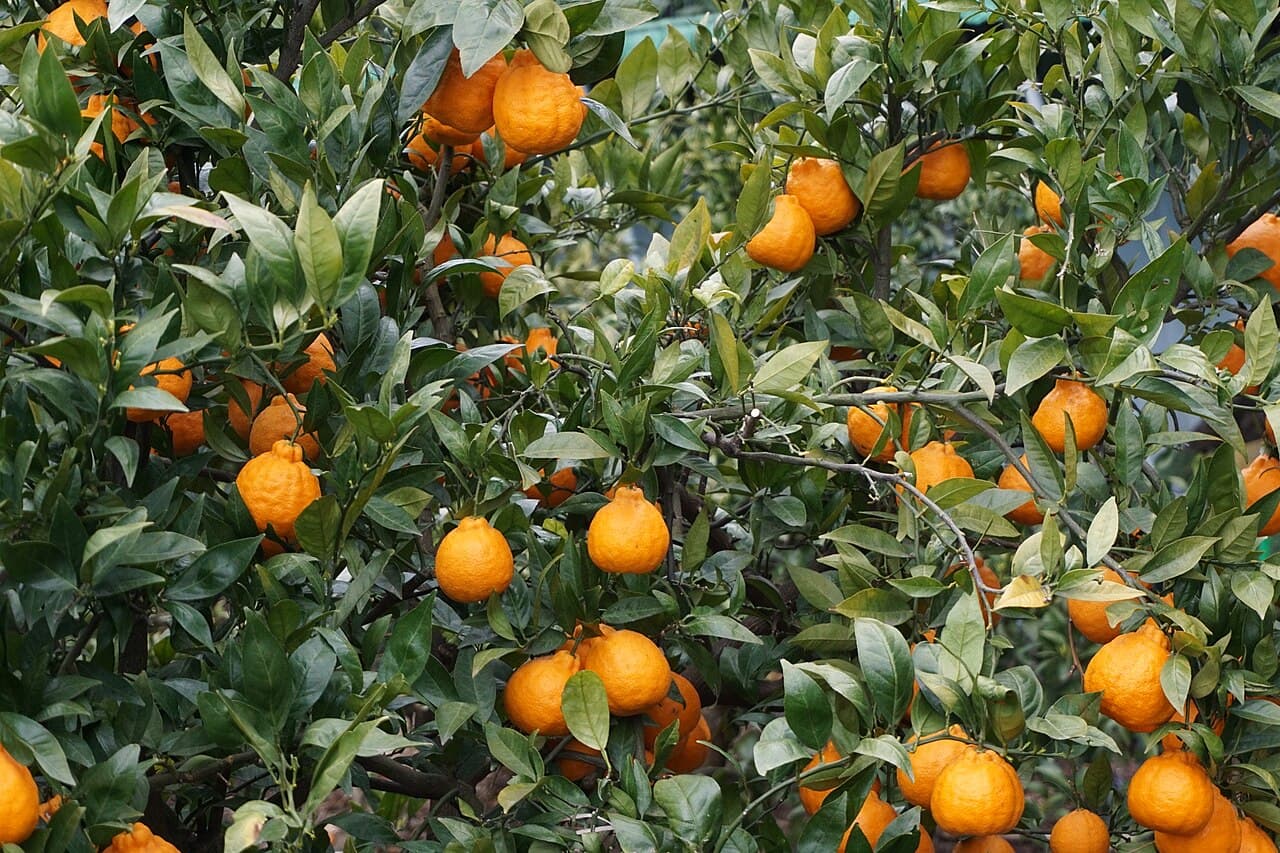
한라봉
Hallabong is a premium mandarin orange variety unique to Jeju Island, known for its distinctive top knot shape, sweet-tart flavor, and juicy flesh — one of Korea's most beloved winter fruits.
카테고리
과일
📖 상세 정보
Hallabong (한라봉) is a hybrid citrus fruit developed in Japan in the 1970s and introduced to Jeju Island, South Korea, where it found its ideal growing conditions and became synonymous with Jeju itself. The fruit takes its Korean name from Hallasan (한라산), Jeju's iconic volcanic mountain, because the fruit's distinctive protruding top resembles the mountain's peak. Hallabong is a cross between a ponkan mandarin and a navel orange. It is larger than a regular tangerine, with a thick, bumpy rind that peels easily by hand. The flesh is extraordinarily juicy, sweet with a pleasant tartness, and virtually seedless, making it one of Korea's most popular eating fruits. The flavor is richer and more complex than ordinary tangerines, with floral and honey notes. Hallabong season runs from December through March, making it a quintessential winter fruit. During this period, Jeju hallabong is shipped across Korea and gifted in premium fruit boxes. The fruit is also processed into juices, teas, jams, desserts, and cosmetics, all of which are popular Jeju souvenirs.
💡 여행자 팁
Buy directly from farm stalls along Jeju's country roads for the freshest and cheapest hallabong, especially during January and February
The best hallabong are heavy for their size with a bright, even orange color and a slight give when gently squeezed
Hallabong products make excellent carry-on gifts — vacuum-sealed hallabong juice packs or hallabong chocolate bars are easy to transport and deeply appreciated
한국 여행에서 직접 맛보기
한라봉 — 어디서 먹을 수 있는지 알아보세요
Menemukan informasi yang salah atau kurang?