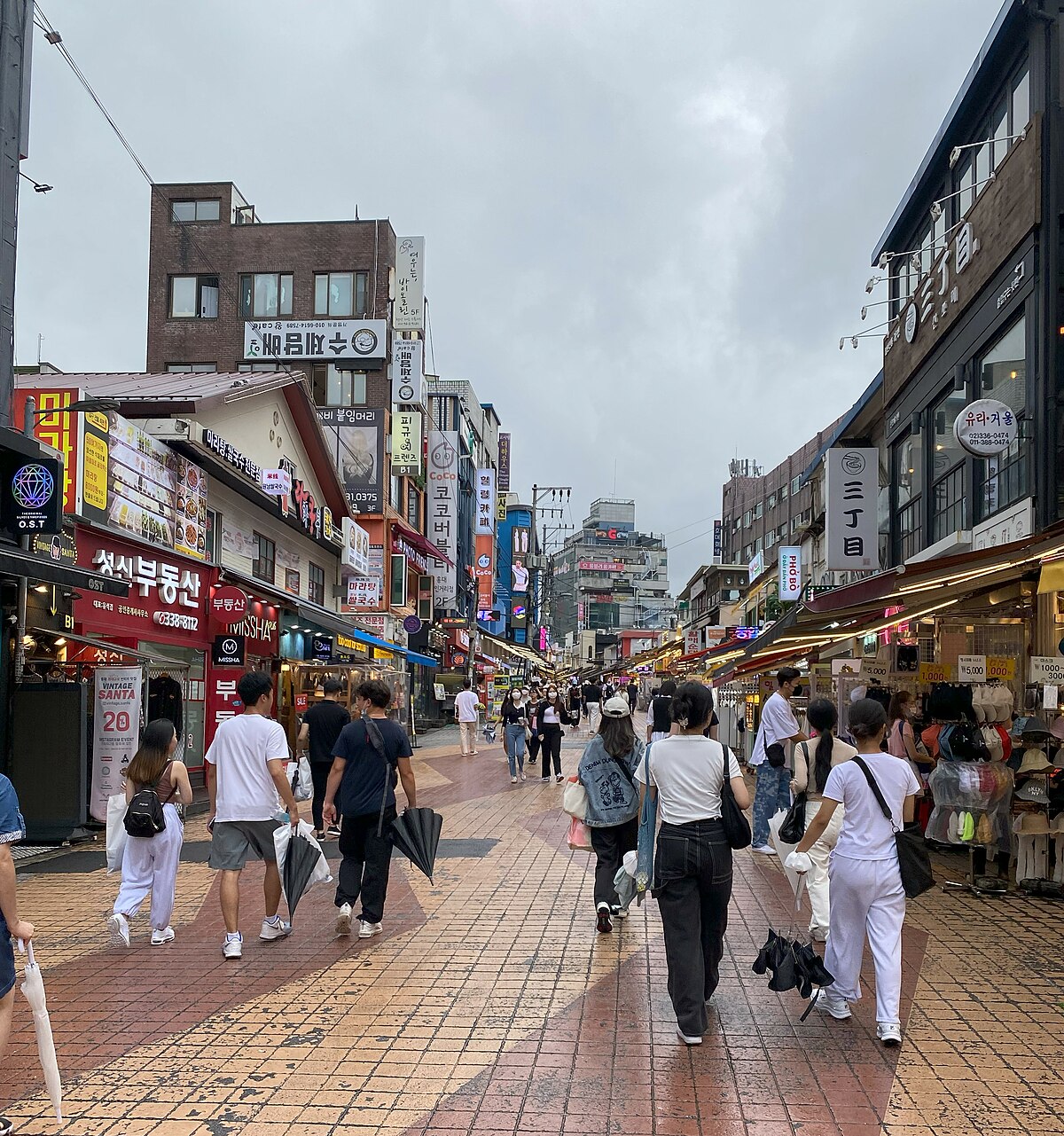
Hongdae: Seoul's Creative Youth Capital
Seoul's most vibrant arts and nightlife district, Hongdae pulses with indie music, street performances, quirky cafés, and the creative energy of Korea's top arts university.
Photo: Wikipedia Commons
What Is Hongdae?
Hongdae (홍대) is named after Hongik University (홍익대학교), one of Korea's most prestigious arts and design universities, located at the heart of the neighborhood. Over the decades, the creative energy of the university spilled into the surrounding streets, transforming the area into Seoul's premier hub for youth culture, indie arts, music, and entertainment. The neighborhood is a sensory feast — colorful murals adorn building walls, independent boutiques showcase local designers, street food vendors line the pavements, and the sound of live music drifts from clubs and buskers. It's a place where traditional Korean youth culture and global influences collide, producing something uniquely energetic and creative. Hongdae has expanded significantly over the years. What was once a small university neighborhood now encompasses the nearby areas of Hapjeong, Sangsu, and Yeonnam, each with its own distinct character. Together, they form one of Seoul's most exciting and diverse urban zones, attracting both local young Koreans and international visitors seeking authentic contemporary Seoul culture.
History & Significance
Hongdae's transformation from a quiet university neighborhood to a cultural powerhouse began in the 1990s when the first wave of indie music clubs and small galleries opened. As Hongik University's art and music departments grew in prominence, their students began creating an alternative cultural scene that consciously pushed back against the mainstream. The neighborhood became particularly famous in the late 1990s and early 2000s for its live music scene, with small clubs hosting performances that launched many careers in Korean indie music. This DIY artistic spirit attracted a broader creative community including fashion designers, graphic artists, and performance artists. Hongdae is also significant in the history of K-pop — many entertainment companies and idol training facilities are located in the broader Mapo district, and the neighborhood has long been where idol trainees spent their free time. Today it balances its indie roots with mainstream appeal, hosting both cutting-edge alternative events and popular tourist attractions.
What to See & Do
The famous Free Market (프리마켓) held on weekend afternoons in Hongdae Park is a great starting point — local artists sell handmade goods, independent designers showcase their work, and performers entertain the crowd. The market perfectly captures the neighborhood's creative DIY spirit. The Hongdae club scene is legendary. Venues like Club FF, Club Evans, and Thunderhorse Tavern host everything from Korean indie bands to electronic DJ sets most nights of the week. Entrance fees are typically reasonable, and the quality of performances is consistently high. For daytime exploration, the surrounding streets are packed with themed cafés — animal cafés, board game cafés, and concept cafés of every imaginable variety. The Hongdae area is also a shopping paradise for fashion-forward visitors. Streets like Yanghwa-ro are lined with independent boutiques and vintage shops selling pieces you won't find in mainstream malls.
- ·Browse the weekend Free Market in Hongdae Park for unique handmade goods
- ·Explore indie music clubs in the evening — Thursdays through Saturdays are best
- ·Visit unique themed cafés for only-in-Korea experiences
- ·Shop independent boutiques along the alleys behind the main street
- ·Watch street performances (busking) — especially lively on weekend evenings
Visitor Tips
Hongdae is accessible via Line 2 (Hongik University Station, Exit 9) or the Airport Railroad (AREX) which makes it a convenient first or last stop for travelers. The neighborhood comes alive in the late afternoon and evening — plan to arrive around 5-6 PM to catch the transition from day to night. The area is generally very safe and visitor-friendly, with most shop and restaurant staff accustomed to international customers. Many menus have English translations or photo menus. Weekends are extremely crowded; if you prefer a more relaxed atmosphere, Thursday or Friday evenings offer almost the same energy with smaller crowds. Budget travelers will find plenty of affordable eating options — from street food stalls to student-friendly restaurants.
Tips
- 💡Come on a Saturday afternoon to catch both the Free Market and the transition into the evening club scene
- 💡Explore the quieter Yeonnam-dong area (nearby) for cafés and restaurants without the crowds
- 💡Download Kakao Maps — many small venues and shops aren't on Google Maps but are on Kakao
Last updated: March 30, 2026
あなたも好きかもしれません
N Seoul Tower: Seoul's Most Iconic Landmark
Perched atop Namsan mountain, N Seoul Tower offers breathtaking 360-degree views of the city and has become a beloved symbol of Seoul's modern romance.
Gwangjang Market: Seoul's Oldest and Most Delicious Traditional Market
Founded in 1905, Gwangjang Market is Seoul's oldest market and most famous street food destination, renowned for bindaetteok, mayak gimbap, and yukhoe.
Gyeongbokgung: Seoul's Grand Joseon Palace
The largest and most magnificent of Seoul's Five Grand Palaces, Gyeongbokgung served as the heart of the Joseon Dynasty for over 500 years.