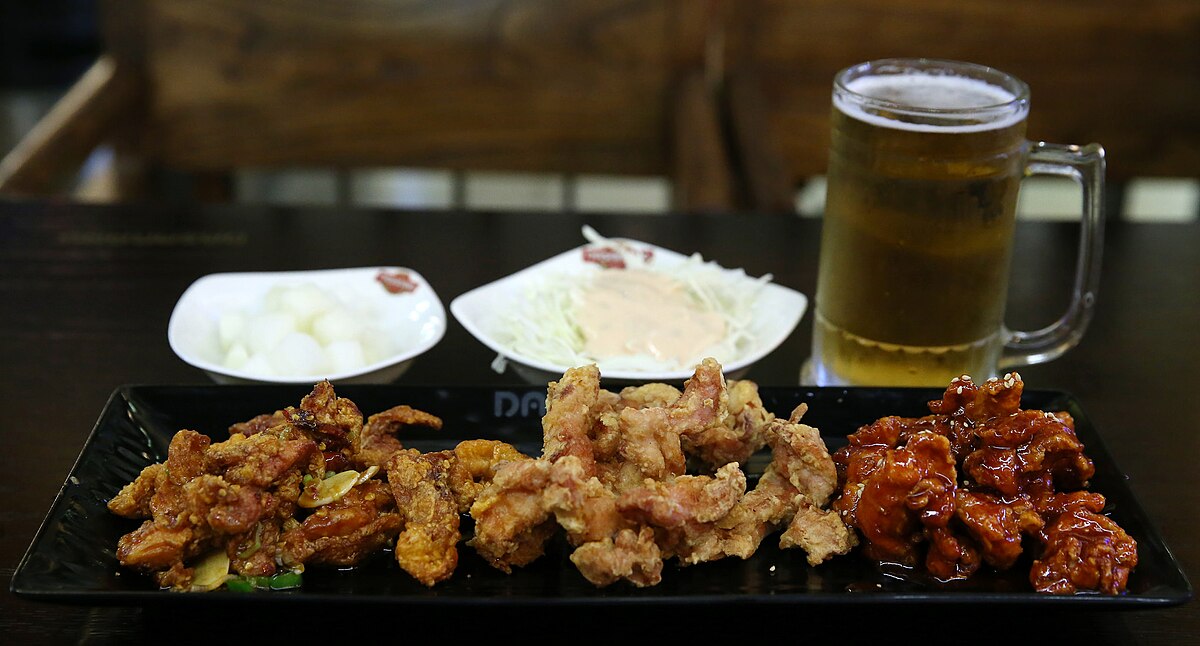
Chimaek: Why Korean Fried Chicken Is the World's Best
Korea has more fried chicken restaurants than McDonald's has locations worldwide. Here's the science and culture behind the crunch.
Photo: Wikipedia Commons
More Chicken Shops Than McDonald's Has Stores
South Korea has a population of 52 million people and approximately 39,789 fried chicken restaurants — more than McDonald's has locations in the entire world (43,477, but when the comparison was first made famous in 2013, Korea's ~36,000 already exceeded McDonald's then-35,429). The ratio works out to roughly one chicken shop per 1,300 Koreans. The average Korean eats about 26 whole chickens per year. Korean fried chicken is not a fast food category — it is a cultural institution. Annual franchise chicken revenues reached ₩8.78 trillion (approximately $6.4 billion) in 2024 across 700+ brands. The global Korean fried chicken restaurant market was valued at $6.2 billion in 2024 and is projected to reach $13.1 billion by 2033, growing at 8.7% annually. Korean-style chicken is the fastest-growing segment of the global fried chicken market (12.04% CAGR), outpacing all other styles. As of February 2026, 28 Korean chicken brands operate 1,809 locations across 28 countries — accounting for 39% of all Korean restaurant overseas locations. The United States hosts 555 of those locations. The trajectory is unambiguous.
- ·~39,789 chicken shops in Korea vs. ~43,477 McDonald's worldwide (per 52 million people)
- ·Average Korean eats 26 whole chickens per year
- ·Korean fried chicken: fastest-growing segment globally at 12.04% CAGR
- ·1,809 Korean chicken brand locations in 28 countries (2026)
- ·4-year consecutive winner: most popular Korean food among international consumers
The Science of the Perfect Crunch: Double Frying
Korean fried chicken's defining characteristic — a crunch that persists for hours, survives delivery, and shatters audibly — is not accidental. It is the product of a specific technique: double frying, combined with a thin potato starch coating rather than the thick breading used in American-style chicken. The first fry, at lower temperature, cooks the chicken through and sets the coating. The chicken rests. Then the second fry, at high heat, drives out the remaining moisture from the coating — producing the paper-thin, crackling shell that is the signature of the style. This two-stage process removes the moisture that makes fried chicken become soggy over time, which is why Korean fried chicken survives 30-minute delivery with its texture largely intact. American fried chicken, with its thick flour coating, absorbs steam from the hot chicken beneath and softens quickly — a catastrophic liability in delivery culture. The potato starch coating is crucial. It is much thinner than flour-based breading, and it fries to a delicate, lacquer-like hardness rather than a thick crust. Combined with the double-frying technique, it produces chicken that is simultaneously juicy inside and shatteringly crisp outside. Korean food scientists have spent decades refining this formula for industrial-scale application.
- 1
Thin Coating
Marinated chicken is coated in potato starch — thin and even, not thick batter.
- 2
First Fry (Low Heat)
Fry at lower temperature until cooked through. Sets the coating, cooks the meat.
- 3
Rest
Remove and rest briefly. Steam escapes, surface moisture evaporates.
- 4
Second Fry (High Heat)
Return to hot oil at high temperature. Drives out remaining moisture. Creates the crunch.
- 5
Sauce (Optional)
Coat in yangnyeom (sweet-spicy sauce) or serve plain (hur-i-da). Both are correct.
Chimaek Culture: Chicken + Beer
Chimaek (치맥) combines chi from chicken (치킨) and maek from maekju (맥주, beer). It is consumed as a unit — ordering one without the other is unusual and slightly puzzling to Koreans. The lightweight, carbonated Korean lager cuts through the fat of fried chicken and refreshes the palate between bites. It is one of the most purposeful food pairings in Korean cuisine. The cultural turning point for chimaek was the 2002 FIFA World Cup, when millions of Koreans gathered in public spaces to watch Korea's unexpected run to the semifinals. The red-clad crowds eating chicken and drinking beer around giant screens created an image — and a habit — that became deeply embedded in Korean sporting culture. Before the World Cup, Korea had roughly 10,000 chicken restaurants. In the years following, that number rose to 25,000. The television drama My Love from the Star (2013–2014) internationalized chimaek through a single scene: protagonist Cheon Song-yi, played by Jun Ji-hyun, declaring that nothing matches chicken and beer on a snowy day. Chinese viewers drove immediate enormous demand for Korean-style chicken. Wait times at Korean chicken restaurants in China reached three hours. Korean tourism rose 34% as fans sought the authentic experience.
Yangnyeom vs. Huraideu: Choosing Your Chicken
Korean fried chicken comes in two fundamental styles, and most restaurants serve both — often ordered together as a half-and-half (반반, banban) plate. Huraideu (후라이드) is plain double-fried chicken, served without sauce. This is the purist's choice: the entire experience is about the coating's texture, the quality of the fry, and the flavor of the chicken itself. In Korea, huraideu is often considered the more discerning order — it strips away everything except technical execution. Yangnyeom (양념) means 'seasoned' in Korean, but the sauce is specific: a thick, vivid red-orange glaze combining gochujang (red pepper paste), garlic, soy sauce, and sugar. It is sweet, spicy, sticky, and deeply flavorful. The coating on yangnyeom chicken softens slightly from the sauce, trading some crunch for the amplified flavor. This is the version that photographs most dramatically and tends to win over international customers on first encounter. The half-and-half order (banban) exists precisely to resolve this tension, allowing diners to experience both styles in a single sitting. For first-time visitors, this is the universally recommended approach.
- ·Huraideu (후라이드): plain, double-fried — technical purity, maximum crunch
- ·Yangnyeom (양념): sweet-spicy red sauce — bold flavor, spectacular appearance
- ·Banban (반반): half-and-half — the correct first order for newcomers
- ·Order delivery: chimaek can be delivered to Han River park in Seoul within 30 minutes
- ·Daegu hosts an annual Chimaek Festival every August — a legitimate international event
Tips
- 💡Order banban (반반, half-and-half) your first time — huraideu and yangnyeom taste completely different and you want both
- 💡Eat it immediately — Korean fried chicken is engineered for freshness and is best within 15 minutes of delivery
- 💡Pairing: Korean beer (Cass or Hite) is traditional; soju mixed with beer (somaek) is the elevated version
- 💡In Seoul, you can order chimaek delivery to Han River park — eat on the grass while watching the city. This is mandatory.
- 💡BBQ Chicken, Kyochon, Bonchon, and BHC are the big international brands — all available outside Korea now
최종 수정: 2026년 3월 30일
이런 글도 있어요
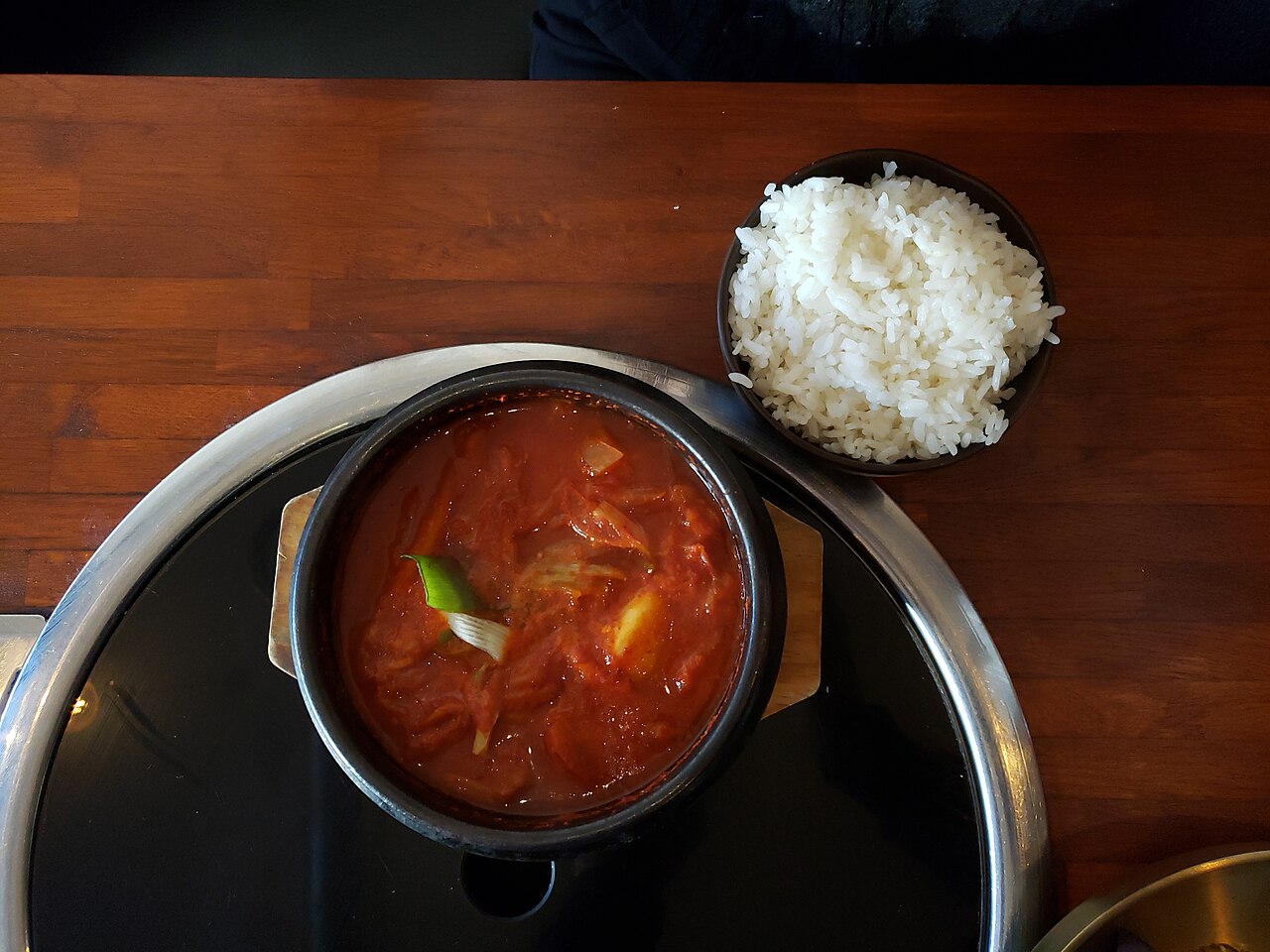
Kimchi Jjigae: Korea's Most Comforting Stew
Bubbling hot, deep red, and unmistakably Korean — kimchi jjigae is the stew that every Korean home smells like on a cold evening.
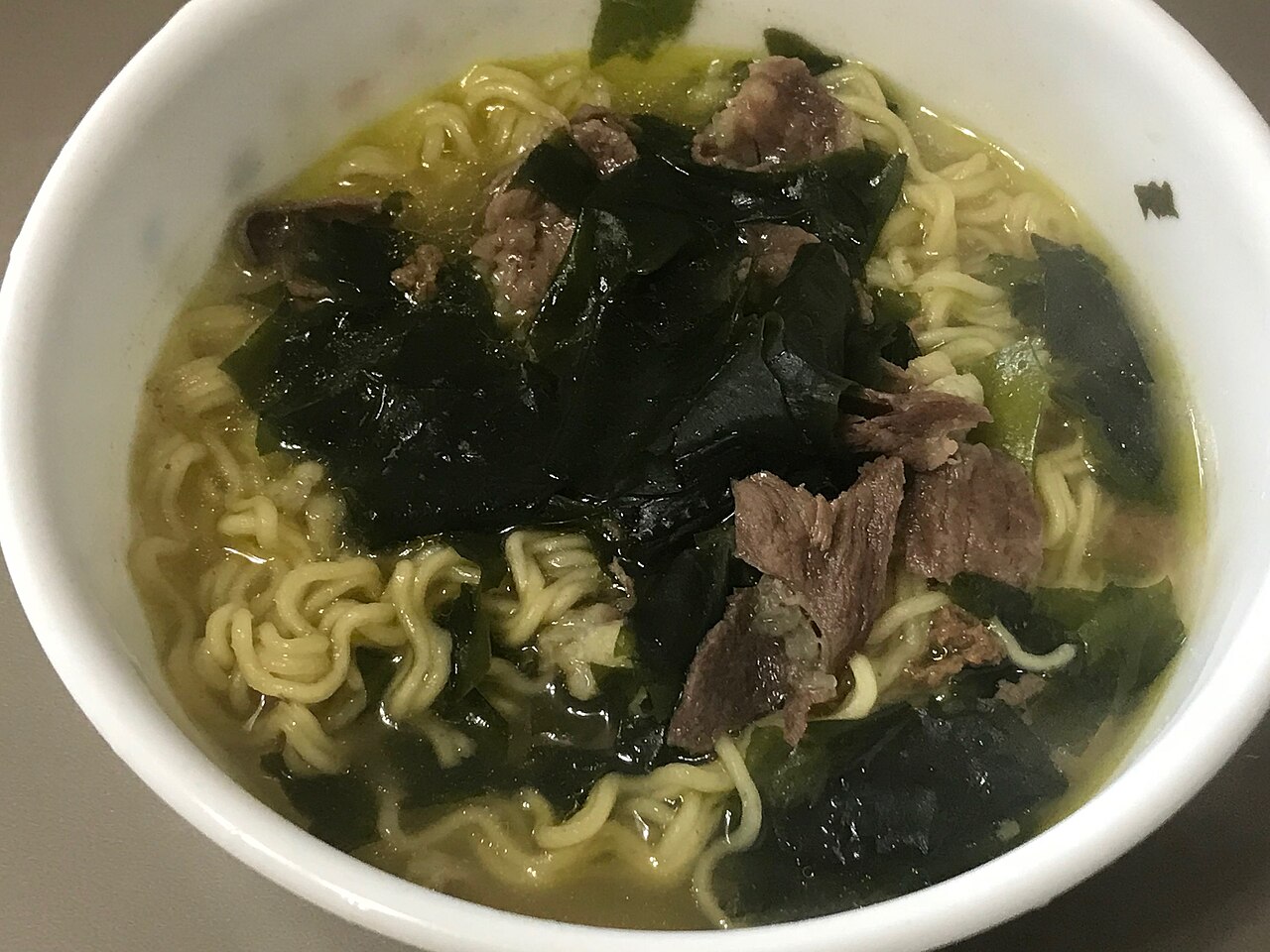
Miyeok-guk: The Birthday Soup That Is Really About Your Mother
Miyeok-guk is the seaweed soup every Korean eats on their birthday — a tradition that began as postpartum recovery food and became an annual act of gratitude to one's mother.
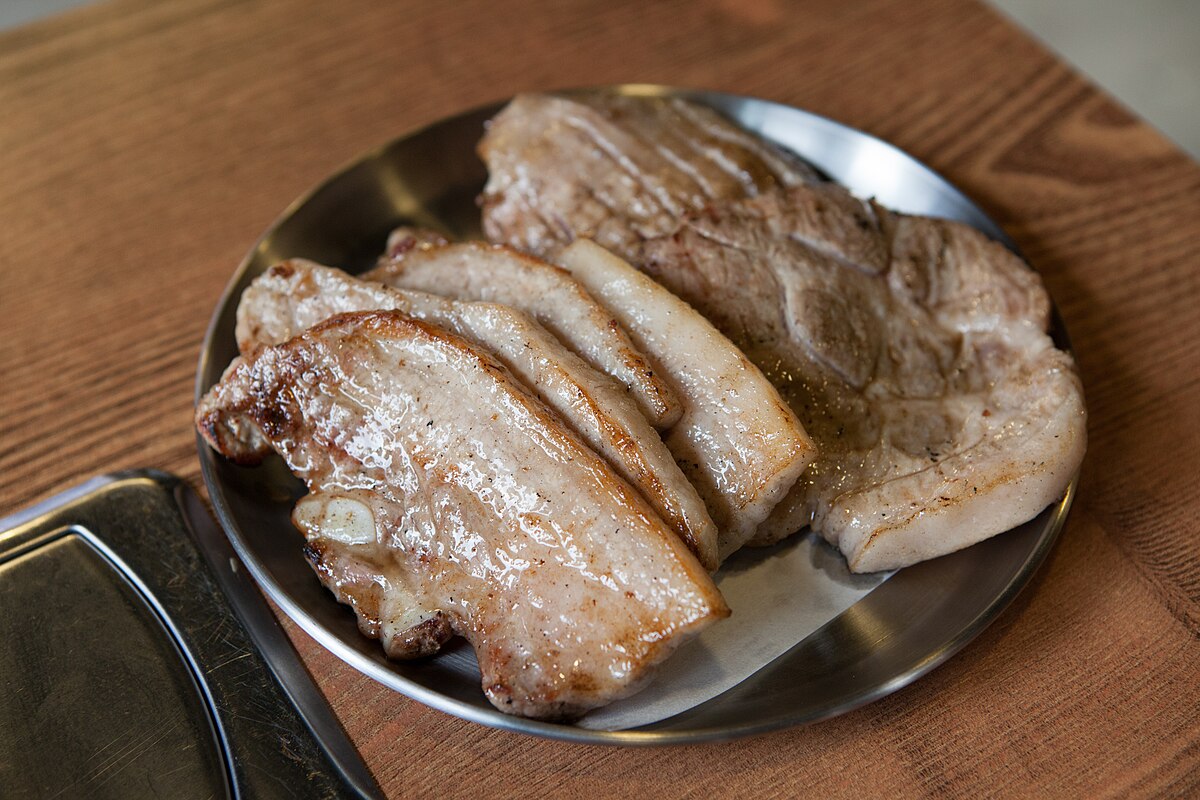
Samgyeopsal: Korea's Ultimate BBQ Experience
Discover why samgyeopsal — grilled pork belly — is the heart of Korean dining culture and a must-try experience.