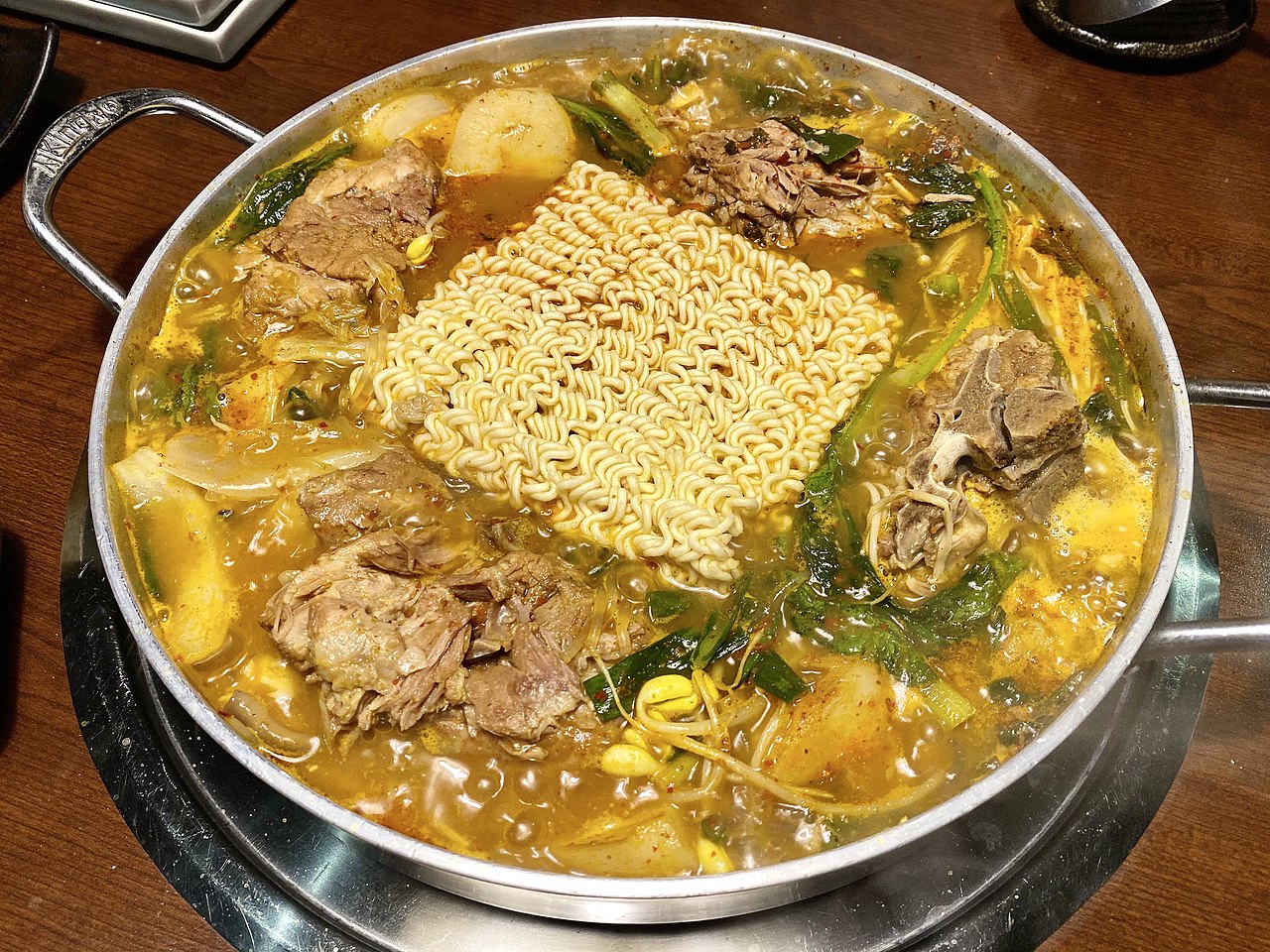
Gamja-tang: Pork Spine and Potato Stew
Gamja-tang is a hearty, spicy Korean stew made with pork neck bones and potatoes simmered in a bold, deeply seasoned red broth — a late-night staple.
Photo: Wikipedia Commons
What Is Gamja-tang?
Gamja-tang (감자탕) is a robust, spicy Korean stew that might surprise first-time visitors: the name contains 'gamja' (potato), but the star of the dish is actually meaty pork neck bones (deungppyeo) that are simmered for hours in a deeply seasoned broth made with doenjang (soybean paste), gochugaru (red chili flakes), gochujang, and various aromatics. Large potato chunks are simmered in the rich red broth until they become creamy and have absorbed all the flavors of the stew. Other common additions include perilla leaves (kkaennip), cabbage kimchi, green onions, and sometimes sesame leaves. The bones are typically pre-boiled and cleaned to remove impurities before the main stewing begins. The dish is known for being affordable and intensely satisfying — diners gnaw the tender pork off the bones and soak up the fiery broth with rice.
History & Origins
The name 'gamja-tang' is somewhat debated among food historians. One theory holds that 'gamja' in this context does not refer to potato at all, but to the Korean word for a specific part of the pork spine (the neck bone), which was called 'gamja' in some regional dialects. Potatoes were added later as the dish evolved. The dish became widespread during the industrial era, when pork neck bones were an extremely cheap cut that workers and laborers could afford. Gamja-tang restaurants became associated with blue-collar neighborhoods, market districts, and late-night eating culture — places where hard-working people came for a filling, inexpensive, and warming meal after a long shift. Today, gamja-tang is enjoyed by all social classes and is particularly popular as late-night food, often eaten after drinks (anju) in the early hours of the morning.
How Koreans Eat It
Gamja-tang is typically served in a large communal pot, shared among two to four diners. It is a classic late-night restaurant dish and is especially popular as a meal to have after a night of drinking.
- ·Use your hands or a spoon to pull the tender meat off the pork neck bones — this is perfectly normal and expected
- ·Order fried rice (볶음밥, bokkeum-bap) to be made in the pot after you finish the stew — the remaining sauce mixed with rice is spectacular
- ·Add perilla leaves (kkaennip) at the end for a fragrant, herbal note that cuts through the richness
- ·Pair with cold draft beer or soju for the classic Korean late-night experience
Cultural Significance
Gamja-tang is deeply associated with Korean late-night culture and the social ritual of eating after drinking. In Korean cities, gamja-tang restaurants often stay open 24 hours and are busiest between midnight and 4 AM, serving groups who have finished a night out and want a final, substantial meal. The dish also carries working-class roots and a sense of robust, unpretentious eating — it is not fine dining, but it is honest and satisfying. Many Koreans have strong nostalgic associations with gamja-tang from their youth or their time living in cities. Its bold, complex flavors make it one of the dishes that Korean food enthusiasts miss most when living abroad.
Tips
- 💡The best gamja-tang experience involves ordering it at a late-night restaurant after a long evening — this is how locals eat it
- 💡Ask for extra perilla leaves (kkaennip) — they are usually included on request and transform the flavor of the broth
- 💡Do not miss the fried rice (bokkeum-bap) made in the pot at the end — most restaurants offer this and it is not to be skipped
최종 수정: 2026년 4월 1일
이런 글도 있어요
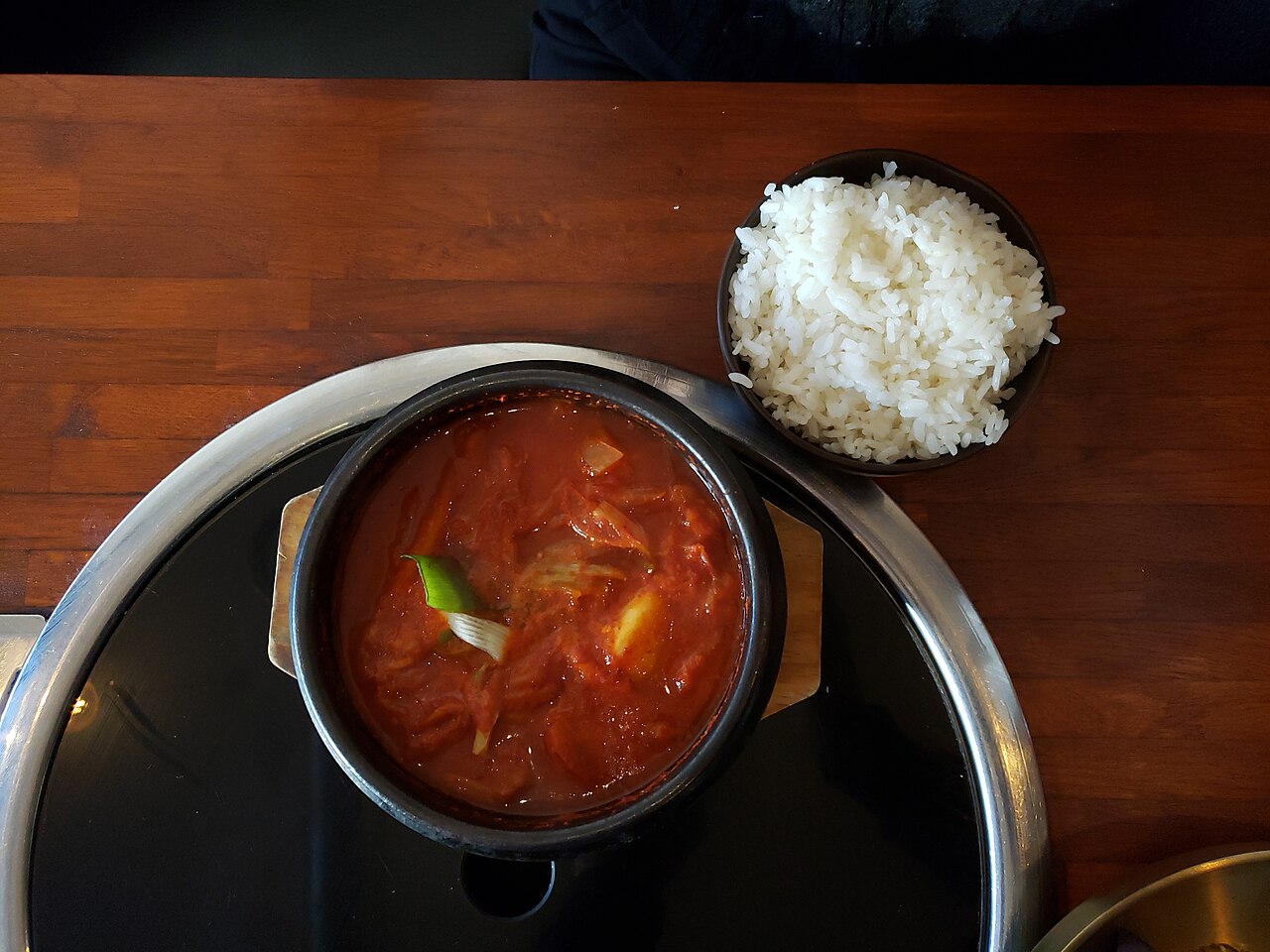
Kimchi Jjigae: Korea's Most Comforting Stew
Bubbling hot, deep red, and unmistakably Korean — kimchi jjigae is the stew that every Korean home smells like on a cold evening.
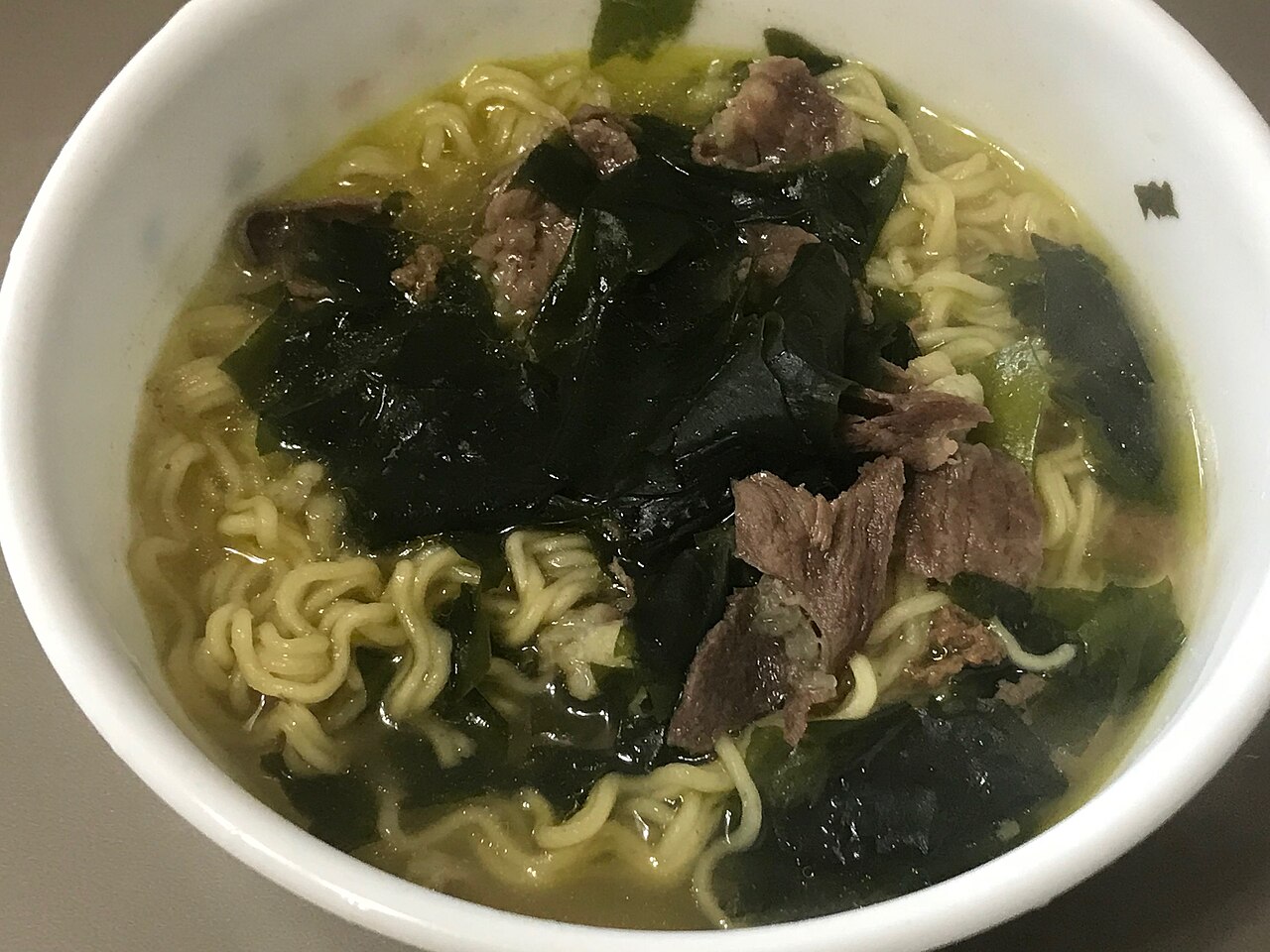
Miyeok-guk: The Birthday Soup That Is Really About Your Mother
Miyeok-guk is the seaweed soup every Korean eats on their birthday — a tradition that began as postpartum recovery food and became an annual act of gratitude to one's mother.
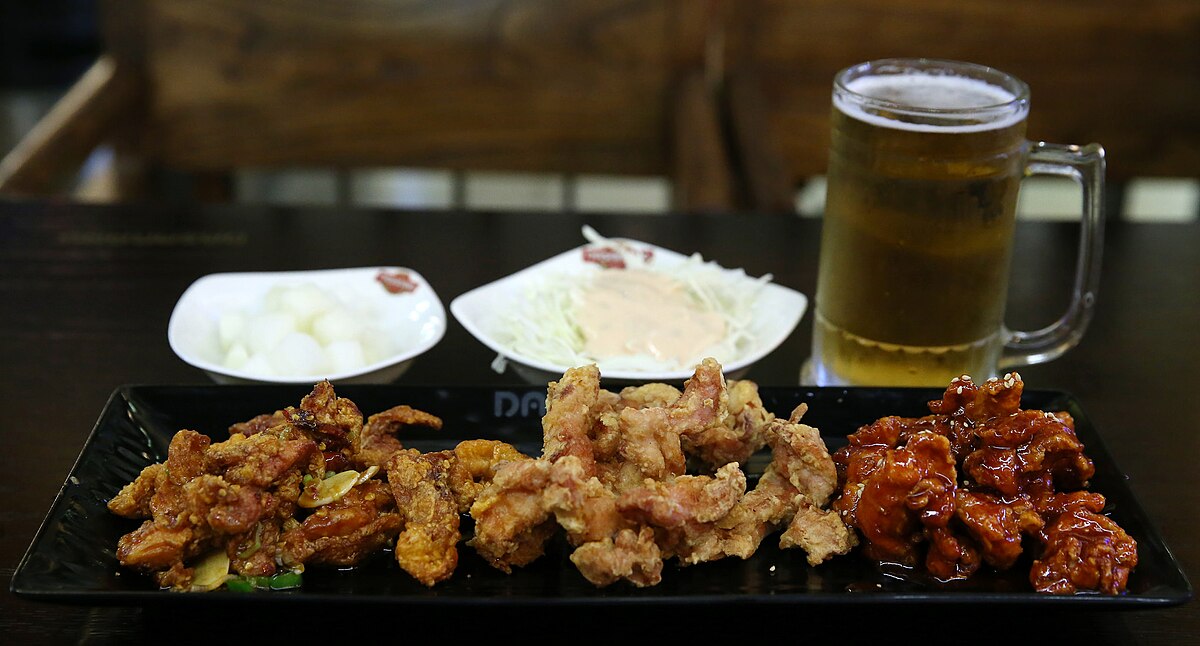
Chimaek: Why Korean Fried Chicken Is the World's Best
Korea has more fried chicken restaurants than McDonald's has locations worldwide. Here's the science and culture behind the crunch.