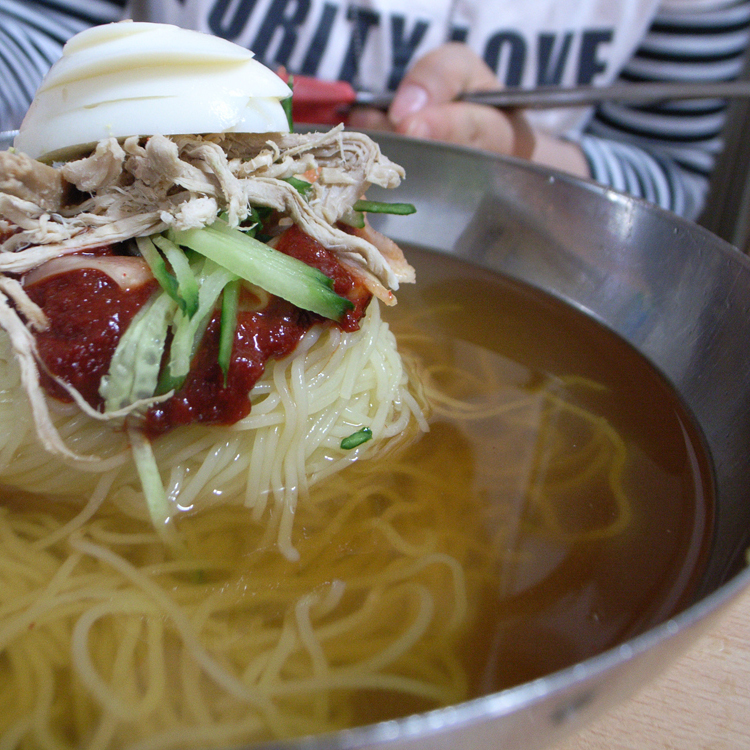
Milmyeon: Busan's Cold Noodle Born from War
Busan's unique cold wheat noodle dish — a survivor's creation from the Korean War that became the city's proudest food identity.
Photo: Wikipedia Commons
What Is Milmyeon?
Milmyeon (밀면, literally 'wheat noodles') is a cold noodle dish indigenous to Busan, Korea's second-largest city. It is prepared in two primary styles: mul-milmyeon (물밀면), served in a cold, savory broth; and bibim-milmyeon (비빔밀면), dressed in a sweet-spicy gochujang sauce. Toppings typically include thin slices of boiled pork, a half hard-boiled egg, julienned cucumber, and braised radish. The noodles that distinguish milmyeon from its cousin naengmyeon are made from wheat flour (sometimes mixed with sweet potato starch) rather than buckwheat. This gives them a somewhat different character: thinner, slightly more elastic, and with a gentler flavor than the earthier buckwheat noodles. The broth for mul-milmyeon is typically made from a combination of pork and beef bones, producing a deeper, richer base than the lighter dongchimi (radish kimchi water) broth common in Pyongyang naengmyeon. Milmyeon is distinctly a Busan food — rarely found in authentic form outside the city. For Busan residents, it is a source of local pride and culinary identity, positioned as their city's answer to Seoul's naengmyeon culture.
History & Origins
Milmyeon's origin story is one of the most poignant in Korean culinary history, directly tied to the trauma of the Korean War (1950–1953). When North Korean forces invaded the South in June 1950, millions of civilians fled south. Busan, as the southernmost port city of the Korean peninsula, became the country's wartime capital and the final refuge for roughly 1.5 million refugees — more than doubling the city's population in a matter of months. Among the displaced were large numbers of North Koreans from the Pyongyang and Hamhung regions who had been accustomed to eating naengmyeon. In Busan, the buckwheat flour needed for traditional naengmyeon noodles was expensive and scarce. However, American military aid programs were distributing wheat flour in large quantities — the same flour being used to make ramyeon and other wartime staples. Refugee cooks began adapting their naengmyeon recipes to use wheat flour, working through the textural and flavor differences to create a comparable cold noodle experience with the available ingredients. The resulting dish — milmyeon — retained the cold noodle structure and the spirit of its northern ancestor while establishing its own distinct identity through the richer pork-beef broth and the more elastic wheat noodle texture. Over the following decades, milmyeon was refined and formalized by Busan restaurants, eventually becoming codified as the city's signature cold noodle dish.
How Koreans Eat It
Eating milmyeon follows similar conventions to naengmyeon, with some Busan-specific customs.
- ·The scissors first: Before eating, use the scissors provided to cut the noodles. Milmyeon noodles are long — cutting them into 10–15 cm lengths makes them manageable.
- ·Plain first, season second: Taste the broth or sauce without adding anything, then adjust with rice vinegar (for acidity) and Korean mustard (for sharpness). This approach reveals the character of the chef's preparation.
- ·Mul vs. bibim choice: Mul-milmyeon (broth style) is more subtle and refreshing; bibim-milmyeon (mixed spicy) is more assertive and immediately satisfying. First-time visitors often prefer the bibim style.
- ·Sugyuk pairing: Most milmyeon restaurants also serve sugyuk (수육, boiled pork slices) as a side dish — the mild, fatty pork is an excellent complement to the cold noodles.
- ·Dongchimi broth shot: Some Busan milmyeon restaurants serve a small cup of the restaurant's dongchimi brine as a digestive after the meal — a custom borrowed from naengmyeon culture.
Cultural Significance
Milmyeon is more than a regional specialty — it is an edible archive of Korean history. Every bowl carries the DNA of displacement, adaptation, and the human capacity to create meaning and comfort in the most difficult circumstances. The refugees who invented it were trying to approximate home in an alien environment using the only materials available to them. That their improvisation became a culinary treasure cherished by an entire city three generations later is a story that resonates deeply. For Busan residents, milmyeon is a marker of local identity and a quiet assertion of independence from Seoul's food culture dominance. While Seoul Koreans eat naengmyeon, Busan Koreans eat milmyeon — and the distinction is a source of civic pride. The city hosts milmyeon festivals, milmyeon restaurant competitions, and milmyeon documentaries with the same seriousness applied to any significant cultural heritage. The most famous milmyeon restaurant, Gami Milmyeon (가미랑밀면) in Busan's Seomyeon district, has been operating for decades and regularly attracts visitors from across Korea who make the journey specifically to eat there. Sitting in one of these old-guard establishments, eating milmyeon while surrounded by locals doing the same, is as close as a visitor can come to experiencing Busan's living food history.
Tips
- 💡Milmyeon is a Busan-specific dish — the most authentic versions are found only in Busan, particularly in the Seomyeon and Haeundae neighborhoods.
- 💡The Gami Milmyeon area in Seomyeon is the most famous milmyeon district — expect queues at lunchtime.
- 💡If you enjoy naengmyeon but find the buckwheat noodles challenging, milmyeon's wheat noodles are more approachable and the broth is typically more robust.
최종 수정: 2026년 3월 30일
이런 글도 있어요
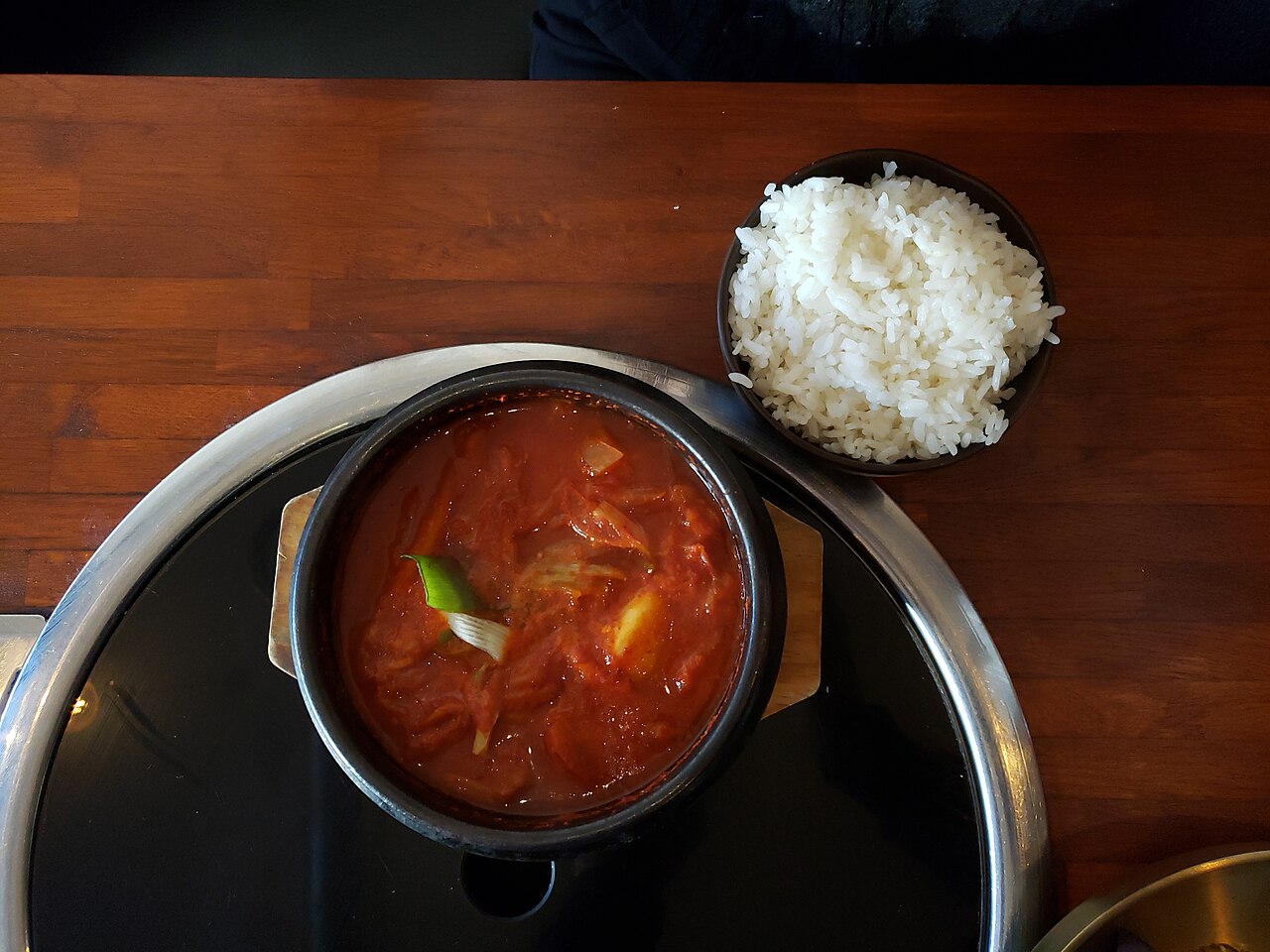
Kimchi Jjigae: Korea's Most Comforting Stew
Bubbling hot, deep red, and unmistakably Korean — kimchi jjigae is the stew that every Korean home smells like on a cold evening.
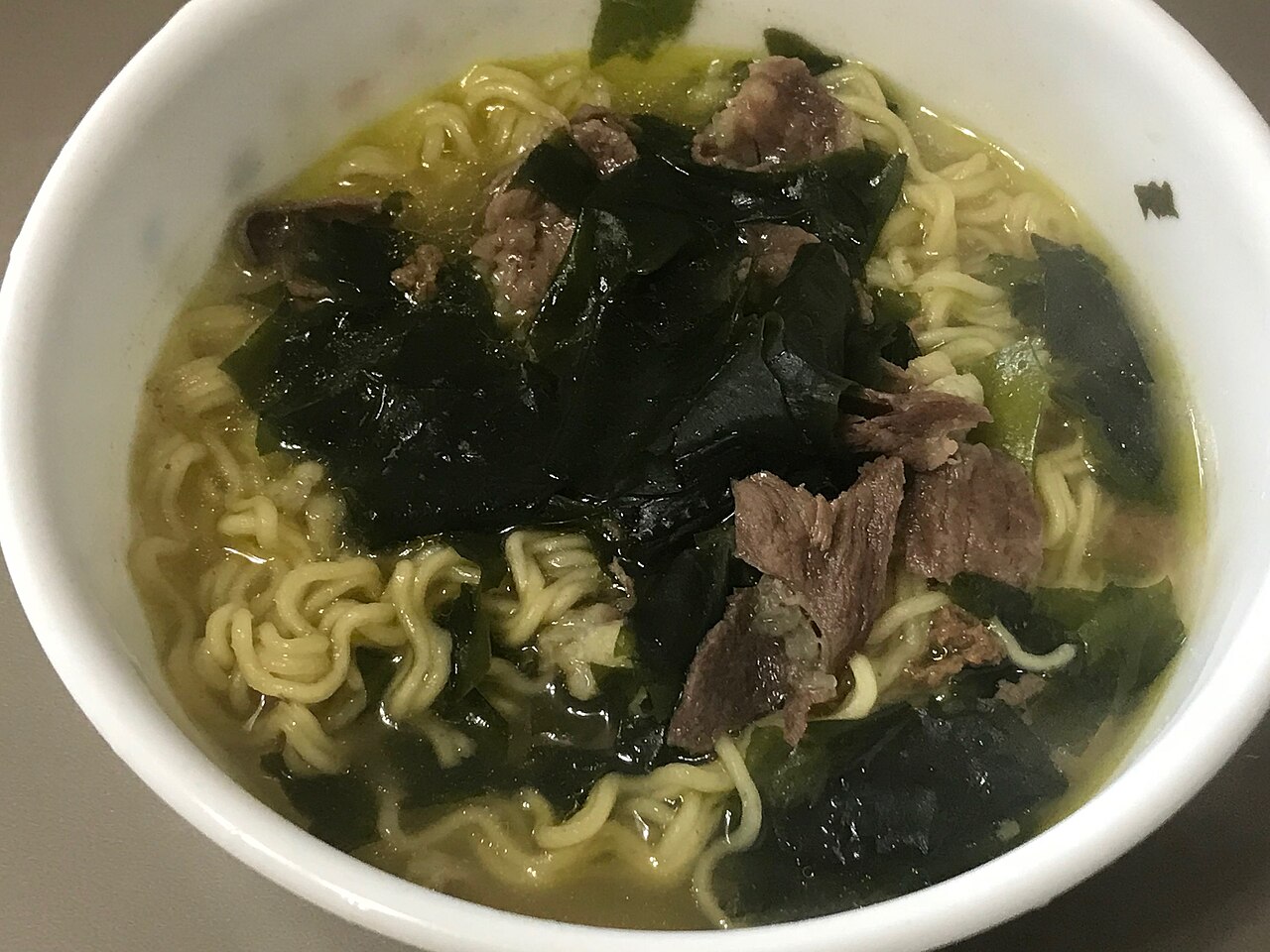
Miyeok-guk: The Birthday Soup That Is Really About Your Mother
Miyeok-guk is the seaweed soup every Korean eats on their birthday — a tradition that began as postpartum recovery food and became an annual act of gratitude to one's mother.
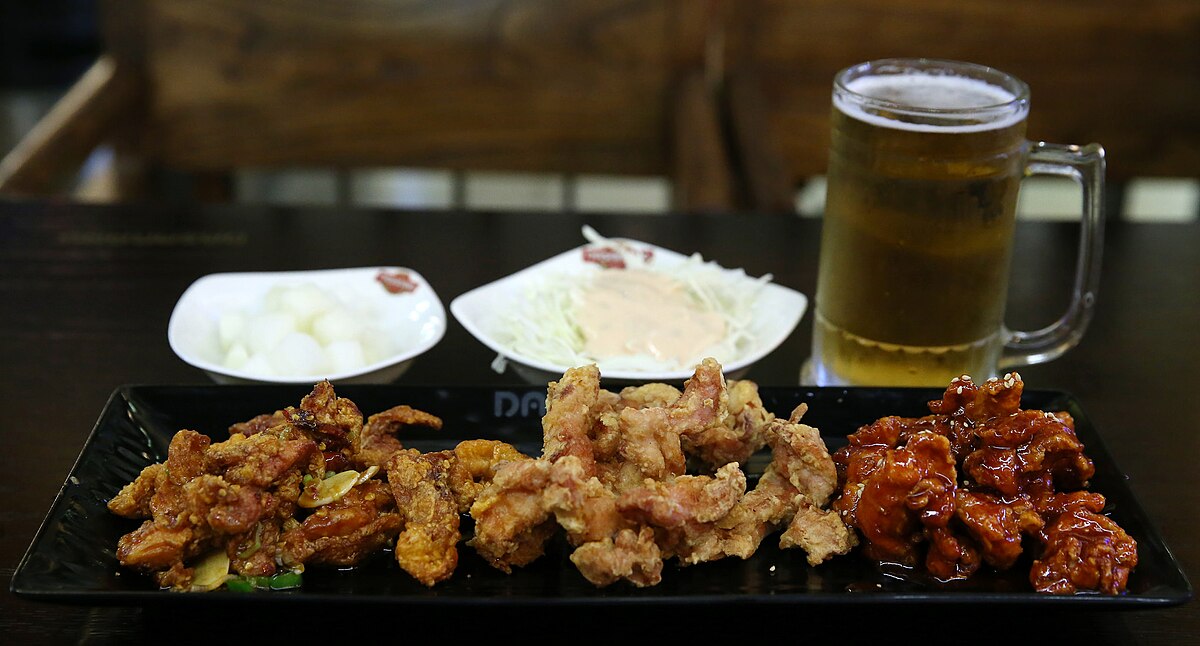
Chimaek: Why Korean Fried Chicken Is the World's Best
Korea has more fried chicken restaurants than McDonald's has locations worldwide. Here's the science and culture behind the crunch.