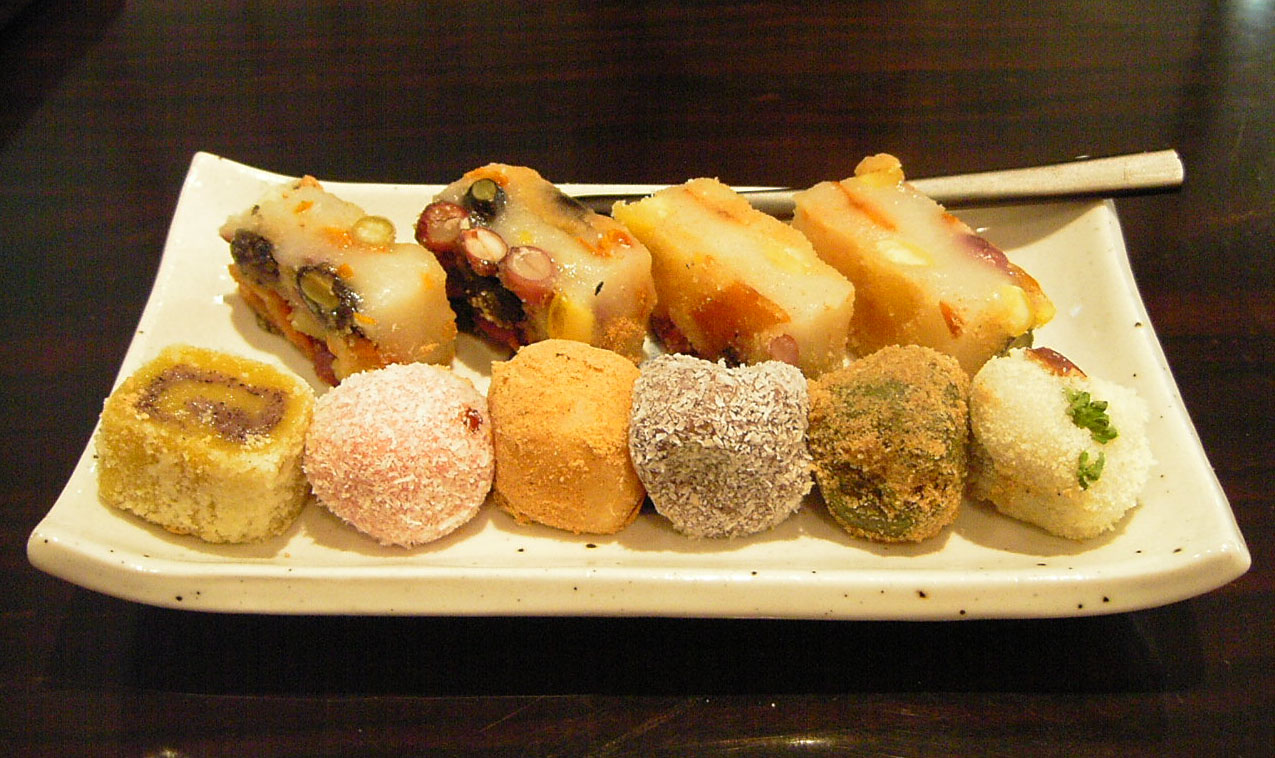
Tteok: Korea's Ancient Rice Cake Tradition
Chewy Korean rice cakes in over 200 varieties, present at every major life ceremony from birth to ancestral rites.
Photo: Wikipedia Commons
What Is Tteok?
Tteok (떡) is the Korean term for rice cakes — a broad category of foods made by steaming, boiling, or pounding glutinous or non-glutinous rice flour into dense, chewy forms. Unlike Western cakes or Chinese mochi, Korean tteok encompasses an enormous range of textures, shapes, colors, and flavors, from savory to sweet, from small bite-sized pieces to large ceremonial wheels. The defining characteristic of tteok is its texture: a satisfying chewiness (쫄깃함, jjolgitham) that Koreans consider one of the most pleasurable qualities a food can have. This texture comes from the starch structure of glutinous rice (찹쌀, chapssal), which creates a sticky, elastic network when cooked. Non-glutinous rice (멥쌀, mepssal) produces a slightly firmer, less sticky version used in different tteok types. More than 200 named varieties of tteok exist in Korean culinary tradition, each associated with specific seasons, regions, and occasions. The diversity reflects how deeply rice has been woven into Korean life across millennia — tteok was not just food, but a medium for marking time, honoring the dead, celebrating new life, and strengthening community bonds.
History & Origins
The origins of tteok in Korea trace back to the Bronze Age, with archaeological evidence of rice cultivation and rice processing tools discovered across the Korean peninsula dating to at least the first millennium BCE. By the Three Kingdoms period (57 BCE–668 CE), rice cakes were well-documented as ceremonial offerings and celebratory foods. During the Goryeo dynasty (918–1392) and into the Joseon period (1392–1897), tteok-making evolved into a sophisticated culinary art with regional specializations. Court kitchens employed dedicated tteok specialists, and elaborate tteok were prepared for royal banquets, ancestral rites, and diplomatic events. Regional styles developed in parallel — each province and city developed its own signature varieties based on local agricultural products and cultural practices. The 20th century brought both challenges and revival. As Western bread and modern snacks proliferated, traditional tteok consumption declined in everyday contexts. However, a revival movement began in the 1990s and accelerated in the 2010s, with younger generations rediscovering tteok through creative modern interpretations — filled tteok (크림떡, cream tteok), tteok cafes, and tteok cake shops that reimagine traditional forms for contemporary tastes.
Essential Tteok Varieties
The world of Korean tteok is vast, but certain varieties are foundational to understanding the category.
- ·Garaetteok (가래떡): Long, cylindrical white rice tubes — the base ingredient for tteokguk (rice cake soup eaten on Lunar New Year) and tteokbokki (spicy stir-fried rice cakes). Chewy and neutral in flavor.
- ·Injeolmi (인절미): Glutinous rice cake pounded smooth and rolled in roasted soybean powder (kong-garu). Dense, sticky, nutty-sweet — one of the most universally beloved tteok varieties.
- ·Songpyeon (송편): Half-moon shaped rice cakes with sweet fillings (sesame, chestnut, red bean) steamed over pine needles during Chuseok (Korean Thanksgiving). The pine steam imparts a subtle fragrance.
- ·Sirutteok (시루떡): Large steamed rice cake made in a special siruok steamer, typically layered with red bean paste. This is the tteok given to neighbors when moving to a new home.
- ·Chapssaltteok (찹쌀떡): Glutinous rice cake filled with sweet red bean paste — the Korean version of Japanese mochi, often served with tea.
- ·Modern cream tteok (크림떡): Contemporary filled tteok with whipped cream, strawberry, matcha, or Oreo fillings — a recent innovation popular in tteok cafes and gift shops.
Cultural Significance
Tteok's presence in Korean life extends far beyond nutrition. It is a ritual food — one that marks the passage of time and signals important transitions. When a Korean baby reaches its first birthday (doljanchi), a large spread of multicolored tteok is prepared as a centerpiece of the celebration, with each color symbolizing a different blessing. A person's 60th birthday (hwangap), traditionally marking a full cycle of the sixty-year calendar, is celebrated with elaborate tteok offerings. When a Korean family moves to a new home, it is customary to prepare sirutteok (steamed red bean rice cake) and distribute it to neighbors — the red bean color is believed to ward off evil spirits and attract good fortune to the new household. Similarly, when a business opens, tteok is often sent to neighbors and acquaintances as an announcement and a gesture of goodwill. 'Tteok doliigi' (떡 돌리기, distributing tteok) remains a living custom in modern Korean cities. The act of sharing tteok encodes a philosophy of communal generosity — the idea that important transitions in life should be shared with and celebrated by those around you, not experienced alone. In this sense, tteok is as much a social technology as it is a food.
Tips
- 💡Gwangjang Market in Seoul has excellent traditional tteok stalls where you can try injeolmi and other varieties freshly made.
- 💡Modern tteok cafes in Insadong and Bukchon Hanok Village offer creative contemporary versions that are excellent for Instagram and for easing into the unfamiliar texture.
- 💡Tteok hardens and dries out quickly at room temperature — eat purchased tteok the same day or store it in the refrigerator and warm briefly in a microwave before eating.
최종 수정: 2026년 3월 30일
이런 글도 있어요
Kimchi Jjigae: Korea's Most Comforting Stew
Bubbling hot, deep red, and unmistakably Korean — kimchi jjigae is the stew that every Korean home smells like on a cold evening.
Miyeok-guk: The Birthday Soup That Is Really About Your Mother
Miyeok-guk is the seaweed soup every Korean eats on their birthday — a tradition that began as postpartum recovery food and became an annual act of gratitude to one's mother.
Chimaek: Why Korean Fried Chicken Is the World's Best
Korea has more fried chicken restaurants than McDonald's has locations worldwide. Here's the science and culture behind the crunch.