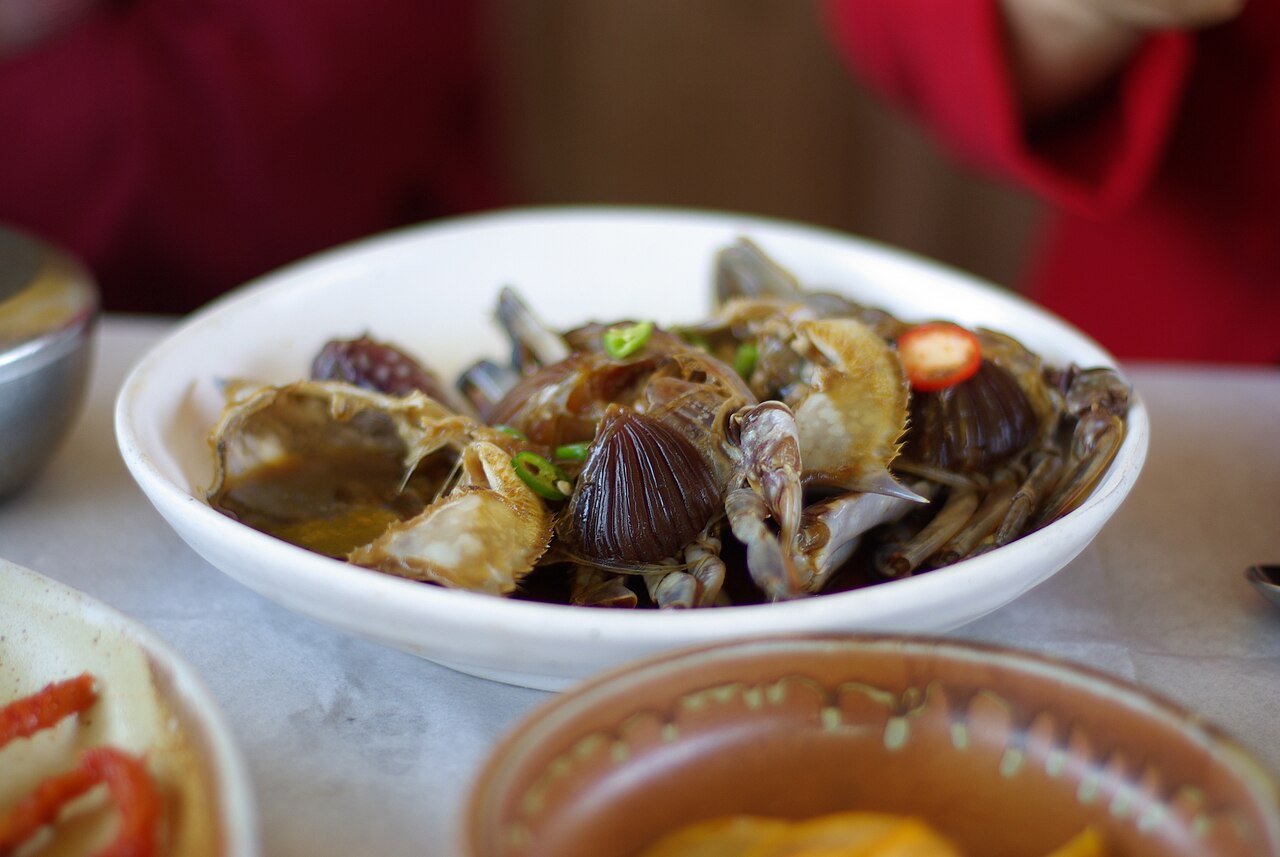
Andong Salted Mackerel: Korea's Most Famous Preserved Fish
Andong ganjogodeungeo is a heavily salt-cured mackerel that was historically transported inland from the coast to Andong, developing a unique fermented flavor that has made it one of Korea's most celebrated preserved fish dishes.
Photo: Wikipedia Commons
What Is Andong Ganjogodeungeo?
Andong ganjogodeungeo (안동 간고등어) is mackerel (고등어, godeungeo) that has been very heavily salted (간, gan, refers to salt seasoning) and traditionally transported from the East Sea coastal city of Yeongdeok to the inland city of Andong. The journey of several days by foot or cart in pre-modern Korea required heavy salting to prevent the fish from spoiling. This long salting period, combined with the curing process during transport, produced a fish with a concentrated, deeply savory, slightly fermented flavor unlike fresh mackerel. The fish is typically grilled (구이) or pan-fried, producing a crispy, deeply golden skin and firm, intensely flavored flesh. The high salt content means the fish is eaten in small quantities alongside plain white rice, which balances the saltiness. Andong ganjogodeungeo is considered one of the best examples of Korean food preservation culture — where necessity created an extraordinary flavor. Today, Andong ganjogodeungeo is available at specialty shops in Andong and through online orders. Some producers still follow traditional salting methods, though refrigerated transport has made the months-long road journey obsolete. The product is sold whole or in fillets, vacuum-packed for freshness.
History & Origins
The history of Andong ganjogodeungeo is inseparable from the geography of Korea. Andong is located about 120 kilometers inland from the East Sea, and before modern roads and refrigeration, transporting fresh fish there was nearly impossible. The solution was heavy salting: mackerel caught at Yeongdeok Port were immediately packed in salt, loaded onto carriers (등짐꾼, back-carrier laborers), and walked inland along the mountain passes. The Yeongdeok-Andong salt-fish road was one of the most important trade routes in Gyeongsang Province. By the time the fish arrived in Andong after 2-3 days of walking, the salt had thoroughly cured it, and a mild fermentation had begun, adding depth of flavor. Andong's elite yangban (noble scholarly) families developed a particular appreciation for this deeply seasoned mackerel, and it became a prestigious food item associated with the city's wealthy households. The tradition was recognized as an important part of Andong's intangible cultural heritage, and efforts have been made to document and preserve the original salting and transport methods.
How Koreans Eat It
Andong ganjogodeungeo is a side dish meant to complement plain rice, not to be eaten alone.
- ·Grill the mackerel over medium heat until the skin is very crispy and slightly charred — the caramelization of the salted skin is half the pleasure
- ·Eat small pieces of fish with large bites of plain steamed rice (공기밥) — the saltiness of the fish seasons the otherwise bland rice perfectly
- ·Pair with doenjang guk (된장국, fermented soybean paste soup) as a mitigating soup course to balance the fish's intense saltiness
- ·Squeeze fresh lemon or yuzu over the fish just before eating if available — the acidity cuts through the salt and lifts all the flavors
Cultural Significance
Andong ganjogodeungeo is a powerful example of how geographic necessity shapes food culture. The inland position of Andong, which made fresh fish impossible to obtain for most of history, paradoxically produced one of Korea's most beloved fish preparations. The difficulty of transport became the source of its excellence. The fish also holds nostalgic and cultural meaning for people from the Gyeongsang region. For many families, the smell of ganjogodeungeo grilling is inseparable from memories of home cooking and ancestral meals. It appears in Korean literature and film as a symbol of rural Korean life and the taste of hardship transformed into sustenance. Modern producers of Andong ganjogodeungeo have worked to brand and certify the product, establishing quality standards and geographic indication protections. Andong ganjogodeungeo sold in markets and online carries a premium price reflecting its heritage and the artisanal salting process used by the best producers.
Tips
- 💡Buy directly from specialist shops in Andong's traditional market for the most authentic and freshest product; look for fish that has been salted within the previous week
- 💡If grilling at home, line your grill pan with foil and ensure good ventilation — salted mackerel produces significant smoke when the fat renders and caramelizes
- 💡Andong ganjogodeungeo makes an excellent gift for Korean food lovers — it keeps refrigerated for 2-3 weeks and the vacuum-packed versions travel well
Last updated: April 1, 2026
You might also like
Kimchi Jjigae: Korea's Most Comforting Stew
Bubbling hot, deep red, and unmistakably Korean — kimchi jjigae is the stew that every Korean home smells like on a cold evening.
Miyeok-guk: The Birthday Soup That Is Really About Your Mother
Miyeok-guk is the seaweed soup every Korean eats on their birthday — a tradition that began as postpartum recovery food and became an annual act of gratitude to one's mother.
Chimaek: Why Korean Fried Chicken Is the World's Best
Korea has more fried chicken restaurants than McDonald's has locations worldwide. Here's the science and culture behind the crunch.