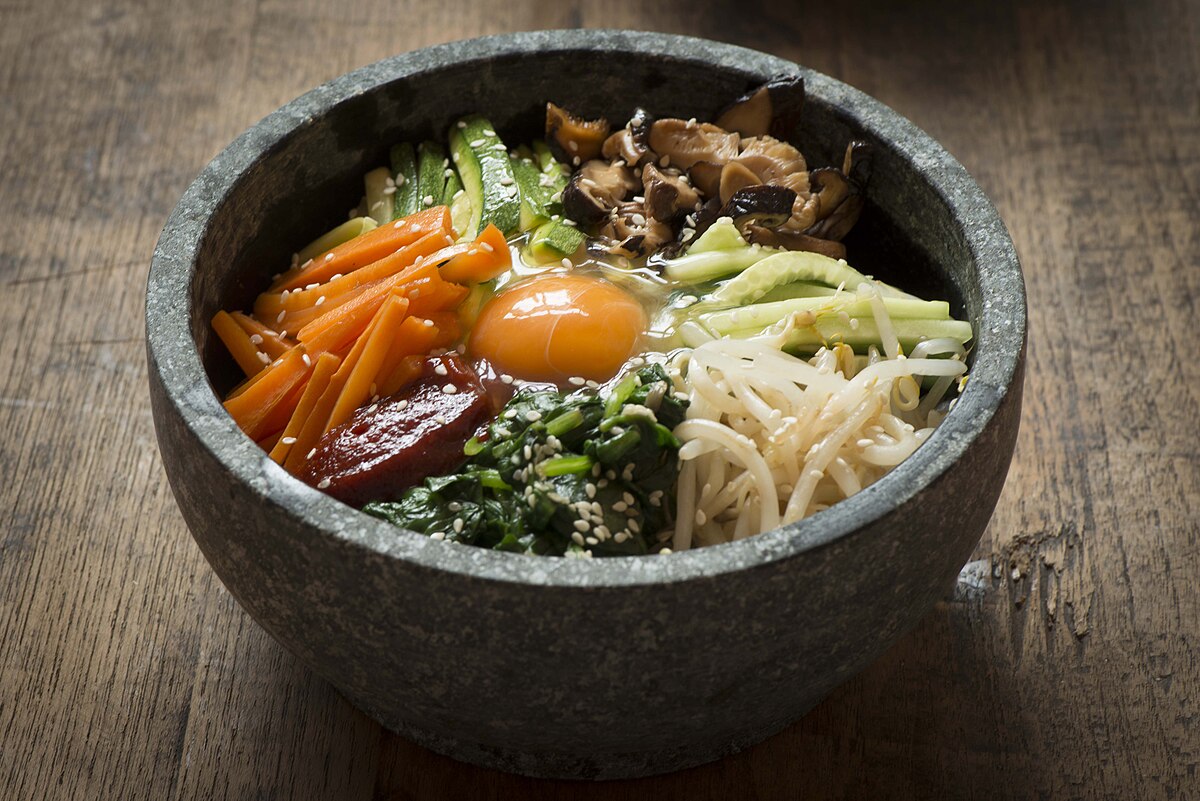
Bibimbap: Korea's Most Iconic Rice Bowl
Bibimbap — meaning 'mixed rice' — is a balanced, colorful bowl that captures Korean philosophy in a single dish.
Photo: Wikipedia Commons
What Is Bibimbap?
Bibimbap (비빔밥) translates directly as 'mixed rice' — bibim (비빔) meaning to mix, bap (밥) meaning cooked rice. It is a bowl of warm white rice topped with an arrangement of seasoned vegetables, a fried or raw egg, and a spoonful of gochujang (red pepper paste). You mix everything together vigorously before eating, which is both the cooking technique and the philosophy: all ingredients become one. The dish appears in Korean written records as early as 1590, though the concept of mixing rice with side dishes is almost certainly older. Some food historians trace it to the practice of mixing together the offerings at a jesa (ancestral memorial rite) before eating them — a way of honoring the meal by combining everything rather than separating it. In 2017, CNN Travel ranked bibimbap the 40th-most delicious food in the world in a Facebook poll — a notable achievement for a dish that is, at its core, rice and vegetables. The ranking reflects not just flavor but cultural resonance: bibimbap is one of the most recognizable Korean dishes globally, available in Korean restaurants from Seoul to São Paulo to Stockholm.
The Anatomy of a Bibimbap Bowl
A proper bibimbap is an exercise in composition. The vegetables — called namul (나물) — are placed in distinct sections around the bowl, each seasoned differently and arranged so that contrasting colors sit next to each other. Common namul include spinach, bean sprouts, julienned zucchini, shredded carrots, sliced mushrooms, and bracken fern stems. Each is blanched or sautéed separately, seasoned with sesame oil, garlic, and salt, then arranged with precision. At the center sits the egg — traditionally raw, dropped directly onto the hot rice so it begins to cook on contact, but fried sunny-side-up in most restaurant versions. Alongside it: a spoonful of gochujang, a drizzle of sesame oil, and thin slices of bulgogi (marinated beef) or raw seasoned beef (yukhoe) in the premium versions. The stone bowl version — dolsot bibimbap (돌솥비빔밥) — is the most theatrical. The bowl arrives smoking hot, the rice sizzling against the stone surface. The heat continues to cook the egg and crisp the bottom layer of rice into nurungji, a golden crust considered the best part of the dish by most Korean diners. Eating from the edges first and saving the center for last is standard practice.
- ·Spinach (시금치) — blanched and seasoned with garlic and sesame oil
- ·Bean sprouts (콩나물) — crunchy, nutty, a textural contrast
- ·Zucchini (호박) — sautéed with sesame oil and salt
- ·Mushrooms (버섯) — usually shiitake, earthy and meaty
- ·Bracken fern (고사리) — dark, slightly chewy, distinctly Korean
- ·Bellflower root (도라지) — slightly bitter, crunchy
- ·Egg (계란) — raw or fried, always centered on top
The Five Colors of Korean Philosophy
One of the most quietly profound aspects of bibimbap is that it embodies obangsaek (오방색), the traditional Korean concept of five directional colors. Each color corresponds to one of the five elements in Korean cosmology, a cardinal direction, and an organ of the human body. A properly arranged bibimbap is not just visually appealing — it is a philosophy made edible. Red (gochujang, carrots) represents fire and the heart. Green (spinach, zucchini) represents wood and the liver. Yellow (egg yolk) represents earth and the stomach. White (bean sprouts, rice, bellflower root) represents metal and the lungs. Black (gosari bracken fern, mushrooms) represents water and the kidneys. This five-element structure appears throughout traditional Korean medicine, architecture, and ritual food. A jesa (ancestral memorial offering) table is arranged using the same color principles. Bibimbap, in this reading, is not casual food — it is a compressed expression of the Korean understanding of natural harmony, served in a bowl.
- ·Red — Fire — Heart: gochujang, carrots
- ·Green — Wood — Liver: spinach, zucchini, cucumber
- ·Yellow — Earth — Stomach: egg yolk, chestnuts
- ·White — Metal — Lungs: bean sprouts, radish, bellflower root (doraji)
- ·Black — Water — Kidneys: gosari bracken fern, shiitake mushrooms, seaweed
How to Eat It Properly
The critical error foreigners make with bibimbap is not mixing it enough. The point is not to have neat sections of vegetables — it is to create a unified dish where every bite contains a bit of everything. Mix aggressively with your spoon until the gochujang is fully incorporated and the rice is evenly coated orange-red. In dolsot bibimbap, timing matters. Mix quickly before the rice overcooks against the stone. But leave a thin layer of rice touching the bowl surface — this becomes the nurungji crust. After eating, pour a little hot water into the empty bowl and scrape up the crust: Koreans call this sungnyung, and it is considered a digestif and a final reward. Gochujang intensity is personal. Restaurant portions are calibrated for average Korean heat tolerance, which is considerably higher than most foreigners' baseline. Ask for it on the side if you are heat-sensitive, and add it gradually. A bibimbap with no gochujang is called mul bibimbap (water bibimbap) and is a legitimate option, though locals may raise an eyebrow.
Jeonju Bibimbap and Regional Pride
If you ask a Korean which bibimbap is the best, the answer is almost always Jeonju (전주). The city in North Jeolla Province is considered the birthplace of the finest version, distinguished by the use of bean sprout broth as the cooking liquid for the rice, a raw egg yolk rather than a fried egg, high-quality sesame oil, and a broader array of namul than standard versions. Jeonju has built an entire tourism industry around bibimbap. The city hosts a Bibimbap Festival annually, drawing hundreds of thousands of visitors. There are restaurants that have been serving their specific version for generations, each with minor variations they guard as trade secrets. Jinju and Tongyeong also have distinct regional versions — Jinju bibimbap traditionally uses raw seasoned beef and a garnish of Korean honey bees, while Tongyeong versions reflect the coastal city's access to seafood. These regional variations illustrate how a seemingly simple dish can carry tremendous local identity.
Bibimbap in the Modern World
Bibimbap has become a gateway dish for the global Korean food wave, partly because it adapts so naturally to contemporary food values. It photographs beautifully — the color-separated vegetables against white rice, with a glossy yolk at center, is visually compelling on social media. It is naturally customizable, easily made vegetarian or vegan by omitting the egg and meat. It reads as healthy: the namul are vegetables, lightly seasoned, and gochujang is fermented and probiotically active. Korean Air famously serves bibimbap in business class, contributing to its global reputation as sophisticated rather than purely casual food. Home cooks around the world have built entire channels and recipe blogs around it. In Korea, bibimbap remains deeply everyday. It is what you eat for lunch when you want something quick but satisfying. It is what hospitals serve. It is what mothers pack in thermoses for school trips. Its universality is the opposite of its international image as a special dish — and that tension is part of what makes Korean food culture so interesting to understand.
Tips
- 💡Mix thoroughly and without hesitation — Koreans grip the bowl in one hand and stir aggressively at least 20-30 times
- 💡In dolsot bibimbap, mix quickly but leave some rice touching the bowl to form the crispy nurungji crust
- 💡Add gochujang gradually — start with half a spoon and build up to your tolerance
- 💡The namul should be at room temperature when served, not cold — cold bibimbap is considered poor quality
- 💡Use a spoon, not chopsticks, after mixing — chopsticks are only for rearranging toppings before you stir
- 💡Korean Air has served bibimbap in-flight since 1997 and won the International In-flight Catering Association Mercury Award for it — order it if you ever fly Korean Air
Last updated: March 30, 2026
You might also like
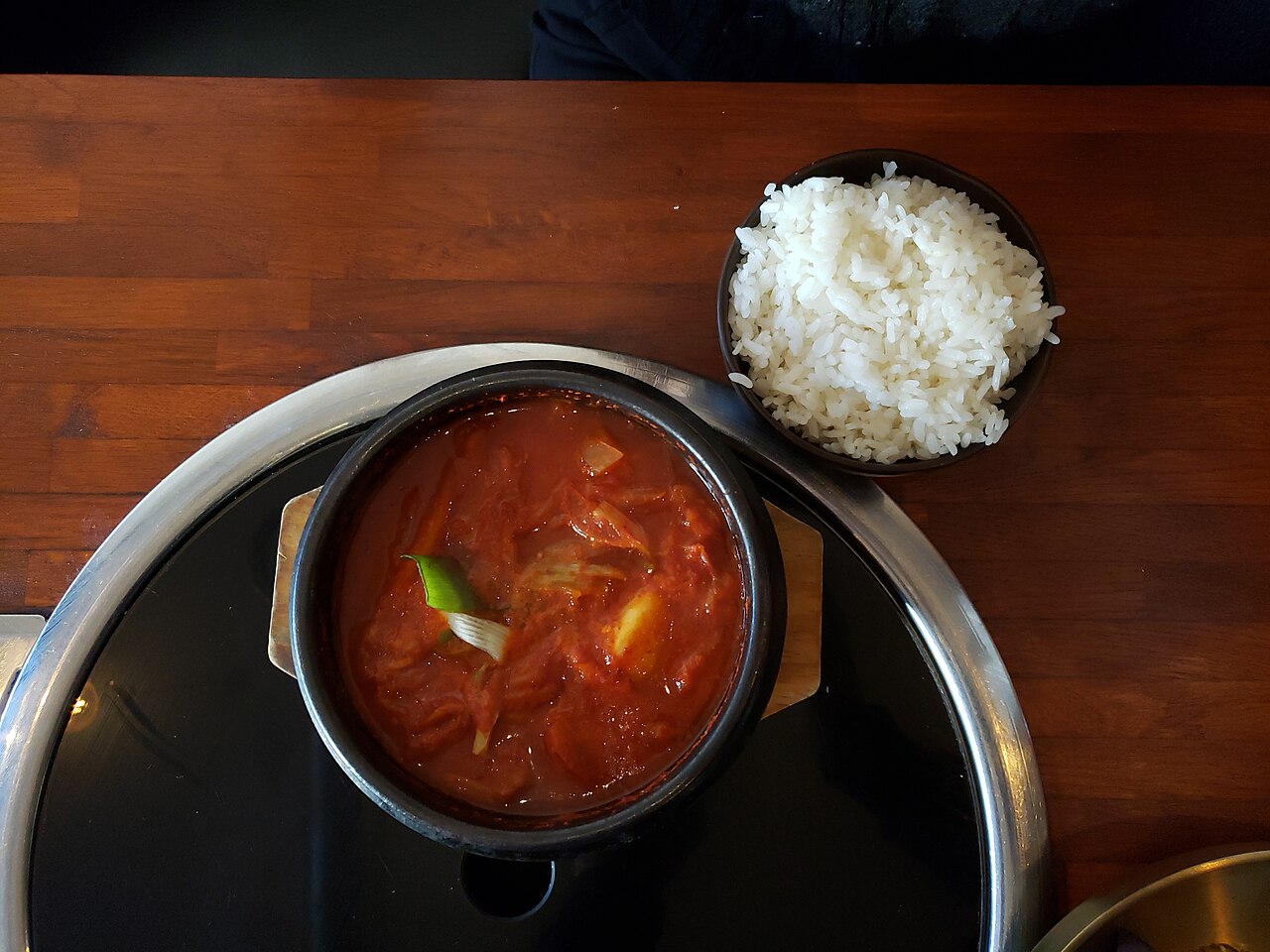
Kimchi Jjigae: Korea's Most Comforting Stew
Bubbling hot, deep red, and unmistakably Korean — kimchi jjigae is the stew that every Korean home smells like on a cold evening.
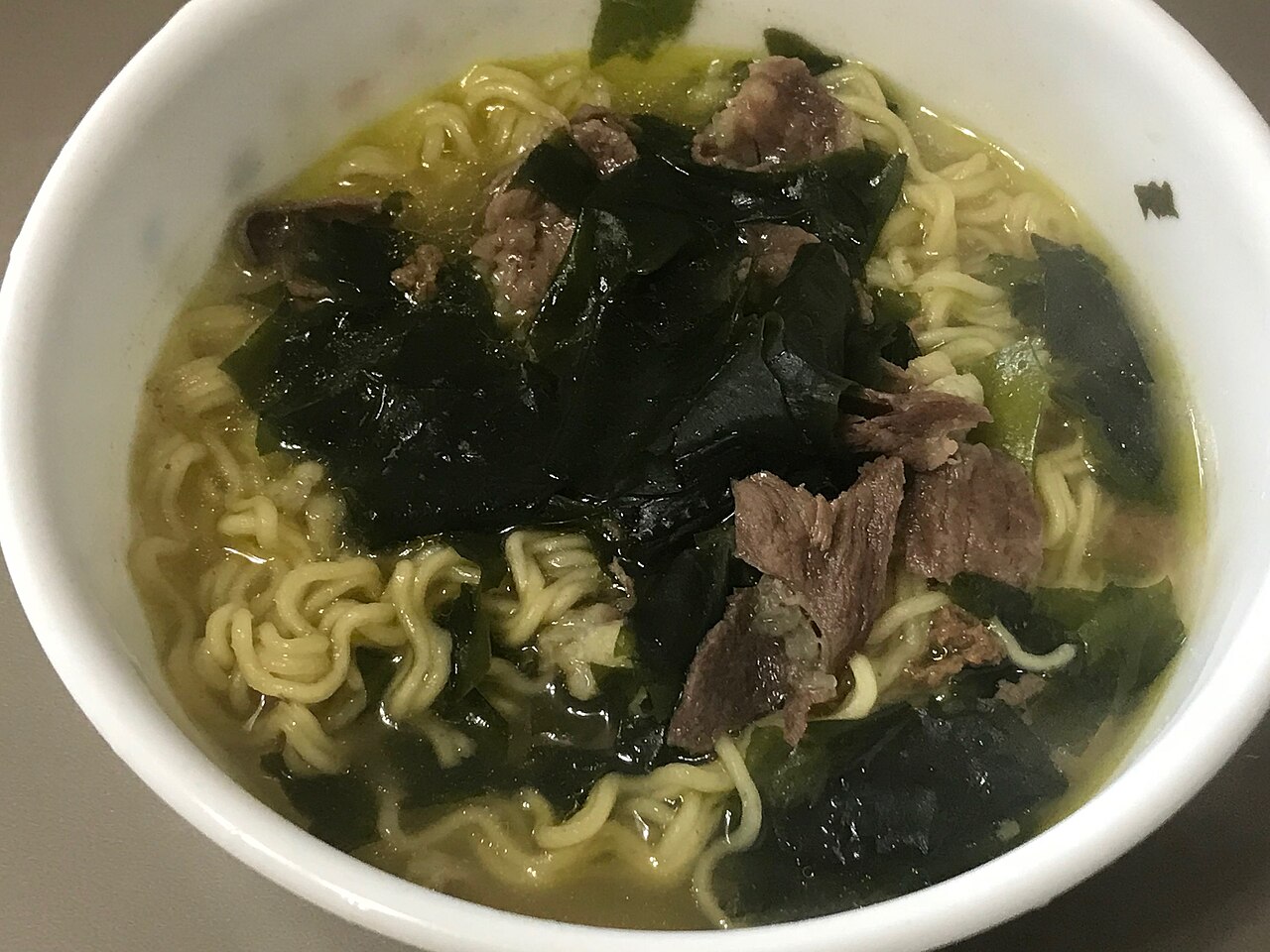
Miyeok-guk: The Birthday Soup That Is Really About Your Mother
Miyeok-guk is the seaweed soup every Korean eats on their birthday — a tradition that began as postpartum recovery food and became an annual act of gratitude to one's mother.
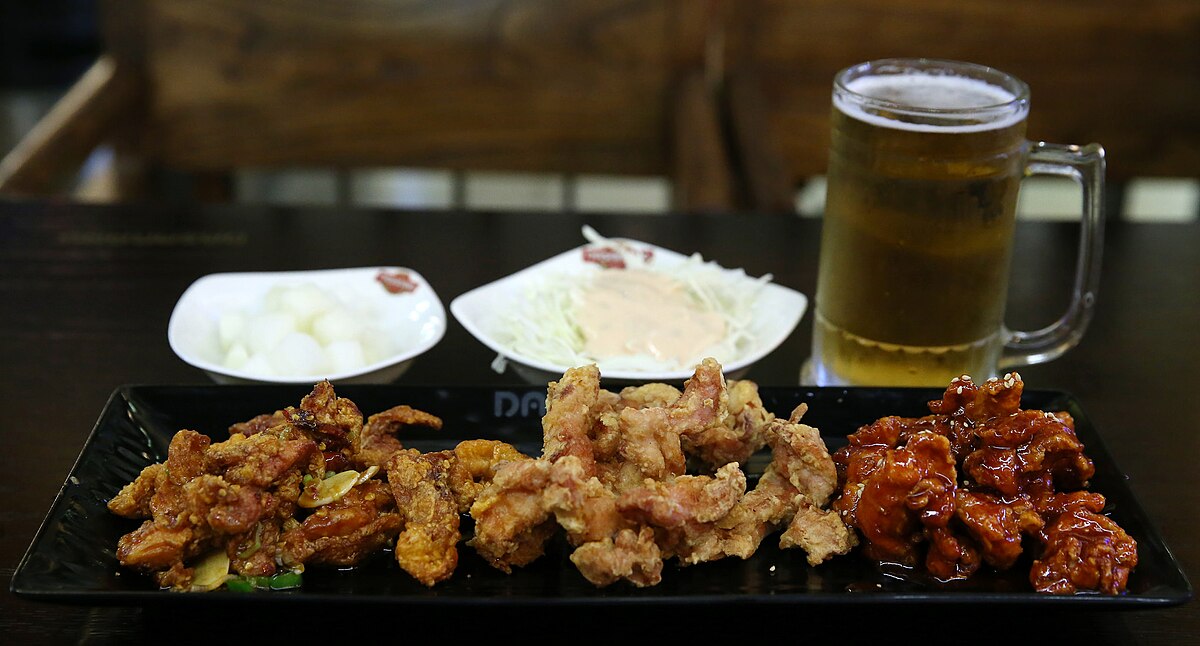
Chimaek: Why Korean Fried Chicken Is the World's Best
Korea has more fried chicken restaurants than McDonald's has locations worldwide. Here's the science and culture behind the crunch.