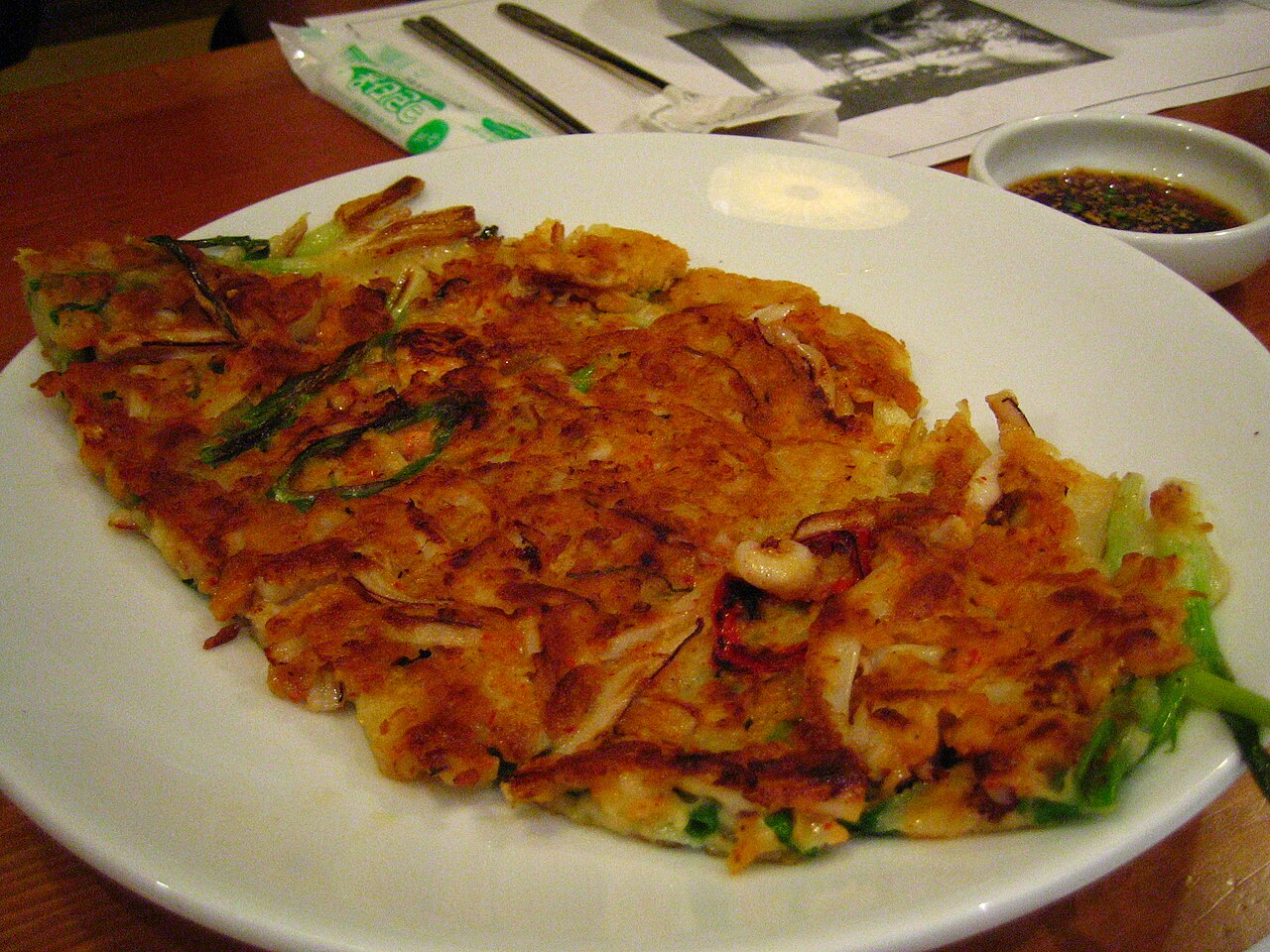
Bindaetteok: Korea's Ancient Mung Bean Pancake
Bindaetteok is a savory Korean pancake made from ground mung beans, mixed with vegetables and pork, pan-fried until crispy — one of Korea's oldest and most beloved street foods with a history spanning centuries.
Photo: Wikipedia Commons
What Is Bindaetteok?
Bindaetteok (빈대떡) is a thick, hearty savory pancake made primarily from soaked and ground mung beans (녹두, nokdu). The ground mung bean batter gives the pancake a distinctive pale yellow-green color and a nutty, earthy flavor unlike any wheat-based pancake. Finely chopped kimchi, green onions, pork belly strips, bean sprouts, and sometimes bracken fern (고사리) are mixed into the batter before frying in a generous amount of oil. The result is a round, thick pancake with a deeply golden, crispy outer crust and a soft, dense interior. The kimchi adds tangy heat, the pork adds richness, and the vegetables provide freshness. Bindaetteok is dipped in a simple soy sauce with a splash of vinegar and a sprinkle of green onion (양념간장). Bindaetteok is a staple of traditional Korean markets (시장), particularly Gwangjang Market in Seoul — one of Korea's oldest and most famous markets, where rows of women fry bindaetteok to order all day long. The sizzle of the pancakes and the smoke rising from the griddles is one of the defining sensory experiences of Gwangjang Market.
History & Origins
Bindaetteok is one of Korea's oldest recorded foods. Historical texts from the Joseon Dynasty describe mung bean pancakes as a common food eaten during festivals and agricultural busy periods. The name may derive from 'bin daek' (빈대) — a reference to poverty or plain living — suggesting it was originally food for the poor, made from inexpensive mung beans when meat was scarce. Another theory suggests the name comes from 'bing da' (炳多), a Chinese term for fried flatbread. Whatever its origin, bindaetteok became deeply embedded in Korean culinary tradition across all social classes. It was included in court records as a dish prepared for royal feasts, while simultaneously being sold on the streets for commoners. During the Japanese colonial period and Korean War era, bindaetteok was a survival food — nutritious, filling, and made from accessible mung beans. This heritage has given the dish a reputation as resilient, humble, and deeply Korean. Gwangjang Market in Seoul, established in 1905, is the most famous venue for bindaetteok and has become a culinary landmark.
How Koreans Eat It
Bindaetteok is best eaten hot from the griddle, with minimal accompaniment to let the natural flavors shine.
- ·Dip each bite in the soy-vinegar sauce (초간장) provided — it cuts through the richness of the fried batter perfectly
- ·Eat it with a glass of makgeolli (막걸리, cloudy rice wine) — this combination is considered one of the great pairings in Korean food, especially at a rainy market
- ·In Korea, eating bindaetteok is linked to rainy days — the sound of rain on a roof and the sizzle of frying pancakes is a beloved sensory memory
- ·At Gwangjang Market, take a seat at a communal table and watch the ajumma (아줌마) skillfully manage multiple pans simultaneously — it's a performance as much as a meal
Cultural Significance
Bindaetteok occupies a unique place in Korean culture as both ancient tradition and living street food. Its association with Gwangjang Market — a place that has survived Japanese colonization, the Korean War, and decades of rapid modernization — gives it a sense of historical continuity. Eating bindaetteok at Gwangjang is a connection to generations of Koreans who ate the same dish in the same place. The dish also reflects the Korean love of jeon (전, savory pancakes) as a comfort food category. Korean jeon encompass dozens of varieties, but bindaetteok stands apart as the most ancient and most substantial. Its revival in food media and culinary tourism has introduced it to international audiences, and Gwangjang Market's bindaetteok has appeared in numerous global food programs and travel guides. For many international visitors, it is their most memorable Korean food experience.
Tips
- 💡Gwangjang Market (광장시장) in Seoul's Jongno District is the definitive destination for bindaetteok — take subway line 1 to Jongno 5-ga Station
- 💡The best bindaetteok is served hot from a skilled vendor — the ones with the longest queues of Korean locals are reliably excellent
- 💡Order makgeolli to drink alongside — the slight sourness and fizz of the rice wine cuts through the oiliness of the pancake beautifully
Last updated: April 1, 2026
You might also like
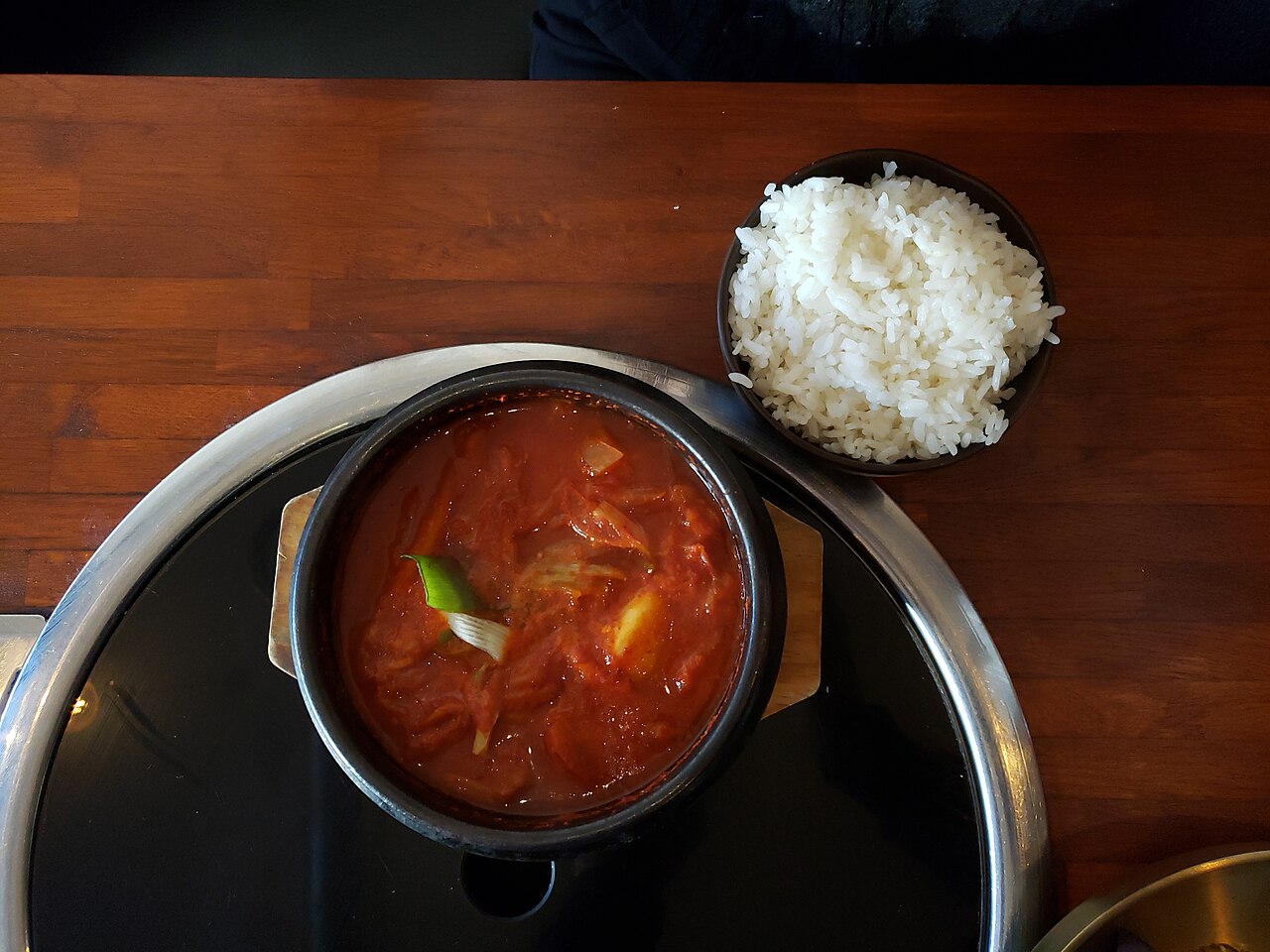
Kimchi Jjigae: Korea's Most Comforting Stew
Bubbling hot, deep red, and unmistakably Korean — kimchi jjigae is the stew that every Korean home smells like on a cold evening.
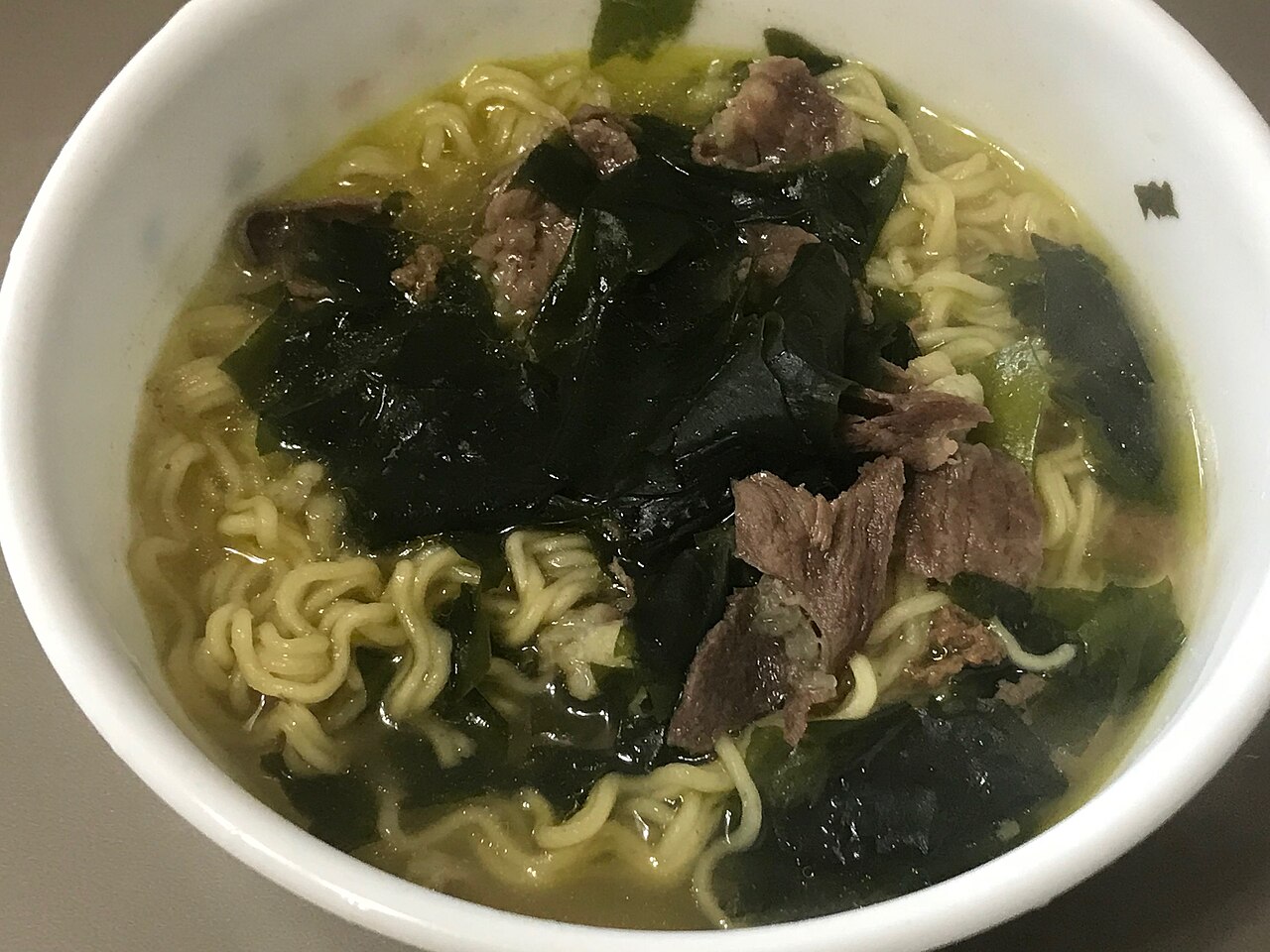
Miyeok-guk: The Birthday Soup That Is Really About Your Mother
Miyeok-guk is the seaweed soup every Korean eats on their birthday — a tradition that began as postpartum recovery food and became an annual act of gratitude to one's mother.
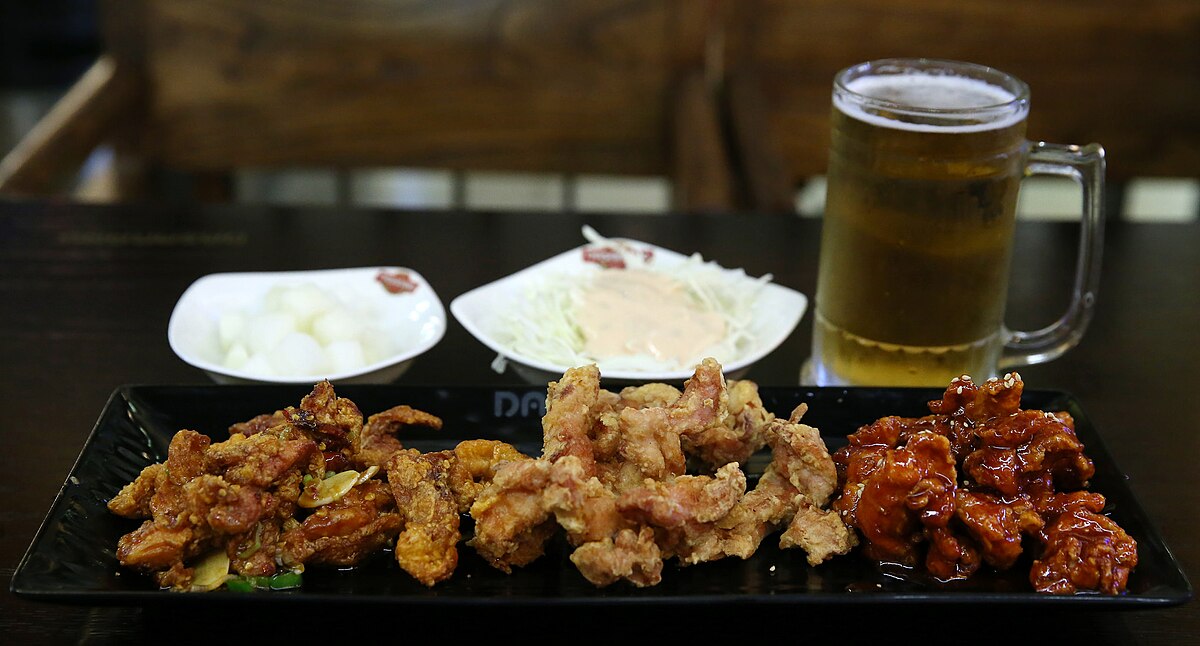
Chimaek: Why Korean Fried Chicken Is the World's Best
Korea has more fried chicken restaurants than McDonald's has locations worldwide. Here's the science and culture behind the crunch.