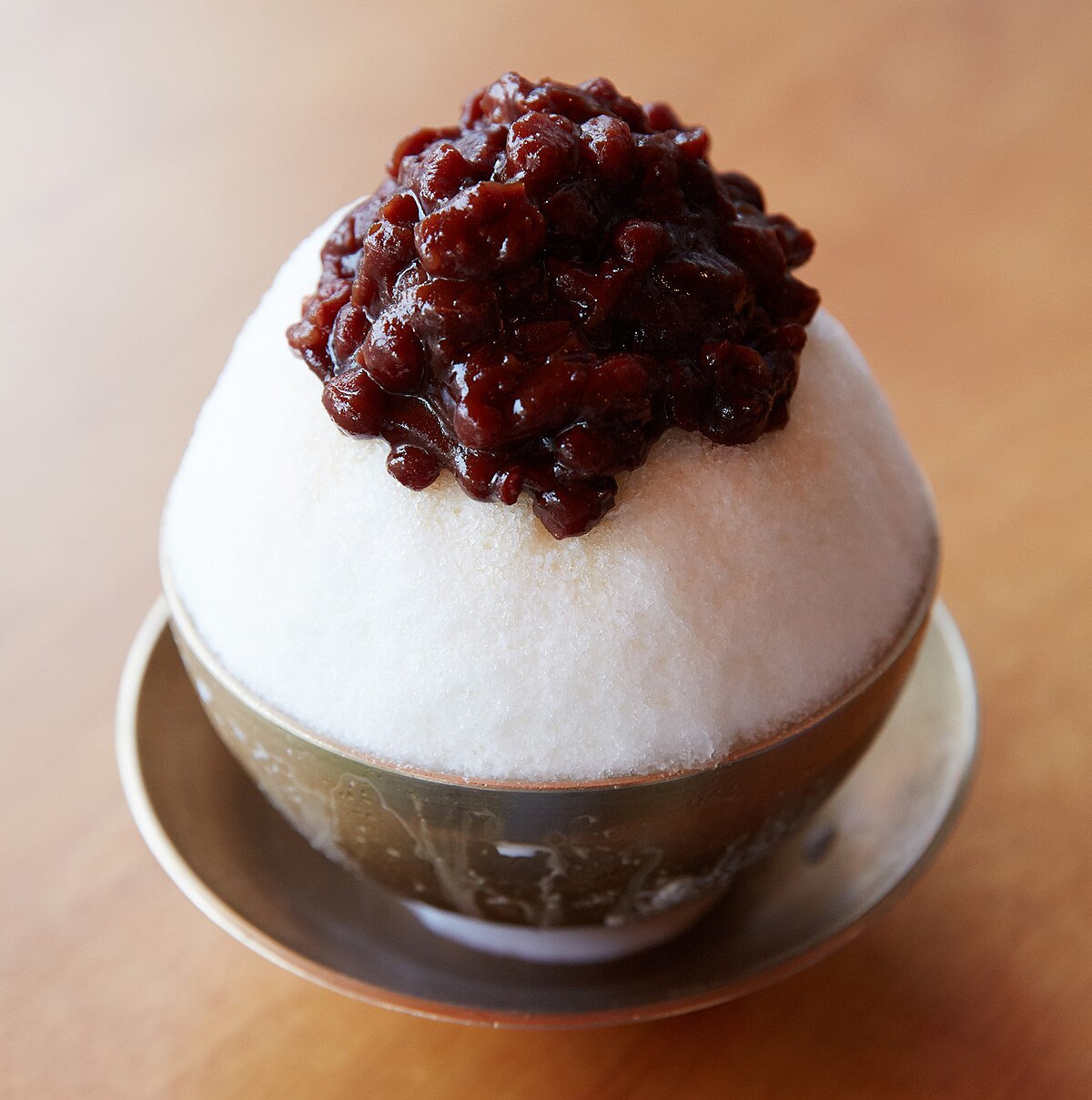
Bingsu: Korea's Shaved Ice Art Form
Korean shaved ice dessert elevated into an art — milk-snow texture, elaborate toppings, and centuries of royal history.
Photo: Wikipedia Commons
What Is Bingsu?
Bingsu (빙수) is a Korean shaved ice dessert that has been elevated far beyond its humble origins as a summer cooling treat into a sophisticated dessert category with artistic ambitions. The base is finely shaved ice — typically made from frozen blocks of milk (milk bingsu, 우유빙수) or flavored liquid — processed by a specialized machine into a texture that resembles freshly fallen snow rather than crushed or shaved ice. This texture, light enough to collapse under its own weight, melts on the tongue almost before any chewing is required. The canonical version is patbingsu (팥빙수, red bean bingsu): a mound of shaved ice topped with sweetened red bean (pat), small chewy rice cake pieces (tteok or injeolmi), condensed milk (yeongyu), and sometimes a scoop of vanilla ice cream. The combination of textures — cold melting ice, sticky sweet bean, chewy rice cake, and rich cream — is considered one of the most satisfying in Korean dessert culture. Modern bingsu has exploded into dozens of varieties: strawberry bingsu (딸기빙수), matcha bingsu (말차빙수), mango bingsu (망고빙수), and seasonal specialty versions that can reach 30–40 cm in height and cost 15,000–35,000 won. These elaborate constructions are as much visual objects as foods — designed to be photographed before being eaten.
History & Origins
Bingsu's origins lie in the royal ice culture of the Joseon dynasty (1392–1897). Ice was considered a precious luxury — harvested from frozen rivers and streams in winter and stored in specially constructed underground ice houses (seokbinggo, 석빙고). The ice houses were built by the state, maintained by government workers, and their contents distributed to the royal court and the nobility during summer. Commoners had no access to ice until commercial ice production became available in the early 20th century. Royal bingsu records from the Joseon dynasty describe sweetened ice preparations flavored with pine nuts, honey, and fruit — considerably simpler than contemporary versions, but clearly recognizable as ancestors of the modern dish. The essential logic of shaved ice + sweet toppings was established centuries ago. The democratic bingsu era began in the 1950s, when commercial ice block production made ice universally accessible for the first time. Small street carts with hand-cranked ice shavers began selling patbingsu for affordable prices throughout Korean cities. By the 1970s–1980s, bingsu had become the default Korean summer dessert, available in bakeries, restaurants, and street stalls everywhere. The modern premium bingsu era began approximately in the 2000s–2010s, when cafes began investing in sophisticated shaving machines capable of producing milk-snow texture, dramatically upgrading the quality of the base while also raising prices and presentation standards.
Essential Bingsu Varieties
Understanding the range of bingsu available helps in choosing what to try first.
- ·Patbingsu (팥빙수): The classic — shaved ice with sweetened red bean (azuki), injeolmi rice cake pieces, and condensed milk. This is the original and most traditional form, and still the benchmark against which all others are measured.
- ·Strawberry bingsu (딸기빙수): Fresh strawberries over milk-snow ice with condensed milk and tteok. The most photogenic variety and the best introduction for those uncertain about the red bean flavor.
- ·Injeolmi bingsu (인절미빙수): Soybean powder-dusted rice cake pieces feature prominently — the nutty soybean flavor permeates the entire bowl and the chewy-cold contrast is particularly satisfying.
- ·Matcha bingsu (말차빙수): Powdered green tea mixed into the shaved ice base creates a gently bitter-sweet foundation, topped with red bean and mochi pieces. Popular in Korean-Japanese fusion cafes.
- ·Bingsu at Cafe Bora: Insadong's famous purple cafe is known for its ssuk (mugwort) bingsu — a visual icon of Instagram Korea that is also genuinely excellent to eat.
Cultural Significance
Bingsu's cultural significance operates on multiple levels. On the surface, it is Korea's summer dessert — the natural climax of a warm afternoon, a reason to seek out a particular cafe, a treat shared between friends at the end of a day of walking. But the social role of bingsu is more specific than generic summer dessert: a large bingsu is designed for two people, served in a single large bowl with two spoons, making it an explicitly paired experience — a date food, a best-friend food, a marker of intimacy and comfort. The Korean cafe culture that developed explosively from the early 2000s onward has made bingsu a flagship product for aesthetic differentiation. Cafes compete not just on taste but on the visual drama of their bingsu presentation — the height of the ice mound, the color saturation of the toppings, the garnishes, the serving vessels. This has made bingsu one of the most photographed Korean foods on social media, contributing to its international visibility. The former royal ice houses (seokbinggo) still exist in Seoul — a brick-vaulted underground chamber from the Joseon dynasty is preserved near the National Folk Museum. Visiting it alongside a bowl of contemporary premium bingsu creates an unusual historical arc: from the ice privilege of kings to the democratic pleasure of a cafe dessert available to anyone with 15,000 won.
Tips
- 💡Premium bingsu portions are large — one bowl is typically sized for two people to share. Ordering a full bowl alone is common but genuinely filling.
- 💡Cafe Bora in Insadong (Seoul) is famous for its purple ssuk (mugwort) drinks and bingsu — arrive before 11 AM to avoid long queues.
- 💡Eat bingsu quickly — the milk-snow texture is best in the first five minutes while the layers have distinct temperatures. Overlong waiting turns the bottom into a pool of sweetened liquid.
Last updated: April 1, 2026
You might also like
Kimchi Jjigae: Korea's Most Comforting Stew
Bubbling hot, deep red, and unmistakably Korean — kimchi jjigae is the stew that every Korean home smells like on a cold evening.
Miyeok-guk: The Birthday Soup That Is Really About Your Mother
Miyeok-guk is the seaweed soup every Korean eats on their birthday — a tradition that began as postpartum recovery food and became an annual act of gratitude to one's mother.
Chimaek: Why Korean Fried Chicken Is the World's Best
Korea has more fried chicken restaurants than McDonald's has locations worldwide. Here's the science and culture behind the crunch.