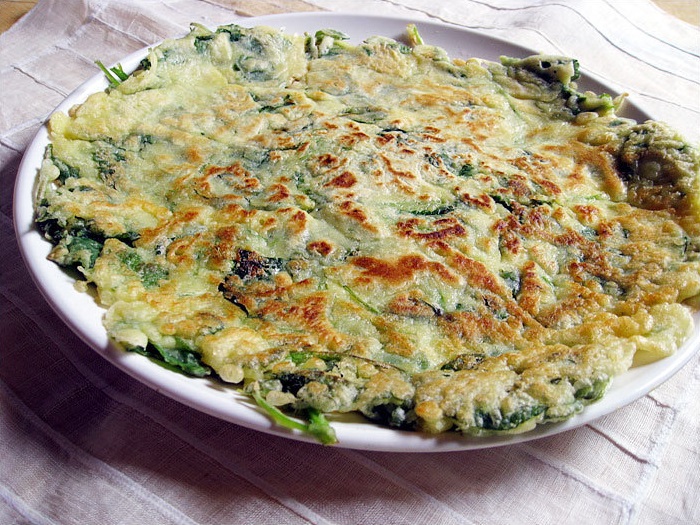
Buchimgae: Korean Savory Pancake
Buchimgae is the general term for Korean savory pan-fried pancakes — a versatile, beloved category of food that includes pajeon, kimchi-jeon, and many regional variations.
Photo: Wikipedia Commons
What Is Buchimgae?
Buchimgae (부침개) is the broad Korean term for savory pan-fried pancakes, encompassing a wide family of dishes made from various ingredients bound together in a batter and cooked in oil. The name literally means 'something pan-fried' (buchida = to fry, gae = thing). When Koreans say 'jeon' (전), they typically refer to the same category of food. The base batter is usually a simple mixture of wheat flour (or rice flour), egg, and water. What distinguishes individual buchimgae is the addition: green onions (pajeon), kimchi (kimchi-jeon), seafood (haemul-pajeon), mixed vegetables (yachae-jeon), or even oysters (gul-jeon). The result in all cases is a large, flat pancake with a crispy exterior and a soft interior, served with a tangy dipping sauce. Buchimgae ranges from paper-thin and delicate to thick and substantial, from mild to fiery, from a single ingredient to a complex mixture — the category is defined by method rather than by a specific set of ingredients.
History & Origins
Pan-frying in oil has been part of Korean cooking since ancient times, and jeon (battered, pan-fried foods) appear in Korean royal court records and household cookbooks from the Joseon Dynasty. Jeon were considered important ceremonial foods — they were prepared for ancestral rites (jesa), where they were arranged on the ceremonial table as offerings. The jesa tradition gives buchimgae a cultural weight beyond ordinary snack food. Even today, Korean families preparing for ancestral rites or major holidays will spend hours making various types of jeon, which are then eaten communally after the ceremony. The skill of making good jeon — especially achieving the right crispiness — is considered a mark of culinary competence in Korean households. Over time, buchimgae transitioned from being primarily ceremonial food to a beloved everyday snack, street food, and drinking accompaniment while retaining its place on ceremonial tables.
How Koreans Eat It
Buchimgae is eaten as a snack, appetizer, side dish, or drinking food. Its versatility means it appears in nearly every context of Korean eating.
- ·The universal dipping sauce is soy sauce + rice vinegar + gochugaru (red pepper flakes) + sesame oil — simple but essential
- ·Eat immediately after frying for the best crispy texture — buchimgae softens quickly as it cools
- ·At ceremonial meals, try each variety on the table — jeon selection reveals Korean culinary breadth
- ·For rainy-day snacking, buchimgae with makgeolli is the quintessential Korean experience
Cultural Significance
Buchimgae connects several important threads of Korean culture simultaneously: the ceremonial (as jesa food), the seasonal (as rainy-day food), the social (as a drinking accompaniment), and the domestic (as a way to use leftover vegetables or kimchi). Its presence across all these contexts makes it one of the most deeply embedded food categories in Korean life. For travelers, discovering the range of buchimgae is one of the pleasures of exploring Korean food. From the simple kimchi-jeon made in someone's home to the elaborate ceremonial jeon spread at a traditional feast, the variety within this category reveals the depth and adaptability at the heart of Korean cuisine.
Tips
- 💡At Korean markets like Gwangjang in Seoul, buchimgae stalls sell multiple varieties — order one of each for a comprehensive tasting
- 💡Making buchimgae at home is very achievable — it requires minimal ingredients and a heavy pan with good heat retention
- 💡The temperature of the oil is critical — too low and the pancake absorbs oil and becomes greasy; too high and the outside burns before the inside cooks
Last updated: April 1, 2026
You might also like
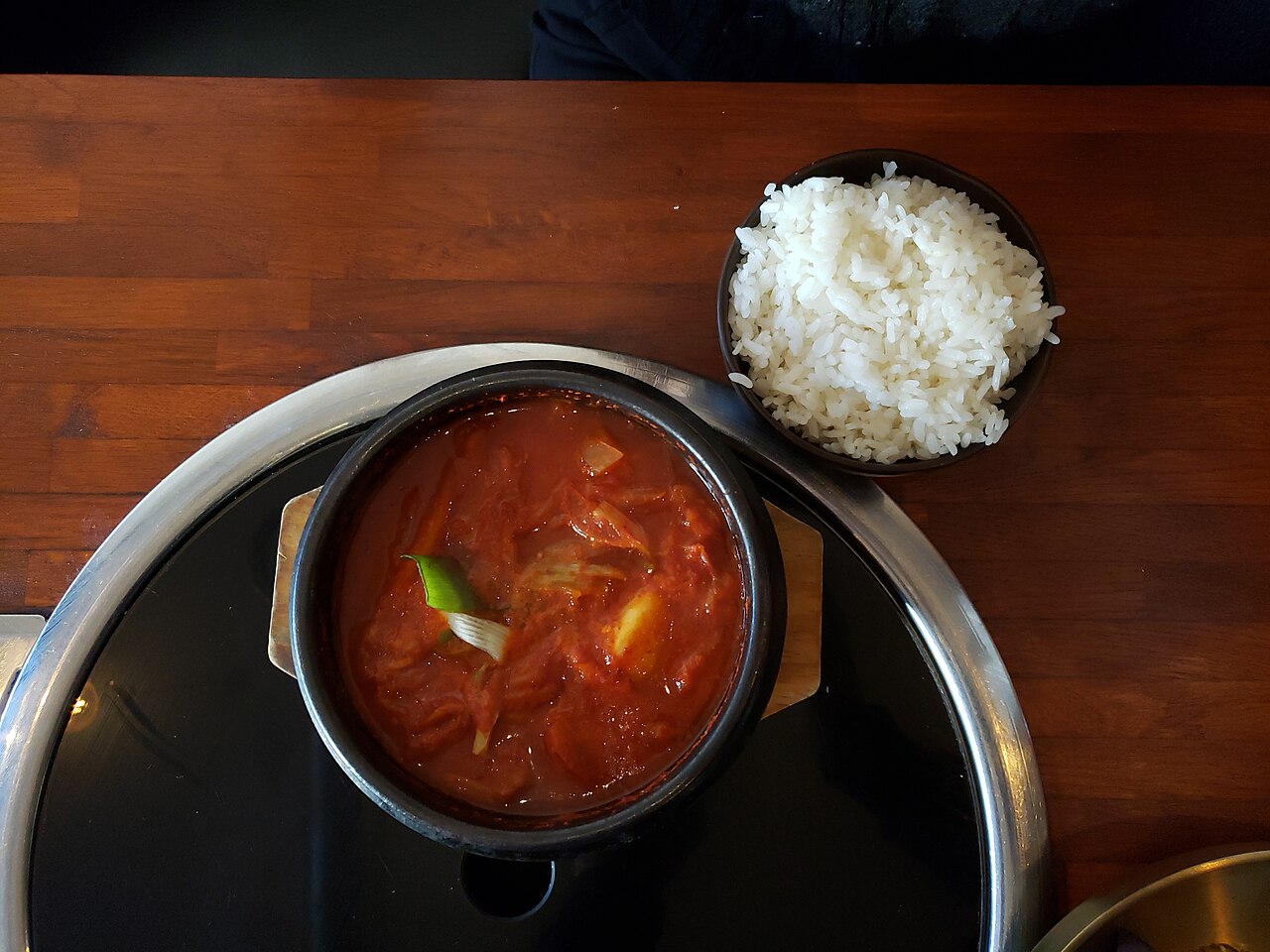
Kimchi Jjigae: Korea's Most Comforting Stew
Bubbling hot, deep red, and unmistakably Korean — kimchi jjigae is the stew that every Korean home smells like on a cold evening.
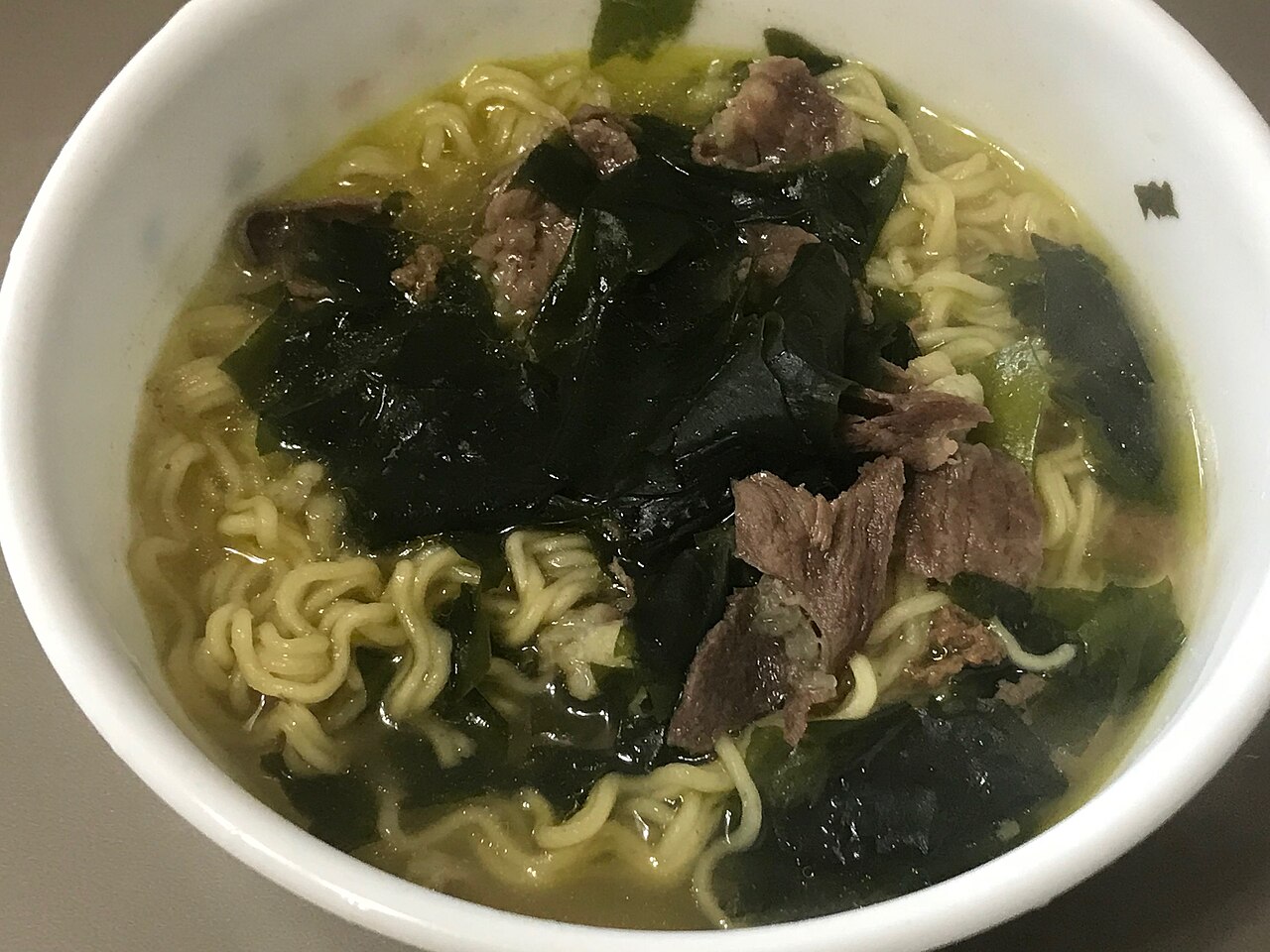
Miyeok-guk: The Birthday Soup That Is Really About Your Mother
Miyeok-guk is the seaweed soup every Korean eats on their birthday — a tradition that began as postpartum recovery food and became an annual act of gratitude to one's mother.
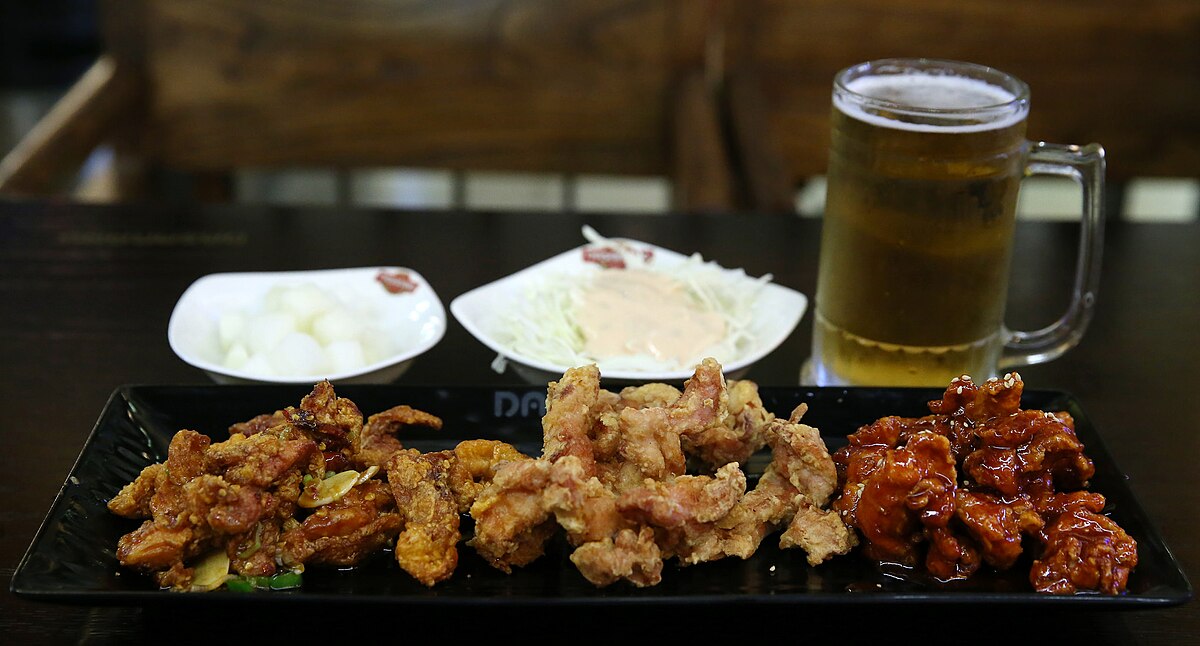
Chimaek: Why Korean Fried Chicken Is the World's Best
Korea has more fried chicken restaurants than McDonald's has locations worldwide. Here's the science and culture behind the crunch.