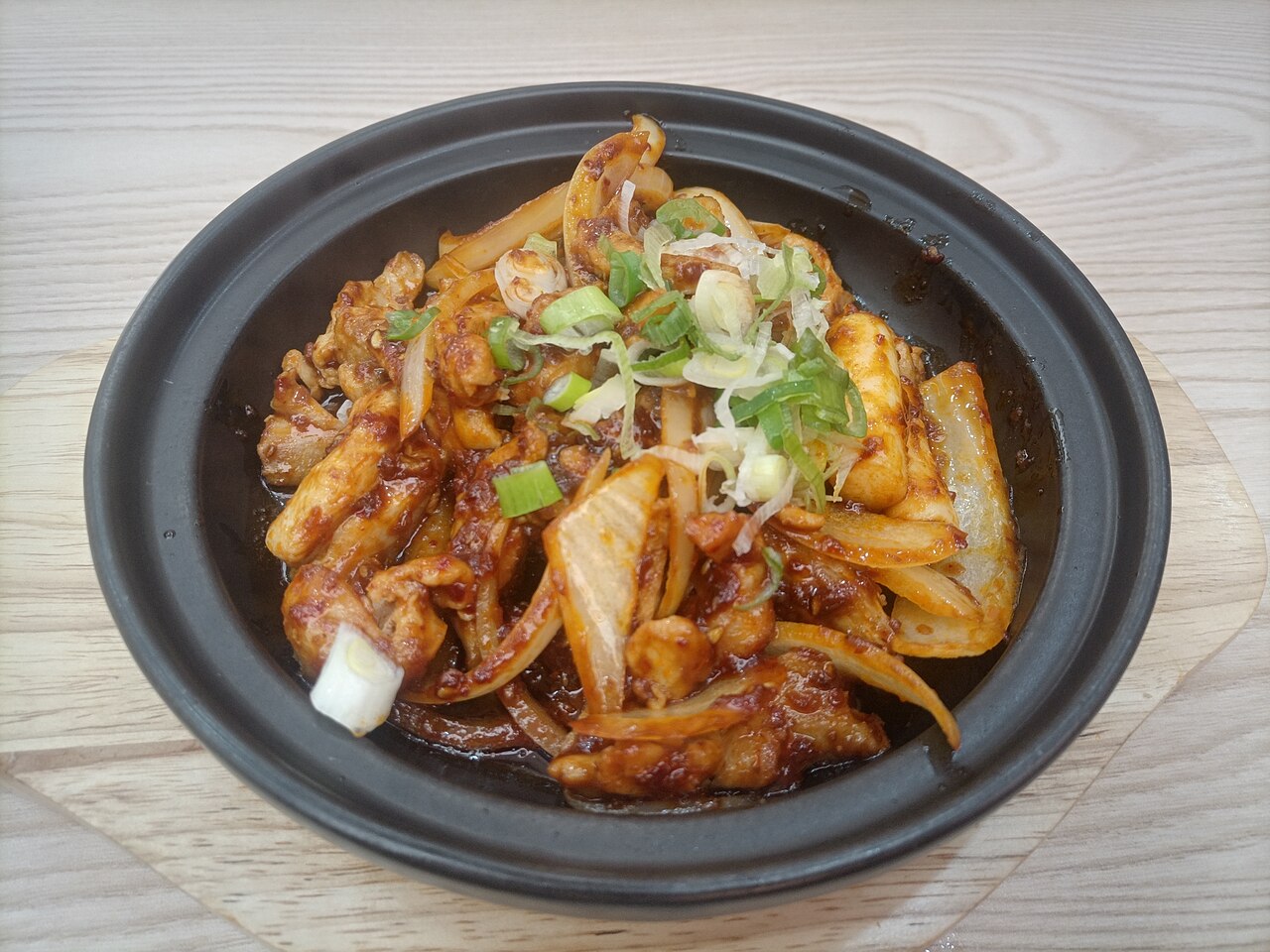
Dakgalbi: Spicy Iron-Pan Chicken from Chuncheon
Chuncheon's iconic spicy stir-fried chicken with rice cakes and vegetables — the affordable galbi that conquered Korea.
Photo: Wikipedia Commons
What Is Dakgalbi?
Dakgalbi (닭갈비) is a spicy Korean stir-fry made by marinating chicken in a sauce of gochujang (red chili paste), gochugaru (chili flakes), soy sauce, sugar, garlic, and ginger, then cooking it on a wide, flat iron pan (cheolpan, 철판) along with sliced sweet potato, cabbage, green onion, scallions, and tteok (cylindrical rice cakes). The result is a visually dramatic pan of deep-red chicken and vegetables, fragrant with chili and sesame, with a sticky-caramelized sauce coating everything. The name means 'chicken ribs' — a somewhat confusing term since the dish contains no actual rib bones. The 'galbi' in the name refers not to the cut of meat but to the galbi style of marinating: heavily seasoned in a sauce similar to the marinade used for beef galbi, creating a sweet-spicy complexity that transcends the simplicity of the individual ingredients. Cheese dakgalbi (치즈 닭갈비) has become enormously popular in recent years — a thick blanket of melted mozzarella is spooned over the cooked dish, mellowing the heat and adding a creamy richness that makes it more accessible for those sensitive to spice. This variant is particularly popular among younger diners and international visitors.
History & Origins
Dakgalbi was invented in Chuncheon (춘천), the capital of Gangwon Province in the mountainous northeast of South Korea, in the mid-1960s. The commonly cited origin story attributes the dish to a small restaurant in Chuncheon where the owner, faced with the challenge of offering affordable grilled meat to cost-conscious customers, substituted inexpensive chicken for expensive beef galbi and adapted the marinade accordingly. In the 1970s and 1980s, as South Korea's economic growth created a new generation of university students with limited budgets but strong appetites for good food, dakgalbi spread rapidly from Chuncheon to university districts across the country. The dish's combination of generous portions, robust flavors, and low price per person made it ideal for group dining — the wide communal pan placed in the center of the table, cooked and eaten together, reinforced its social character. Chuncheon today has an entire dedicated 'Dakgalbi Street' (닭갈비 골목) in the Myeongdong district, where dozens of restaurants line both sides of a long alley, each with near-identical menus and loyal regulars. The street has become a food tourism destination, and the city brands itself heavily around dakgalbi — there is even a Dakgalbi Museum and an annual Dakgalbi Festival.
How Koreans Eat It
Dakgalbi is a communal, active eating experience — the cooking happens at the table, and participation is expected.
- ·The table cook: Dakgalbi arrives partially marinated and raw. It is stir-fried on the iron pan at the table, either by the server or by the diners themselves. The cooking takes 10–15 minutes of active stirring.
- ·Rice cake timing: The tteok (rice cakes) should be added after the chicken is mostly cooked — they need only a few minutes in the pan and become sticky and overcooked if added too early.
- ·Cheese option: If ordering cheese dakgalbi, the server places a small pot of melted mozzarella in the center of the pan during the final minute of cooking. Diners dip each piece through the cheese before eating.
- ·The bokkeumbap finale: After the main dish is mostly eaten, small portions of cooked rice, sesame oil, and green onion are added to the remaining sauce in the pan and stir-fried into a fried rice. This finale is frequently described as the best bite of the meal.
- ·Sangchu ssam: Wrapping dakgalbi in fresh lettuce with a smear of doenjang moderates the heat and adds crunch.
Cultural Significance
Dakgalbi holds a distinctive place in Korean food culture as a 'democratized luxury' — a dish that delivered the satisfaction of a galbi meal at a price that working-class and student budgets could sustain. Its origin story is in many ways a parable of Korean postwar pragmatism: rather than serving nothing, you adapt; you substitute; you use what you have; you make something not merely adequate but genuinely good. The dish's association with Chuncheon gives it strong regional identity and has contributed to a broader trend in Korean food culture where specific dishes are inseparable from their city of origin. Visiting Chuncheon primarily to eat dakgalbi on the famous alley, then taking the Gyeongchun Line train back to Seoul, is an established day-trip itinerary that thousands of Koreans make each year. The Sinchon (신촌) and Hongdae (홍대) neighborhoods of Seoul, both heavily populated with university students, have their own dakgalbi restaurant clusters that function as the Seoul proxy for the Chuncheon experience. These areas have their own modifications — Seoul-style dakgalbi sometimes includes ramyeon noodles added to the leftover sauce — adding another layer to the dish's ongoing evolution.
Tips
- 💡Chuncheon Myeongdong Dakgalbi Street (춘천 명동 닭갈비 골목) is the original and most atmospheric location — take the ITX train from Seoul Cheongnyangni station (1h 10min).
- 💡For first-timers, ordering the cheese dakgalbi option reduces the spice intensity significantly while adding a crowd-pleasing richness.
- 💡Do not skip the bokkeumbap (fried rice finish) — ask the server explicitly for it before they clear the pan, since some restaurants omit it if not requested.
Last updated: April 1, 2026
You might also like
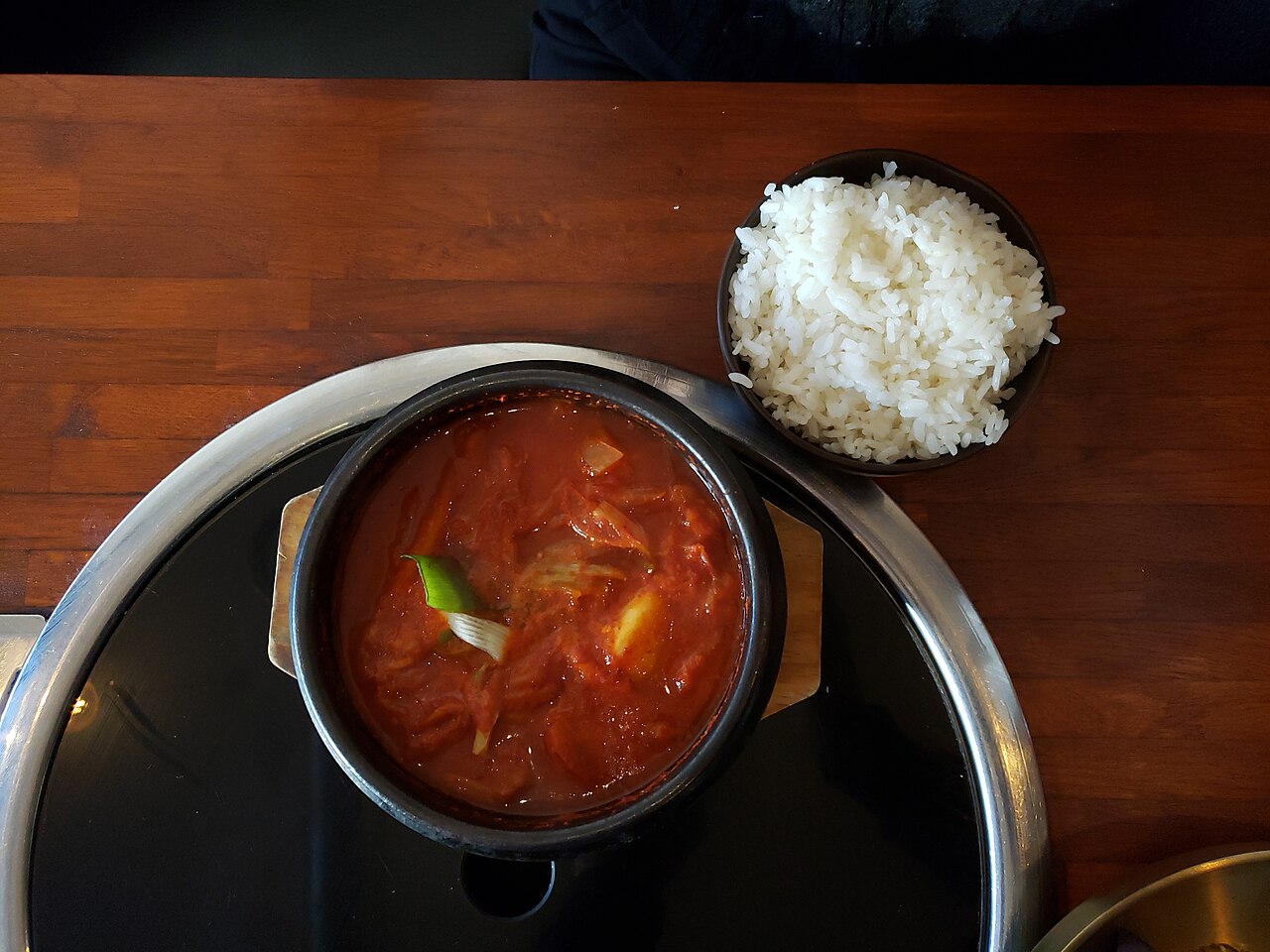
Kimchi Jjigae: Korea's Most Comforting Stew
Bubbling hot, deep red, and unmistakably Korean — kimchi jjigae is the stew that every Korean home smells like on a cold evening.
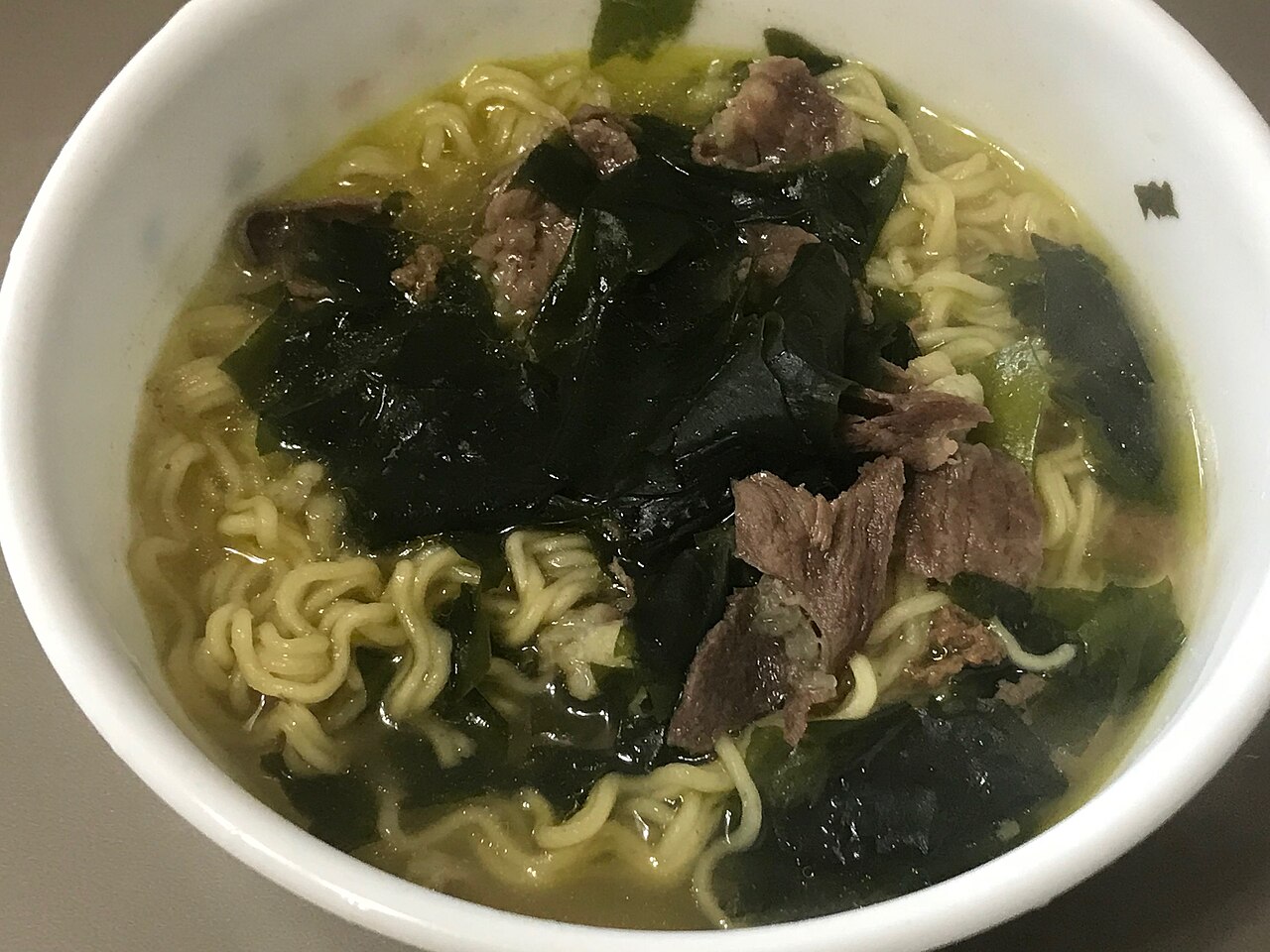
Miyeok-guk: The Birthday Soup That Is Really About Your Mother
Miyeok-guk is the seaweed soup every Korean eats on their birthday — a tradition that began as postpartum recovery food and became an annual act of gratitude to one's mother.
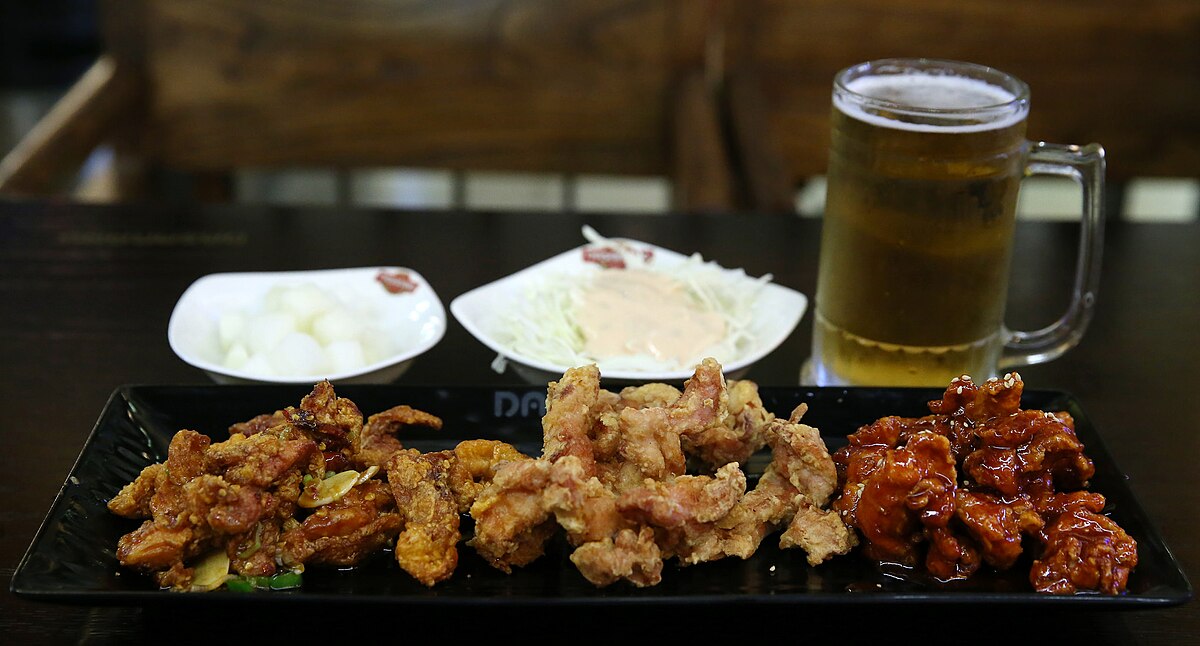
Chimaek: Why Korean Fried Chicken Is the World's Best
Korea has more fried chicken restaurants than McDonald's has locations worldwide. Here's the science and culture behind the crunch.