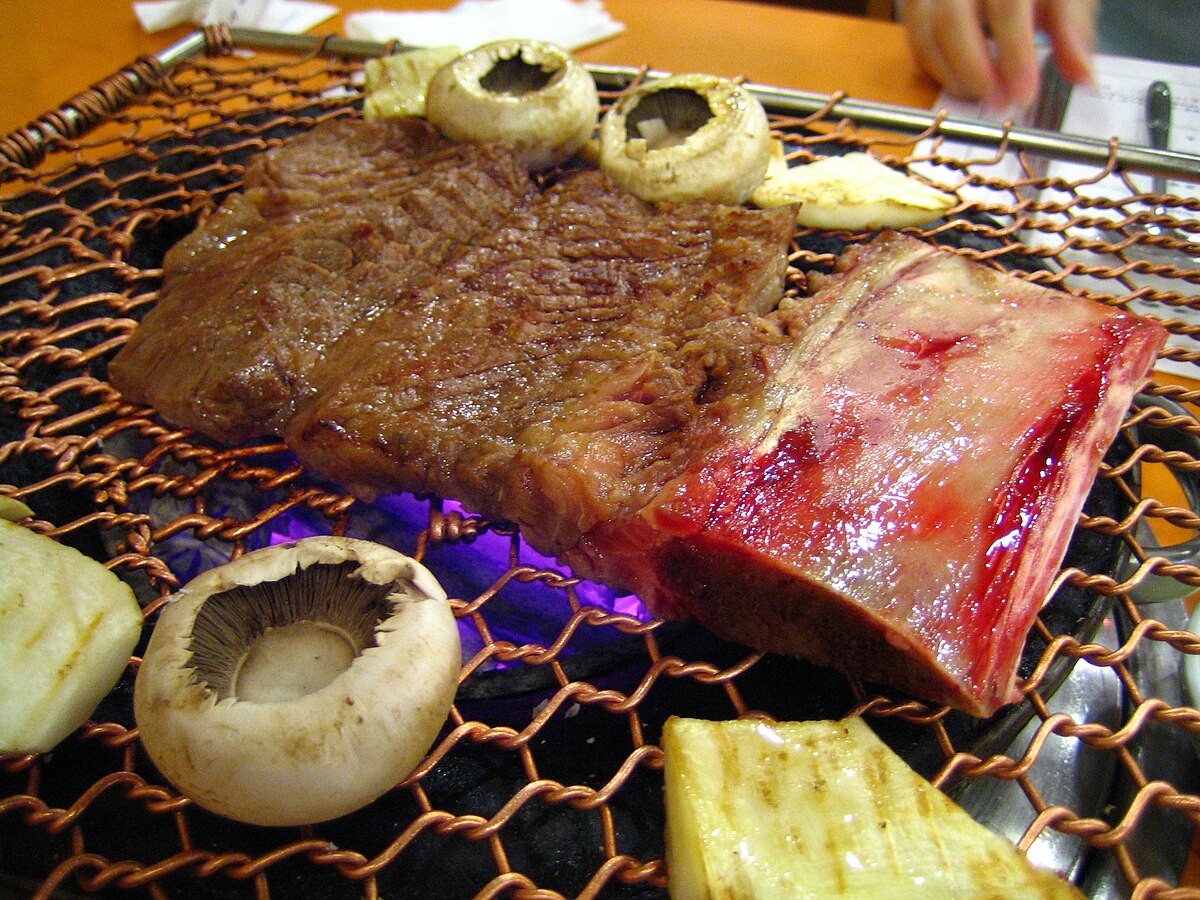
Galbi: Korea's Celebrated Short Ribs
Marinated beef or pork ribs grilled over charcoal — the crown jewel of Korean BBQ and special occasion dining.
Photo: Wikipedia Commons
What Is Galbi?
Galbi (갈비) refers to grilled ribs — most commonly beef short ribs (소갈비, sogalbi) or pork ribs (돼지갈비, dwaejigalbi) — marinated in a sweet and savory sauce built from soy sauce, sugar, sesame oil, garlic, Asian pear juice, and green onions. The pear juice is a critical ingredient: its natural enzymes (proteases) tenderize the meat fibers, producing a melt-off-the-bone softness that is the hallmark of well-made galbi. The most distinctive cutting technique is the 'LA-style' (LA galbi), in which the ribs are cut across the bone into thin strips rather than between the bones into individual rib sections. This cross-cut method exposes more surface area to the marinade and grill, creating more caramelized crust and more even cooking. The name comes from the Korean-American community in Los Angeles, where this technique became dominant and was eventually exported back to Korea. Beyond grilled versions, galbi also appears in galbijjim — a braised short rib preparation slow-cooked with radish, chestnuts, and carrots in a rich sauce until the meat becomes spoon-tender.
History & Origins
Galbi's history as a prestigious Korean dish stretches back to the Three Kingdoms period (57 BCE–668 CE). Archaeological evidence suggests that grilled rib meats were consumed by the Korean nobility, and by the Joseon dynasty (1392–1897), galbi had become an honored dish served at royal banquets and ancestral rites. Because cattle were valuable working animals in agricultural Korea, beef was not an everyday food for ordinary people. Eating beef galbi was reserved for special occasions — birthdays, weddings, and major holidays — giving it an enduring association with celebration, generosity, and good fortune. This cultural positioning as 'the food for important days' persists strongly today. Pork galbi democratized the dish in the 20th century. As pork became an affordable and widely available protein, pork ribs marinated in the same galbi sauce became a staple of outdoor barbecues, camping trips, and casual dining — bringing the galbi experience to everyday tables without the formality and expense of beef.
How Koreans Eat It
Galbi is typically cooked on a tabletop charcoal or gas grill built into the restaurant table, either by the diner or by the server.
- ·Eating technique: Unlike samgyeopsal, which is usually cut into small pieces before eating, galbi is often held by the bone and eaten by biting directly off the rib — this is considered perfectly acceptable and in fact the most satisfying way to eat it.
- ·Ssam pairing: Beef galbi can be wrapped in lettuce with a small amount of doenjang (fermented soybean paste), but the meat is rich enough to be enjoyed on its own without wrapping.
- ·Galbijjim (braised galbi): This banchan and holiday dish is served without grilling — the short ribs are slowly braised until fork-tender with soy sauce, ginger, and vegetables, then served in the braising liquid.
- ·Cold noodle pairing: Many high-end galbi restaurants serve naengmyeon (cold noodles) as the final course after the ribs — the cool, refreshing noodles provide an ideal contrast to the rich, smoky meat.
Cultural Significance
In Korean social vocabulary, 'I'll buy you galbi' (갈비 사줄게) is a meaningful promise — it signals genuine appreciation or a desire to celebrate together. Because galbi is more expensive than everyday meats like samgyeopsal, the offer carries weight. Parents use it to reward academic success; managers use it to mark a team's accomplishment; friends use it to celebrate good news. Galbijjim holds particular importance in Korean food culture as a mandatory holiday dish. During Chuseok (Korean Thanksgiving) and Seollal (Lunar New Year), families across Korea prepare galbijjim as part of the elaborate ancestral offering ceremony (jesa) and the family feast that follows. The dish's presence on the table signals abundance, care, and continuity with tradition. Outside Korea, galbi — particularly in its LA-cut form — has become one of the most popular Korean dishes in Korean-American communities. Koreatown restaurants in Los Angeles, New York, and Chicago built their reputations on galbi, introducing it to mainstream American diners and establishing Korean BBQ as a dining category in its own right.
Tips
- 💡Beef galbi is significantly more expensive than pork galbi — expect to pay two to three times more, but the flavor is also dramatically richer.
- 💡At premium galbi restaurants, let the server grill the meat — they know the ideal temperature and timing for each cut.
- 💡After eating, ask for guksu (noodle soup) or naengmyeon to serve as a palate cleanser and light finale to the meal.
Last updated: April 1, 2026
You might also like
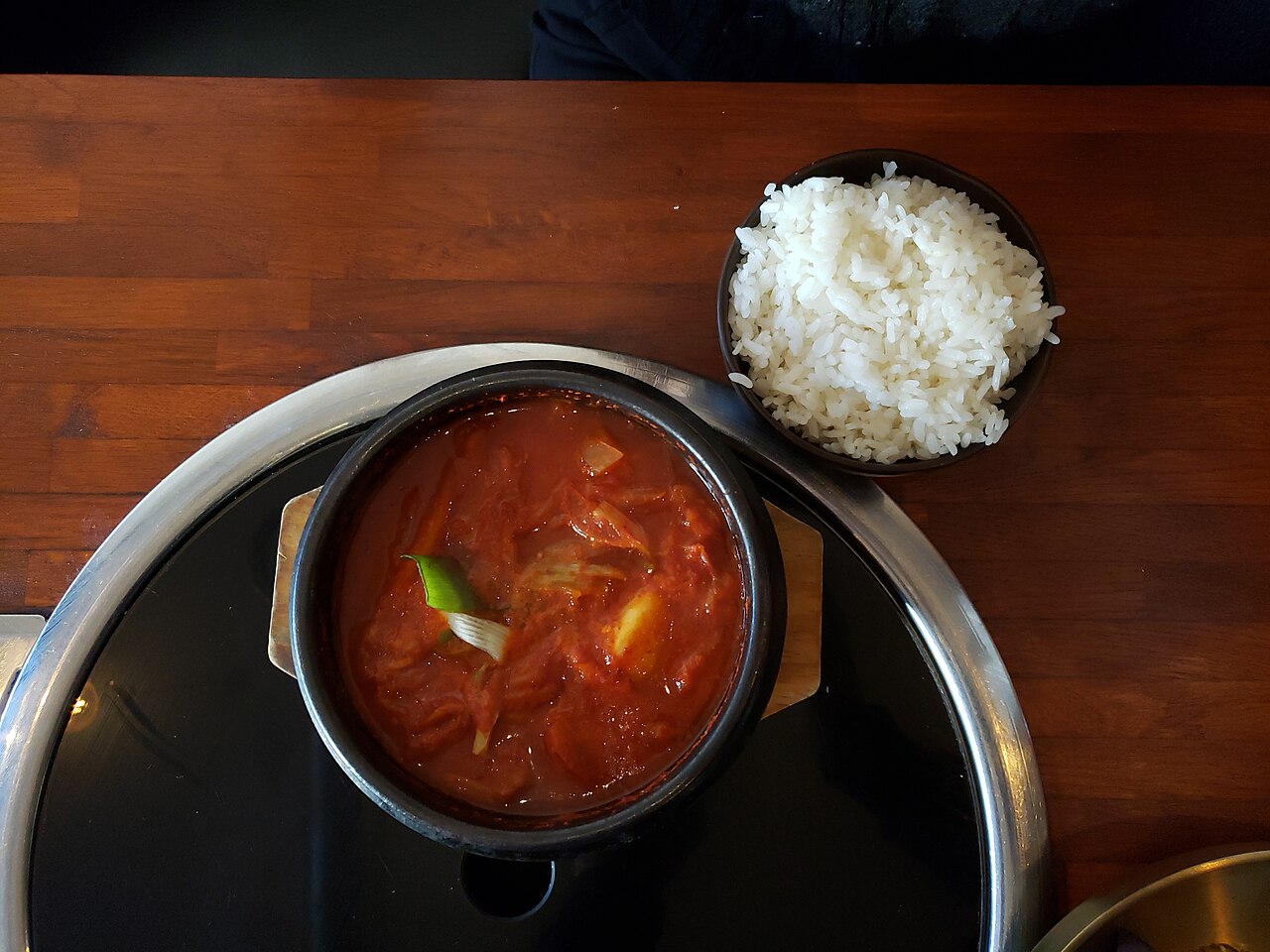
Kimchi Jjigae: Korea's Most Comforting Stew
Bubbling hot, deep red, and unmistakably Korean — kimchi jjigae is the stew that every Korean home smells like on a cold evening.
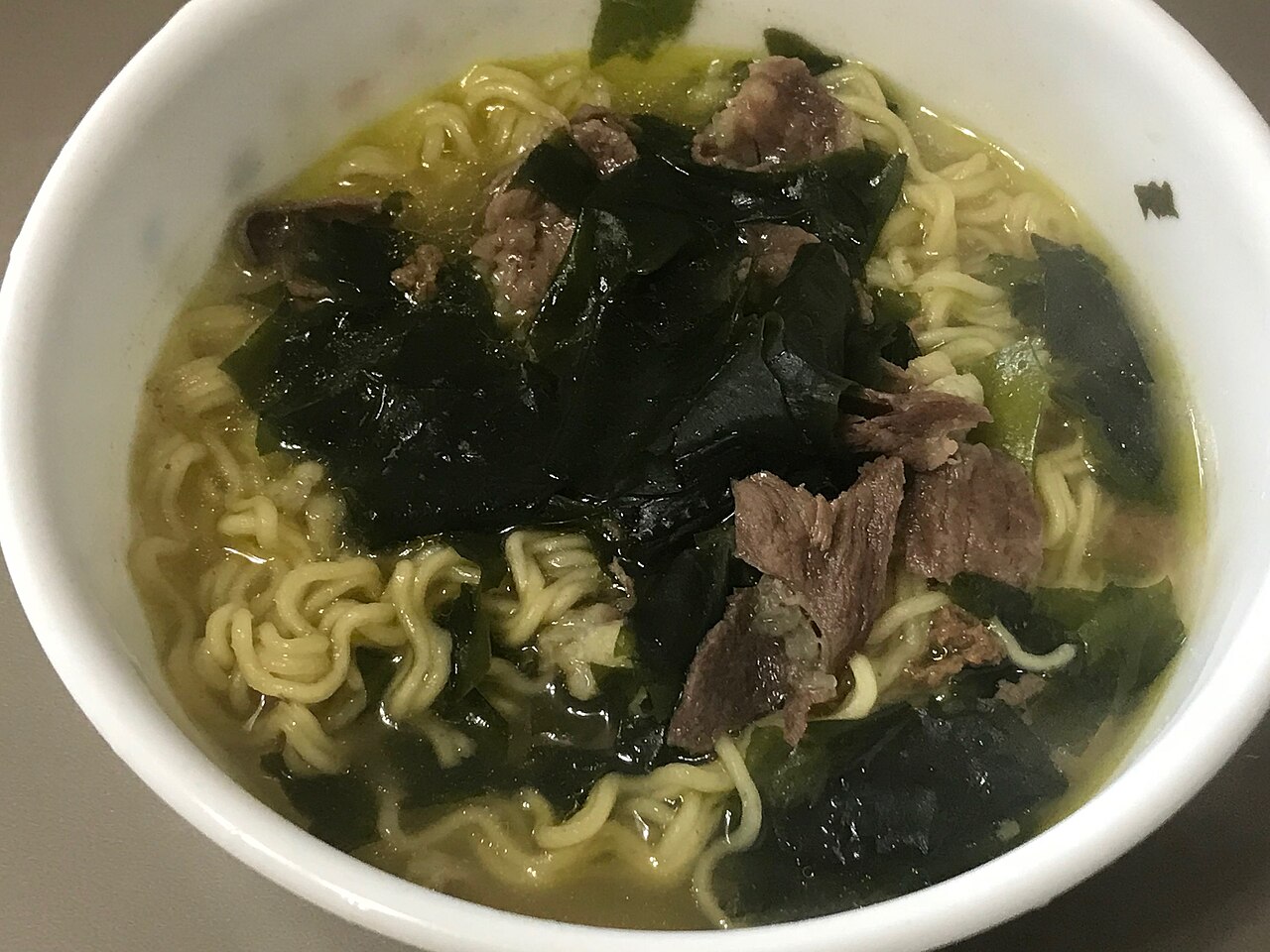
Miyeok-guk: The Birthday Soup That Is Really About Your Mother
Miyeok-guk is the seaweed soup every Korean eats on their birthday — a tradition that began as postpartum recovery food and became an annual act of gratitude to one's mother.
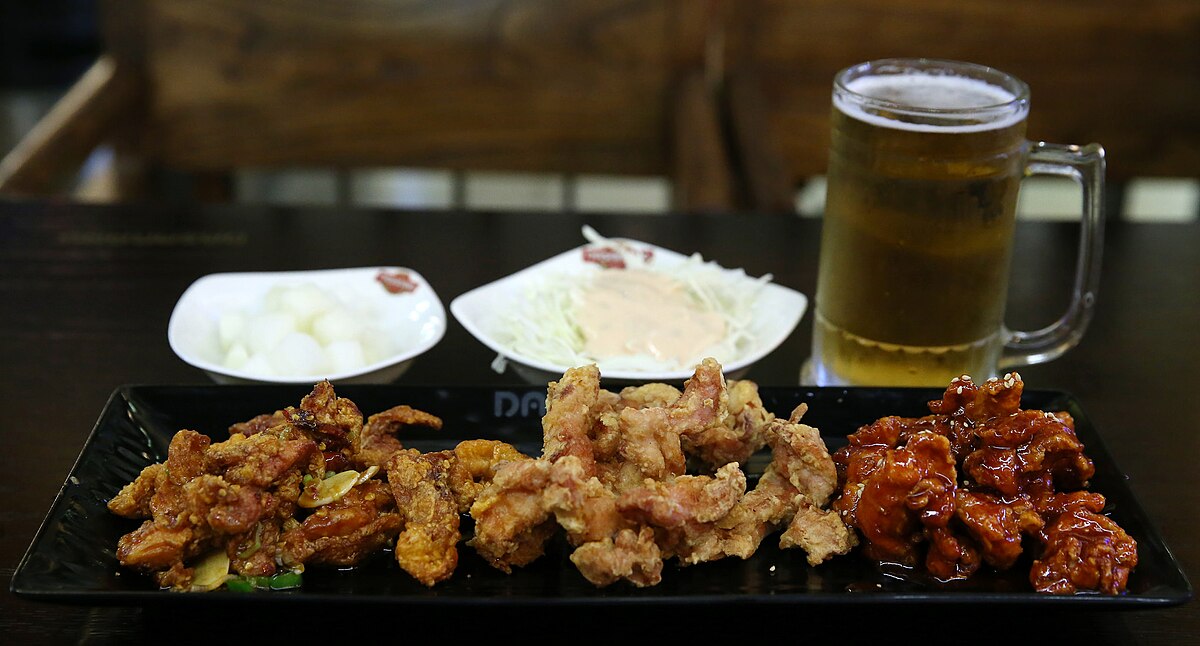
Chimaek: Why Korean Fried Chicken Is the World's Best
Korea has more fried chicken restaurants than McDonald's has locations worldwide. Here's the science and culture behind the crunch.