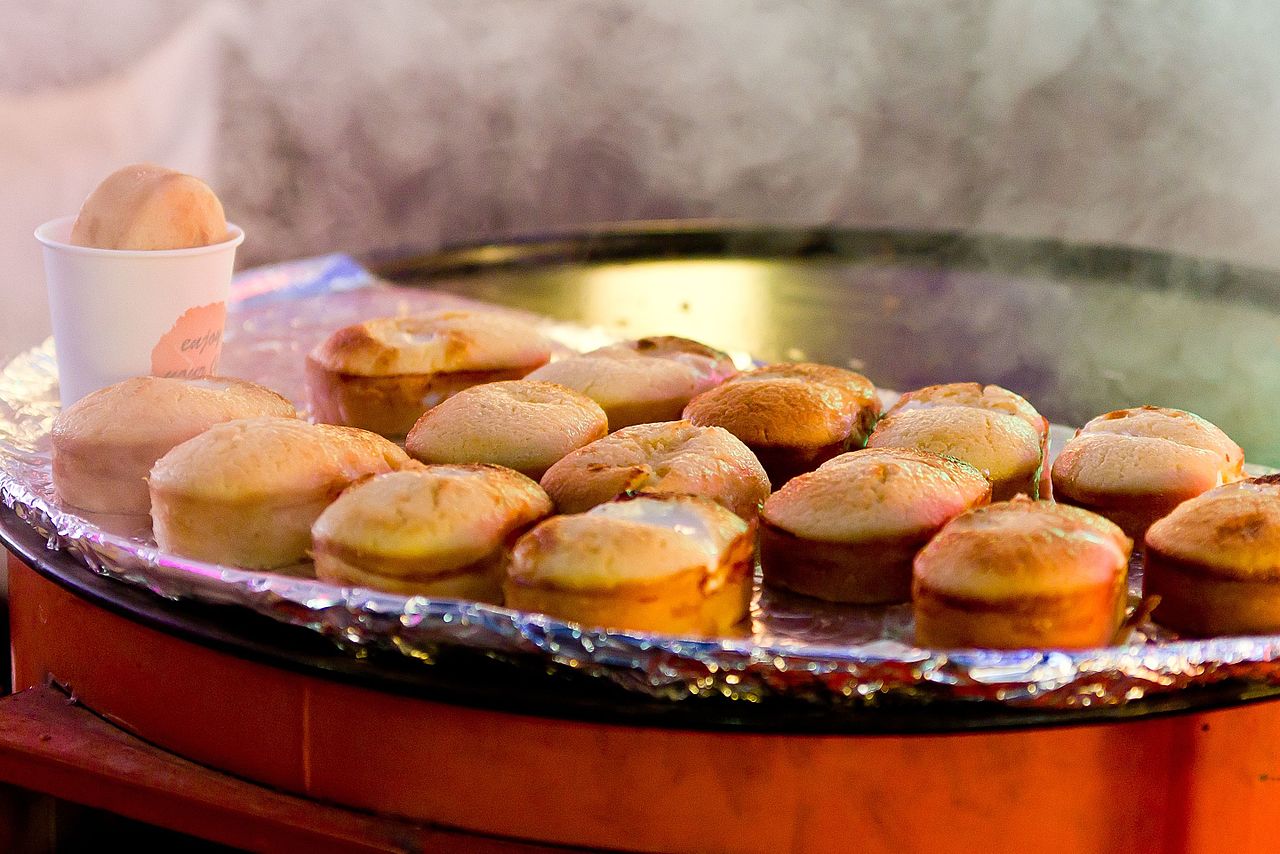
Gyeranppang: Korean Egg Bread Street Snack
Gyeranppang is a soft, sweet Korean street bread baked with a whole egg on top — a warm, portable winter snack sold from street carts that is both filling and comforting.
Photo: Wikipedia Commons
What Is Gyeranppang?
Gyeranppang (계란빵) literally means 'egg bread' — and that is exactly what it is. A sweet, slightly spongy bread batter is poured into individual oblong iron molds, and a whole raw egg is cracked directly onto the batter before it goes into the oven or heating apparatus. The bread bakes around the egg, setting it in place on top. The result is a small, pillow-like bread that is sweet and soft on the inside with a slightly crisp exterior, and a fully cooked egg (usually with a firm yolk) nestled into the top. The combination of sweet bread and savory egg should be contradictory, but the balance is exactly right — each bite contains both elements. Gyeranppang is one of Korea's most recognizable winter street foods, sold from small heated carts positioned near subway stations, market entrances, and busy pedestrian areas throughout the colder months.
History & Origins
Gyeranppang belongs to the broader category of Korean street breads (ppang) that became popular during the second half of the 20th century as Korean urban culture developed and street vendors diversified their offerings. The specific format — individual molds producing a single-serving bread with an egg — became standardized into the form familiar today. The basic concept of baking eggs into bread batter exists in various forms across East Asia, and Korea's version reflects the pragmatic, nourishing ethos of Korean street food: a single item that provides both carbohydrates (from the bread) and protein (from the egg) in a portable, affordable package. Gyeranppang is particularly associated with winter and the street food culture of Korean cities. Its appearance on street carts is a seasonal signal — when you see gyeranppang carts, winter has arrived.
How Koreans Eat It
Gyeranppang is a casual, mobile snack. It is eaten immediately after purchase, while walking or standing near the vendor's cart. The warmth of the freshly baked bread on cold days is a significant part of its appeal.
- ·Eat it immediately while hot — the soft, warm bread and the set egg are at their best fresh from the mold
- ·Hold from the bottom and bite from the top to avoid the egg falling out
- ·Available primarily in autumn and winter (October to March) at street carts near subway stations
- ·Look for carts with multiple iron molds — vendors with high turnover will have the freshest gyeranppang
Cultural Significance
Gyeranppang is an emblem of Korean winter street food culture. For many Koreans, the sight of a gyeranppang cart steaming in the cold air, the smell of baking bread and egg, and the warmth of holding one in both hands is deeply tied to winter memories — the walk home from school, a cold commute, a festival outing. The food also illustrates Korean street food's emphasis on warmth, immediacy, and the small pleasures of everyday life. Unlike some street foods that are associated with nightlife or celebration, gyeranppang is a daily, democratic pleasure — a small, warm, satisfying snack that costs almost nothing and requires only a moment to eat.
Tips
- 💡Look for gyeranppang carts near major subway station exits in Seoul from October through March
- 💡The freshest gyeranppang comes from carts with the most customers — turnover ensures the bread is hot from the mold
- 💡If you prefer a runnier yolk, ask the vendor to cook it briefly (반숙, bansuk) — though most gyeranppang has a fully set yolk
Last updated: April 1, 2026
You might also like
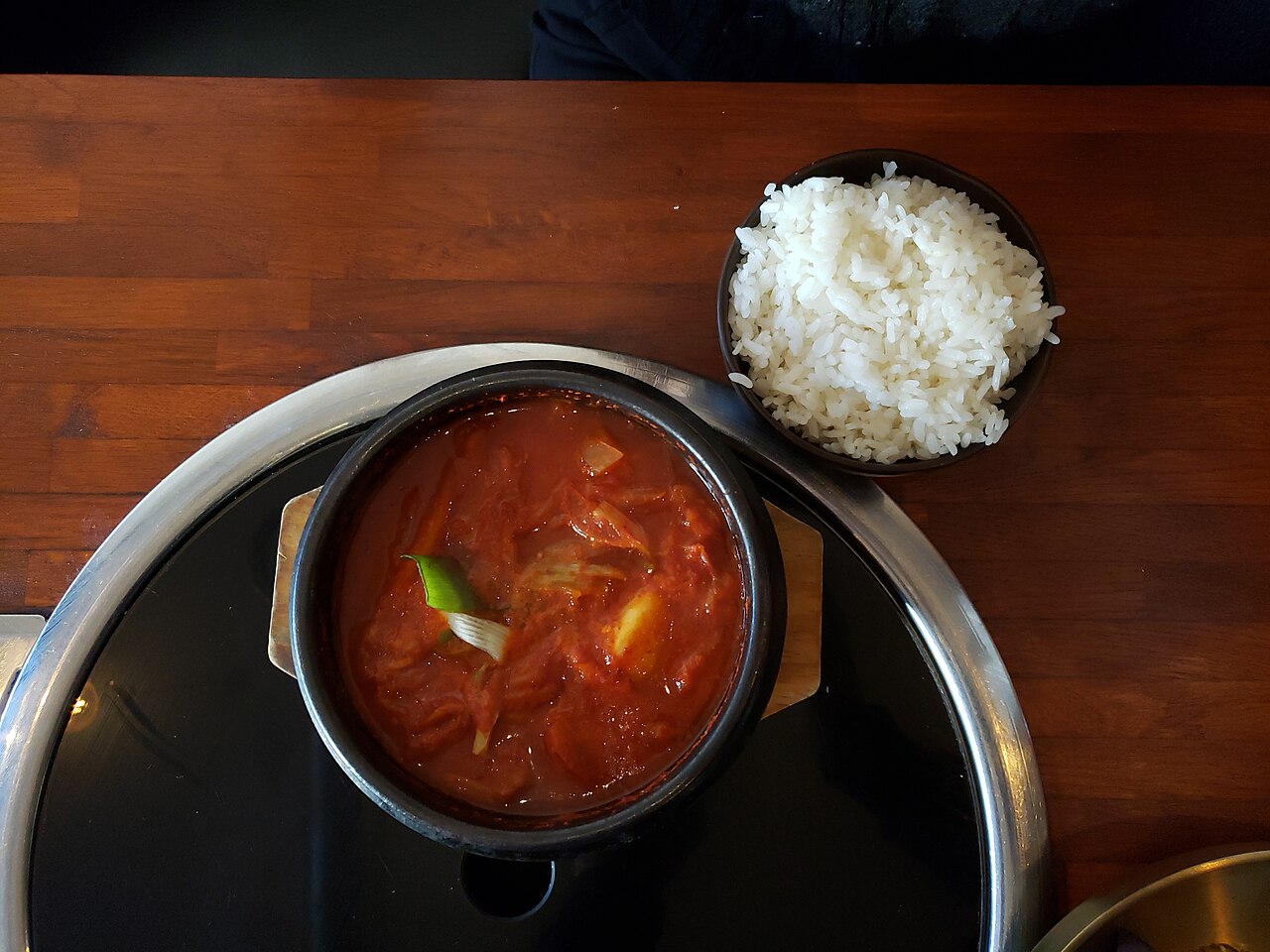
Kimchi Jjigae: Korea's Most Comforting Stew
Bubbling hot, deep red, and unmistakably Korean — kimchi jjigae is the stew that every Korean home smells like on a cold evening.
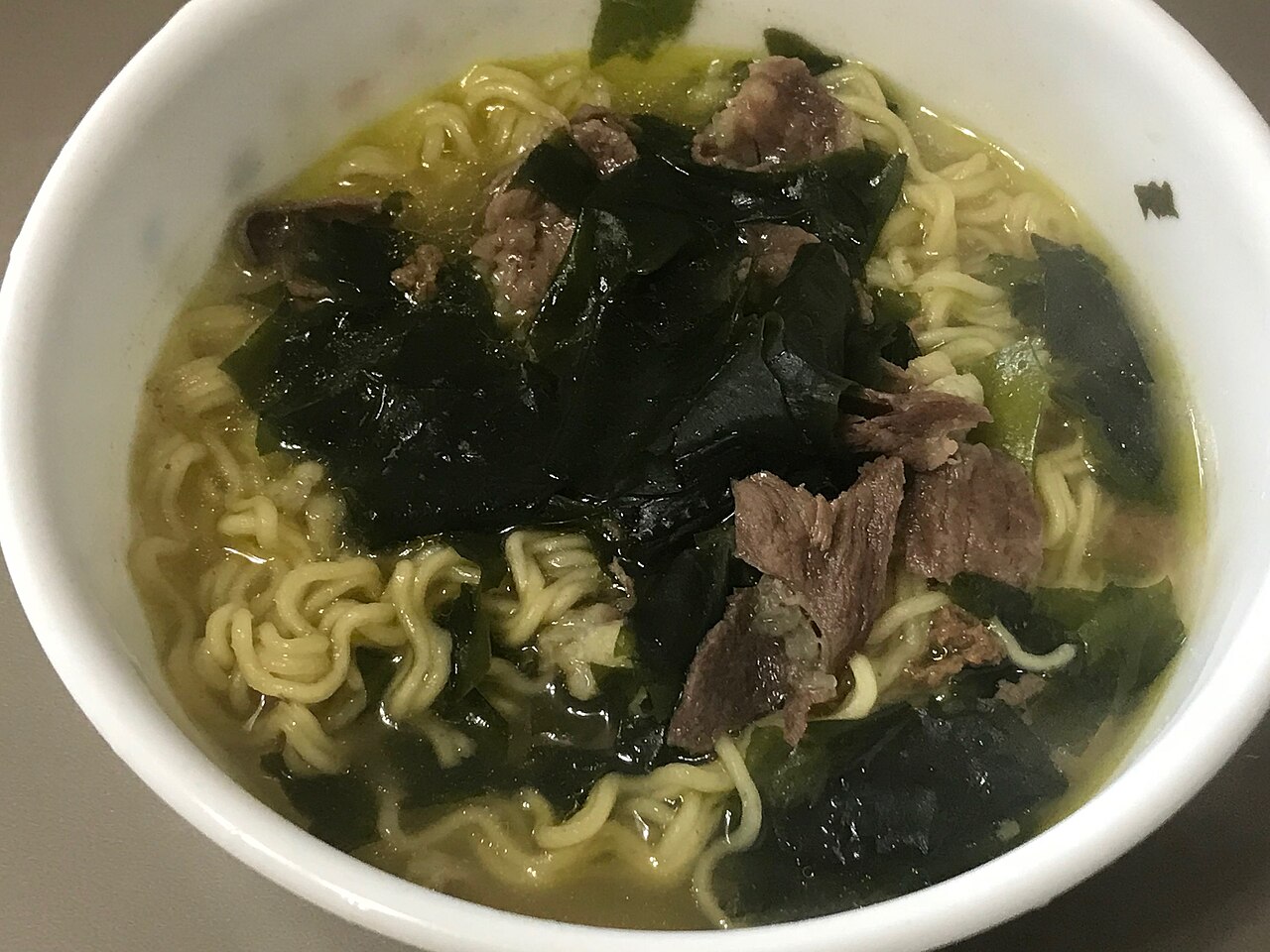
Miyeok-guk: The Birthday Soup That Is Really About Your Mother
Miyeok-guk is the seaweed soup every Korean eats on their birthday — a tradition that began as postpartum recovery food and became an annual act of gratitude to one's mother.
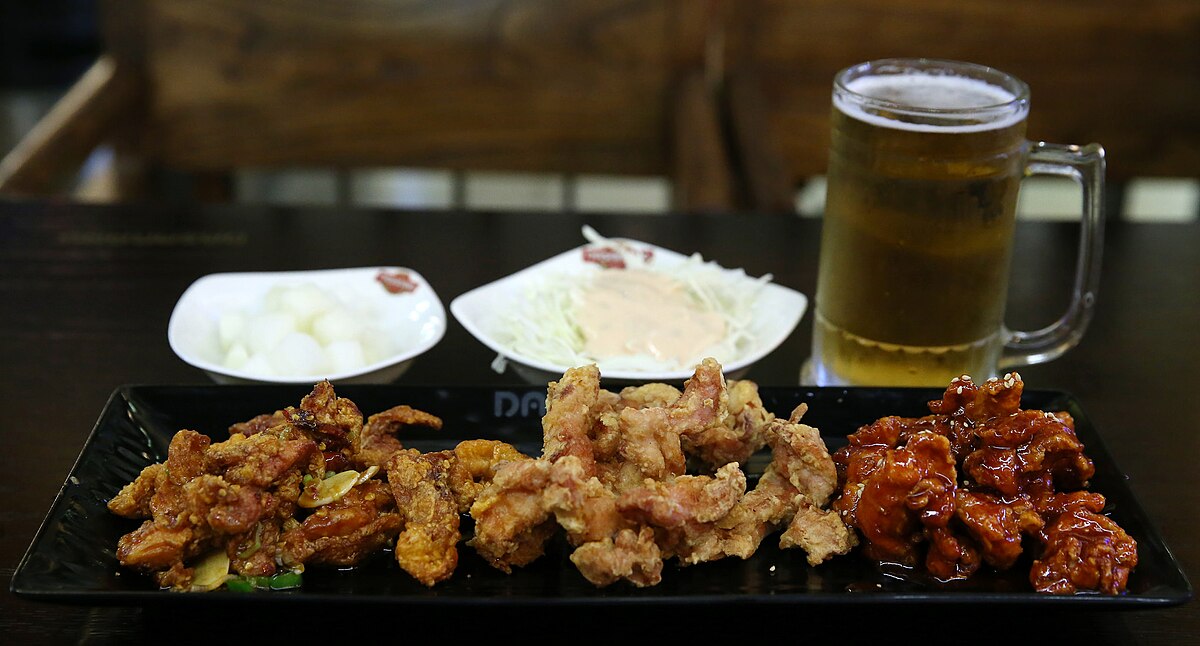
Chimaek: Why Korean Fried Chicken Is the World's Best
Korea has more fried chicken restaurants than McDonald's has locations worldwide. Here's the science and culture behind the crunch.