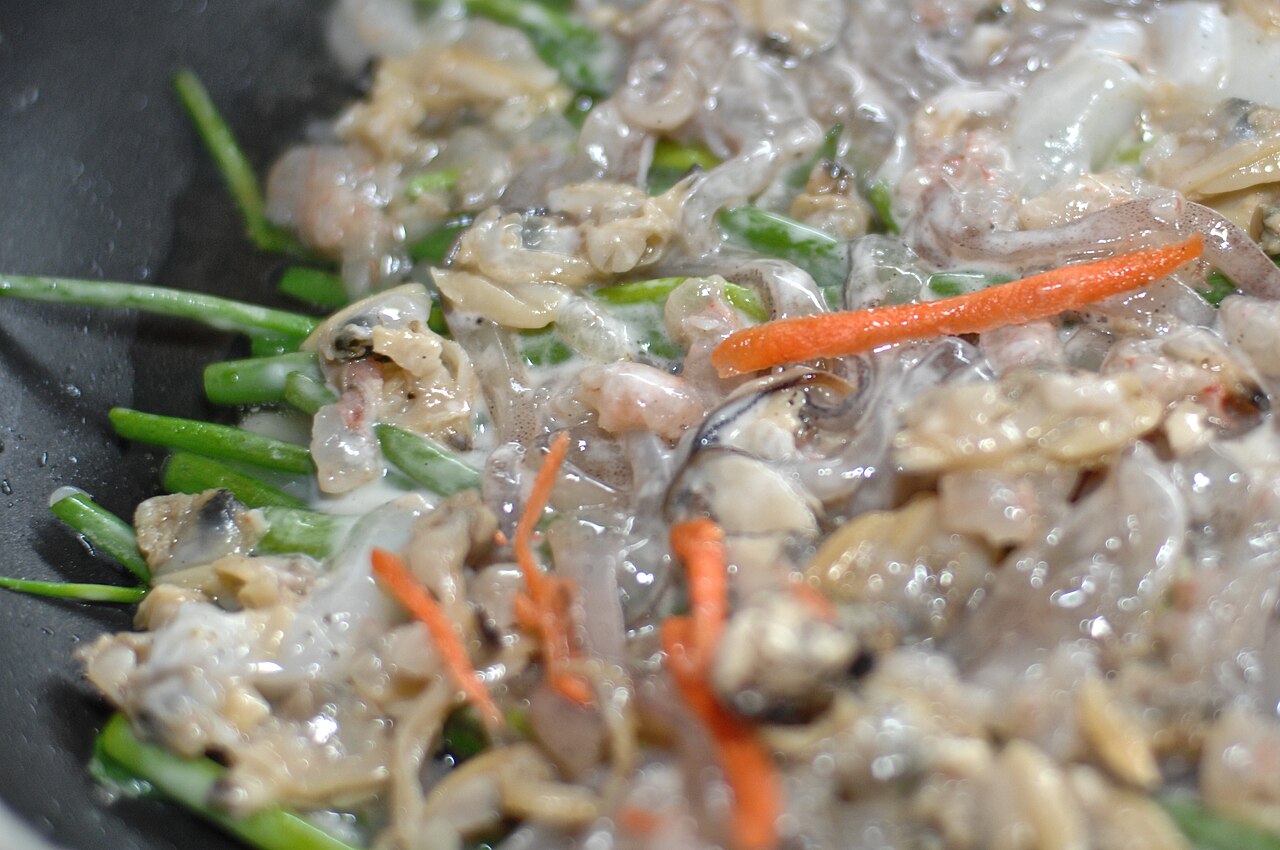
Haemul-pajeon: Korean Seafood and Green Onion Pancake
Haemul-pajeon is a crispy, savory Korean pancake packed with seafood and green onions, beloved as a rainy-day comfort food and a classic pairing with makgeolli.
Photo: Wikipedia Commons
What Is Haemul-pajeon?
Haemul-pajeon (해물파전) is a large Korean savory pancake made from a batter of wheat flour and egg, generously filled with pa (green onions or scallions) and haemul (seafood) — typically a mix of squid, shrimp, oysters, and mussels. The pancake is fried in oil until the outside is golden and crispy while the inside remains soft and eggy. The green onions are laid in long, parallel strips that give the finished pancake a distinctive layered structure when cut. The seafood provides a briny, oceanic richness that complements the mild sweetness of the scallions beautifully. Haemul-pajeon is typically cut into squares at the table and served with a dipping sauce made from soy sauce, vinegar, and sesame oil. It is one of the most popular Korean dishes for both everyday eating and social gatherings.
History & Origins
Savory pancakes (buchimgae or jeon) are among the oldest categories of Korean food, with references appearing in historical records from the Three Kingdoms period. The combination of green onions and seafood in a pan-fried batter developed along Korea's extensive coastline, where both ingredients were abundant. The Dongnae region near Busan is historically famous for a version of pajeon called 'Dongnaepajeon,' which uses only green onions (no seafood) and is made with a slightly different, more delicate batter. This variety is considered a heritage food and is listed on Korea's national cultural preservation list. The 'jeon' (전) category of foods — battered and pan-fried items — holds special significance in Korean cuisine as ceremonial food, prepared for ancestral rites (jesa) and major holidays.
How Koreans Eat It
Haemul-pajeon is strongly associated with rainy weather — there is a well-known Korean saying that rain makes you crave pajeon and makgeolli (rice wine). On rainy afternoons, sales of both items spike noticeably across Korea.
- ·Always eat with the soy-vinegar dipping sauce — the acidity brightens the rich, oily pancake
- ·Pair with makgeolli (Korean rice wine) for the classic Korean combination that locals swear by
- ·Eat it hot from the pan — the contrast between the crispy edge and soft interior is best right away
- ·Gwangjang Market in Seoul is famous for pajeon stalls where they are cooked fresh in enormous pans
Cultural Significance
Haemul-pajeon is one of the most emotionally resonant foods in Korean culture. The rainy-day association runs deep — the sound of rain on a roof is said to resemble the sound of pajeon sizzling in a pan, and generations of Koreans have internalized the connection between rainy weather and craving a warm, crispy pancake with a cup of makgeolli. The dish is also a central part of Korean drinking culture (anju) — foods eaten alongside alcohol. Pajeon's combination of crispy texture, savory flavor, and mild character make it the ideal companion to the slightly sweet, milky notes of makgeolli. Together, they form one of Korea's most iconic food-drink pairings.
Tips
- 💡On a rainy day in Korea, find a traditional restaurant and order haemul-pajeon with makgeolli — this is a quintessential Korean experience
- 💡Gwangjang Market (광장시장) in Seoul has legendary pajeon stalls that have been cooking since the market's founding
- 💡The outside should be very crispy — if it is soft and soggy, the oil was not hot enough or the pancake is not fresh
Last updated: April 1, 2026
You might also like
Kimchi Jjigae: Korea's Most Comforting Stew
Bubbling hot, deep red, and unmistakably Korean — kimchi jjigae is the stew that every Korean home smells like on a cold evening.
Miyeok-guk: The Birthday Soup That Is Really About Your Mother
Miyeok-guk is the seaweed soup every Korean eats on their birthday — a tradition that began as postpartum recovery food and became an annual act of gratitude to one's mother.
Chimaek: Why Korean Fried Chicken Is the World's Best
Korea has more fried chicken restaurants than McDonald's has locations worldwide. Here's the science and culture behind the crunch.