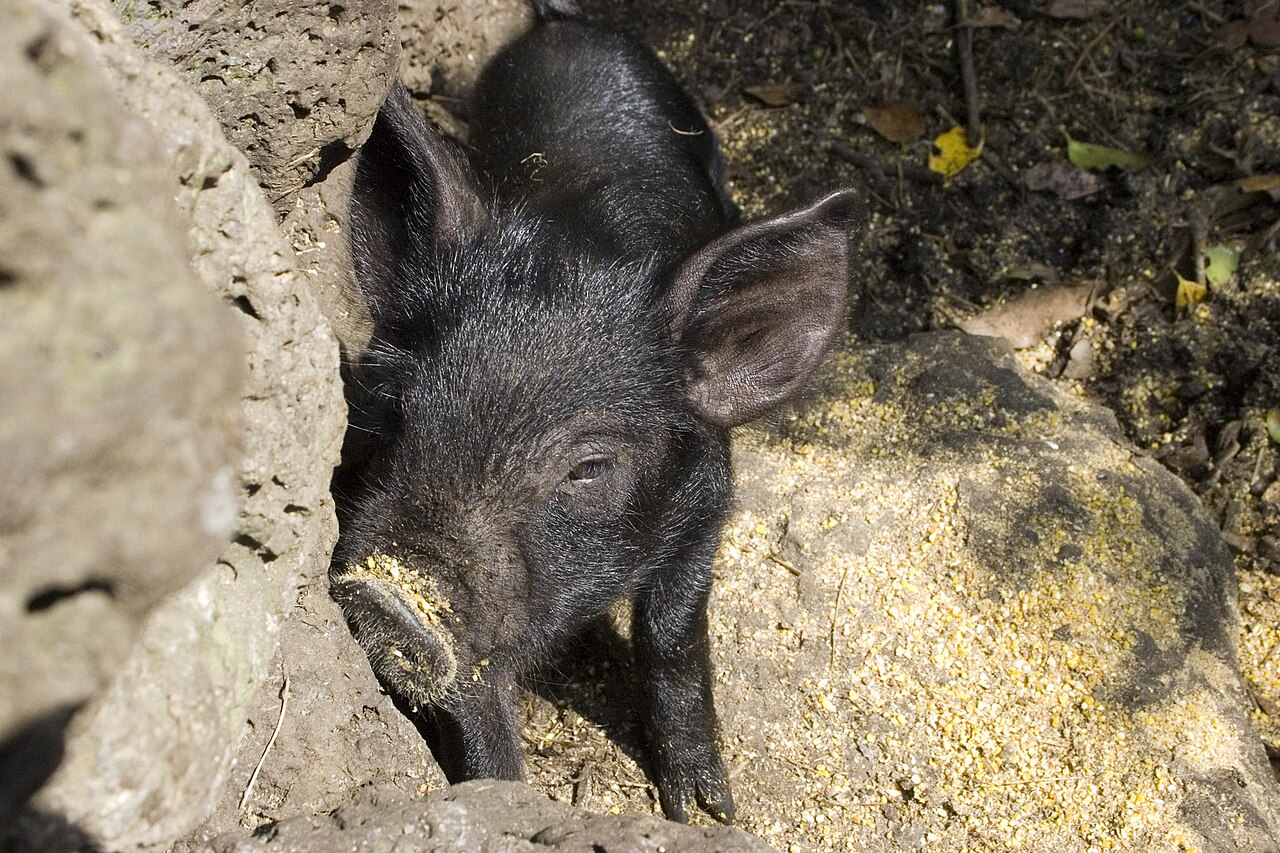
Jeju Heukdwaeji: Jeju Island's Black Pork BBQ
Jeju Island's prized black-haired native pig, grilled over charcoal — the island's most celebrated culinary treasure.
Photo: Wikipedia Commons
What Is Jeju Heukdwaeji?
Heukdwaeji (흑돼지) means 'black pig' — specifically the native Jeju Island pig breed, a compact, short-legged animal with coarse black hair that is genetically distinct from mainland Korean pig breeds. It has been raised on Jeju Island for at least a millennium, kept in traditional stone-walled enclosures and fed on a diet of grains, vegetables, and the by-products of the island's citrus orchards. The meat from Jeju black pigs is markedly different from mainland pork in several respects. The fat distribution is finer and more marbled throughout the muscle tissue, producing a juicier, more flavorful result. The fat itself has a higher concentration of oleic acid (the same beneficial fatty acid prominent in olive oil), giving it a cleaner, less greasy quality than standard pork fat. The meat has a deeper, more complex flavor — firmer in texture and more intensely savory — with virtually no 'off' smell even when eaten without heavy seasoning. The most common way to eat heukdwaeji is as samgyeopsal (grilled pork belly) or moksal (neck/shoulder), cut thickly, grilled over charcoal or wood, and eaten simply with salt, sesame oil dipping sauce, and fermented seafood condiments unique to Jeju.
History & Origins
The Jeju black pig's history on the island stretches back to at least the Goryeo dynasty (918–1392), when pigs were central to the island's agricultural economy and cultural life. Historical records describe Jeju's pigs as being among the tributes sent to the Korean royal court, suggesting their quality was recognized from early on. Jeju's traditional pig-keeping practice involved a structure called the 'tonsi' (통시) — a combined pig pen and outdoor toilet where pigs were kept below a raised outdoor latrine. The pigs consumed human waste along with other food scraps, creating a uniquely efficient recycling system. While this practice sounds off-putting by modern standards, the resulting pigs were noted for their particularly rich flavor by historical sources. The tonsi has been officially defunct for decades, but heritage preservation efforts maintain some examples at folk culture villages on the island. The modern Jeju heukdwaeji industry developed significantly from the 1990s onward as Jeju tourism grew and food-focused travel became mainstream. Pure-bred Jeju black pigs are now raised under controlled conditions, with certification programs distinguishing genuine Jeju native breed pork from crossbred or imported black pigs sold under similar names on the mainland.
How Koreans Eat It
Eating Jeju heukdwaeji is a structured experience with regional customs that differ from mainland Korean pork BBQ.
- ·Salt and sesame oil first: Unlike mainland pork BBQ where the meat is often wrapped in lettuce with doenjang paste, the traditional Jeju approach is to dip grilled pork in a mixture of salt and sesame oil (기름장, girumjang). The restraint allows the pork's own flavor to dominate.
- ·Mel-jeot (멸젓) dipping: Unique to Jeju, this fermented salted anchovy condiment (called mel-jeot or haenyeo jeotgal) is served as a dipping companion — its funky, savory depth complements the pork in a way unlike anything used in mainland BBQ.
- ·No ssam wrapping: Wrapping in lettuce is less common with heukdwaeji than with mainland pork — purists argue the wrapper dilutes the pork's distinct flavor.
- ·Hanlasan soju pairing: Local Jeju soju brands (Hanlasan, O2Lin) are considered the natural pairing — their slightly different flavor profile (Jeju water, slightly higher sweetness) is said to complement black pork better than mainland brands.
- ·Side dishes: Traditional Jeju side accompaniments include kimchi made with local varieties, braised black pork bones (heukdwaeji galbi-tang), and gochujang-dressed vegetables.
Cultural Significance
For Jeju residents and for Koreans in general, heukdwaeji has transcended the status of regional food to become one of the most powerful symbols of Jeju Island's distinct identity within Korea. The island, already set apart by its dialect, climate, volcanic landscape, and history of semi-autonomous governance, uses its black pork as a culinary statement of difference — a reminder that Jeju is not simply a smaller, warmer version of mainland Korea but a place with its own distinct character. The Heukdwaeji Street (흑돼지 거리) in Jeju City's Yeon-dong neighborhood is a famous concentration of black pork BBQ restaurants that operates as a destination in its own right. Visitors to Jeju who skip this area are considered to have missed one of the island's essential experiences. The restaurants compete intensely on the quality of their pork sourcing and the expertise of their grilling, and regulars have strong opinions about which establishments are superior. Jeju's culinary identity has become increasingly important as the island develops as an international tourist destination. Heukdwaeji, along with Jeju mandarin oranges (hallabong), abalone (jeonbok), and the haenyeo (women divers) seafood culture, is positioned as a pillar of what makes Jeju worth the journey — food as cultural destination.
Tips
- 💡The Yeon-dong Black Pork Street (연동 흑돼지 거리) in Jeju City is the most concentrated area for heukdwaeji restaurants — book in advance for dinner.
- 💡Ask specifically for 'injeung heukdwaeji' (인증 흑돼지) — certified native breed pork — to ensure you are getting the genuine Jeju breed rather than a mainland black pig.
- 💡Order both samgyeopsal (belly) and moksal (neck) to taste the contrast — the neck is often preferred by those who find the pure belly too fatty.
Last updated: April 1, 2026
You might also like
Kimchi Jjigae: Korea's Most Comforting Stew
Bubbling hot, deep red, and unmistakably Korean — kimchi jjigae is the stew that every Korean home smells like on a cold evening.
Miyeok-guk: The Birthday Soup That Is Really About Your Mother
Miyeok-guk is the seaweed soup every Korean eats on their birthday — a tradition that began as postpartum recovery food and became an annual act of gratitude to one's mother.
Chimaek: Why Korean Fried Chicken Is the World's Best
Korea has more fried chicken restaurants than McDonald's has locations worldwide. Here's the science and culture behind the crunch.