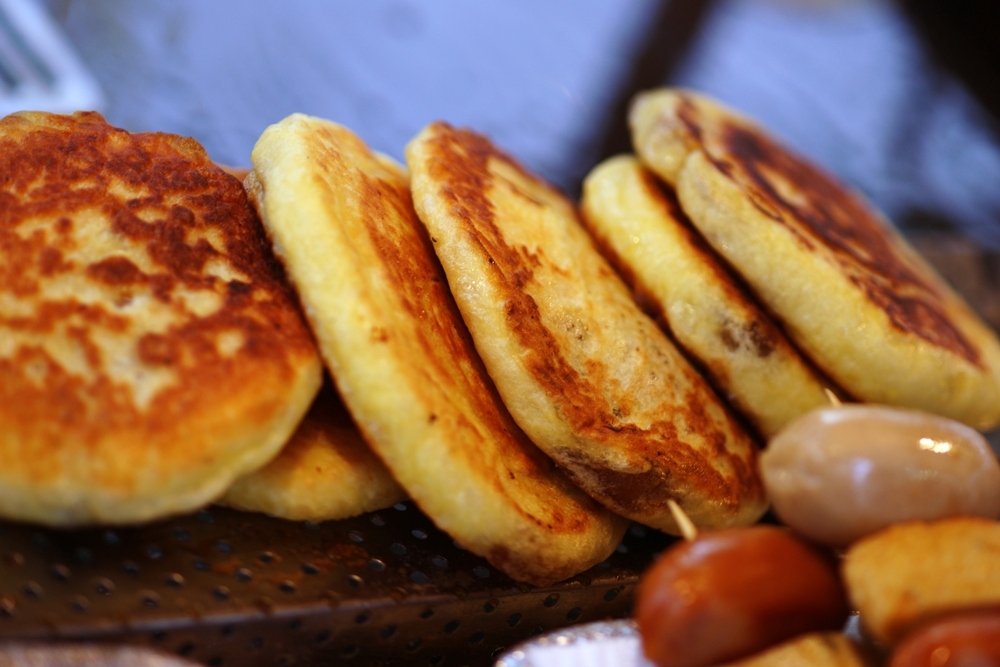
Hotteok: Korea's Winter Street Pancake
A crispy-outside, molten-sweet-inside fried pancake that defines the romance of Korean winter street food.
Photo: Wikipedia Commons
What Is Hotteok?
Hotteok (호떡) is a fried Korean pancake made from a soft, yeast-leavened dough of wheat flour and glutinous rice flour, stuffed with a filling of brown sugar, honey, cinnamon, and crushed peanuts or seeds. The dough ball is placed on a hot oiled griddle and pressed flat with a special weighted spatula (누르개, nureugae), creating a disc about 10–12 cm in diameter with a slightly crispy, caramelized outer shell and a thin, chewy inner layer surrounding a pool of hot, liquefied sweet filling. The first bite requires care: the molten filling can reach temperatures hot enough to cause burns if rushed. This makes the act of eating hotteok slightly theatrical — people are often seen blowing on the pancake, waiting for the steam to dissipate, before carefully biting into the edge and releasing the sweet flow gradually. A signature regional variant,씨앗호떡 (ssiat hotteok, 'seed hotteok'), is associated specifically with Busan's BIFF Square in the Nampo-dong district. These pancakes are pressed into a mixture of sunflower seeds, pumpkin seeds, and black sesame seeds before frying, creating a crunchy, nutty exterior that elevates the standard recipe significantly.
History & Origins
The word hotteok comes from 'ho' (胡, meaning 'foreign' or 'of the barbarians' in Chinese, used historically to refer to things from the west or central Asia) and 'tteok' (떡, rice cake). The 'ho' prefix suggests the dish's origin outside Korea — and indeed, hotteok is believed to have been introduced to Korea in the late 19th century by Chinese traders who settled in Korean port cities, particularly Incheon and Busan. The original Chinese pancake that inspired hotteok was likely a version of shaobing or a similar griddle bread filled with sesame or sugar. Korean cooks adapted the recipe to local ingredients and tastes over the following decades, replacing Chinese spices with the familiar Korean combination of cinnamon and brown sugar, and modifying the dough to incorporate glutinous rice flour for a chewier texture. Hotteok became embedded in Korean street food culture during the 20th century, particularly following the Korean War and the economic development of the 1960s–1980s when street food vendors proliferated across cities. Today it is available year-round but is most strongly associated with winter, when the warm, sweet pancake offers immediate comfort against the cold.
How Koreans Eat It
Hotteok is unambiguously street food — it is bought from a stall or cart, handed to you in a small paper cup or plastic glove, and eaten while standing or walking.
- ·The waiting game: The key skill with hotteok is patience. After receiving it, wait at least one to two minutes before biting in — the internal temperature of the filling is extremely high immediately off the griddle.
- ·Bite from the edge: Start with a small bite at the edge of the pancake rather than from the center, allowing steam to escape gradually and preventing the molten filling from surging out.
- ·Ssiat hotteok technique: The Busan seed hotteok has a denser, crunchier exterior — it can be bitten more directly without the filling flowing as dramatically as the classic version.
- ·Pairing: Hotteok is often eaten alongside a paper cup of hot tea or sikhye (sweet rice drink) sold by the same street vendors, making a complete quick warm snack.
- ·Homemade version: Hotteok kits are sold in Korean supermarkets and convenience stores worldwide — a popular activity for families and children.
Cultural Significance
Hotteok sits at the intersection of several themes that run deeply through Korean food culture: the embrace of foreign influences and their transformation into something distinctly Korean; the celebration of street food as a legitimate and beloved culinary category; and the particular romance Koreans attach to winter food. Korean winters are cold — temperatures in Seoul regularly drop below -10°C — and the culture has developed a rich set of winter foods and rituals around the idea of warmth as comfort and connection. Hotteok is central to this seasonal food vocabulary: the image of a person standing in a cold street, cradling a warm hotteok in both hands while steam rises from the crispy disc, is immediately recognizable as a winter Korea visual. Busan's BIFF Square ssiat hotteok has achieved national fame through word of mouth and social media documentation. Visitors to Busan regard eating one as near-mandatory, and the specific vendors at BIFF Square have become local celebrities. The hotteok's journey from a 19th-century Chinese immigrant food to a beloved symbol of Korean winter culture is a small but telling story about how Korea absorbs, transforms, and claims outside influences.
Tips
- 💡Busan's BIFF Square (BIFF 광장) in Nampo-dong is the home of ssiat hotteok (seed hotteok) — visit in the afternoon when queues are shorter than at peak evening times.
- 💡Price is typically 500–1,500 won per pancake — one of the best value snacks in Korea.
- 💡Hold the hotteok in the paper cup provided rather than handling it directly — the bottom surface will be oil-soaked and very hot.
Last updated: March 30, 2026
You might also like
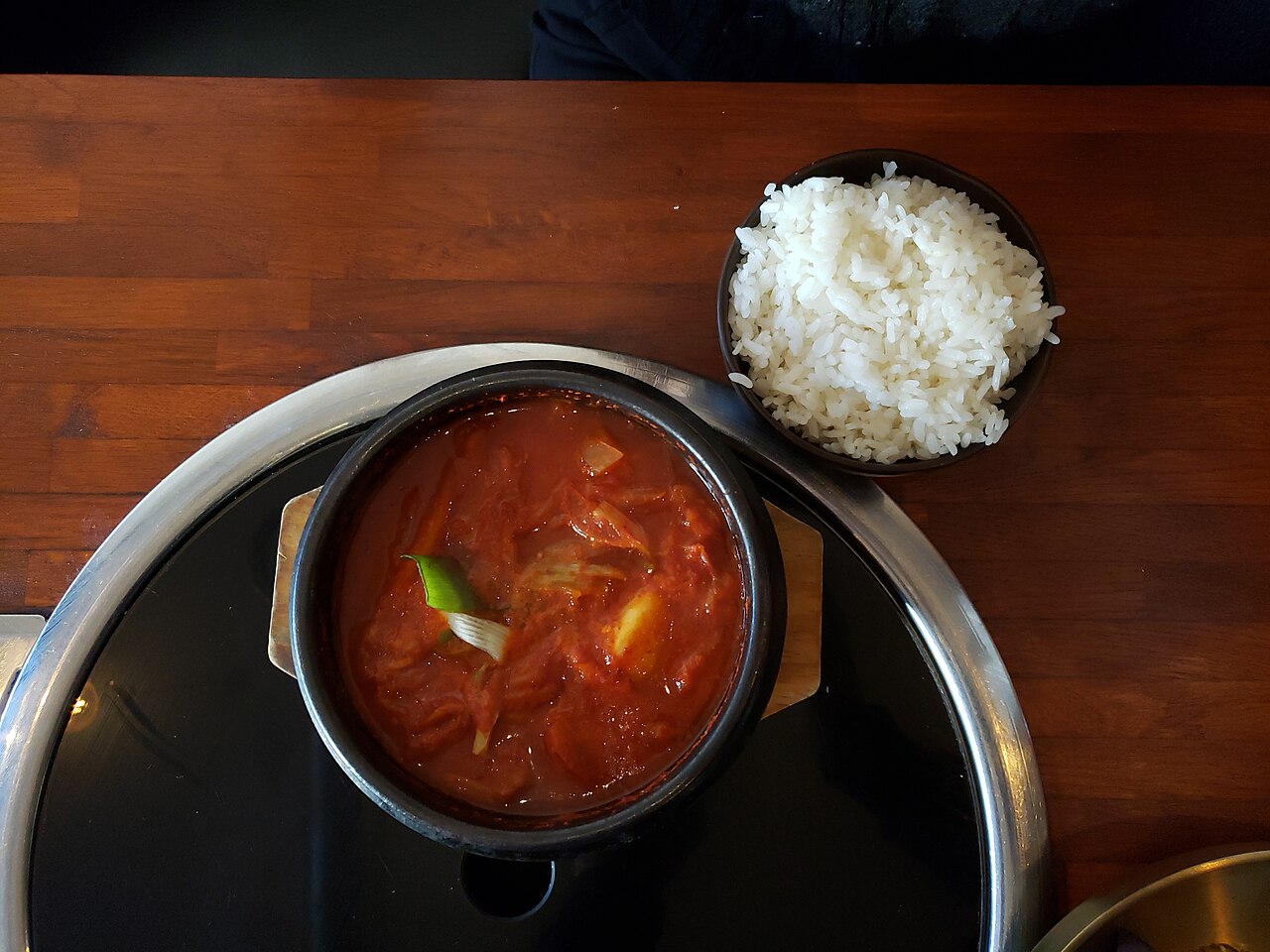
Kimchi Jjigae: Korea's Most Comforting Stew
Bubbling hot, deep red, and unmistakably Korean — kimchi jjigae is the stew that every Korean home smells like on a cold evening.
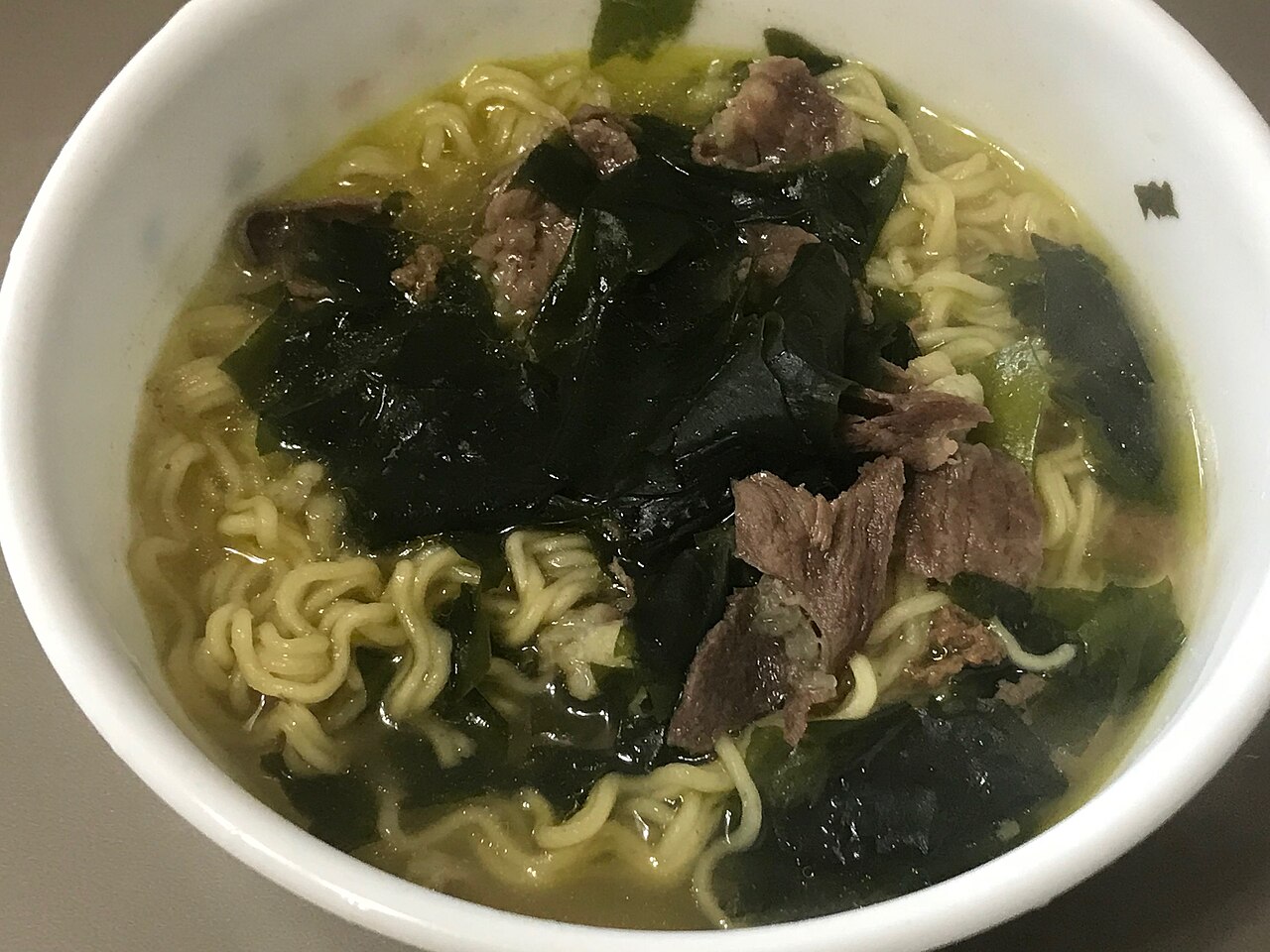
Miyeok-guk: The Birthday Soup That Is Really About Your Mother
Miyeok-guk is the seaweed soup every Korean eats on their birthday — a tradition that began as postpartum recovery food and became an annual act of gratitude to one's mother.
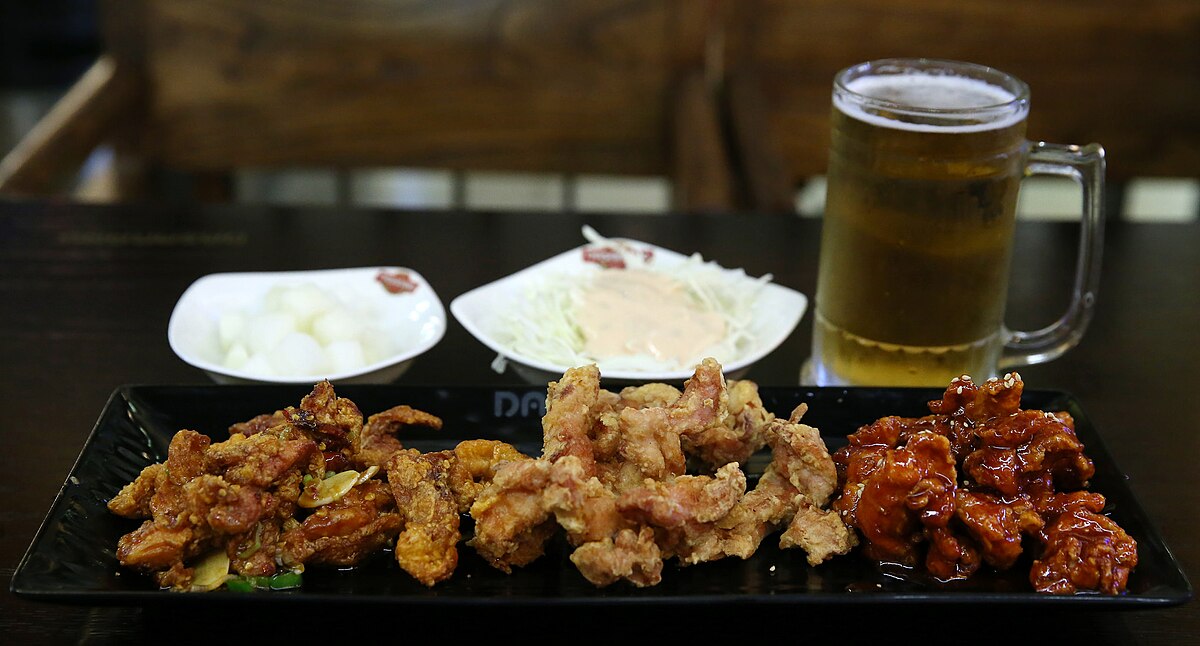
Chimaek: Why Korean Fried Chicken Is the World's Best
Korea has more fried chicken restaurants than McDonald's has locations worldwide. Here's the science and culture behind the crunch.