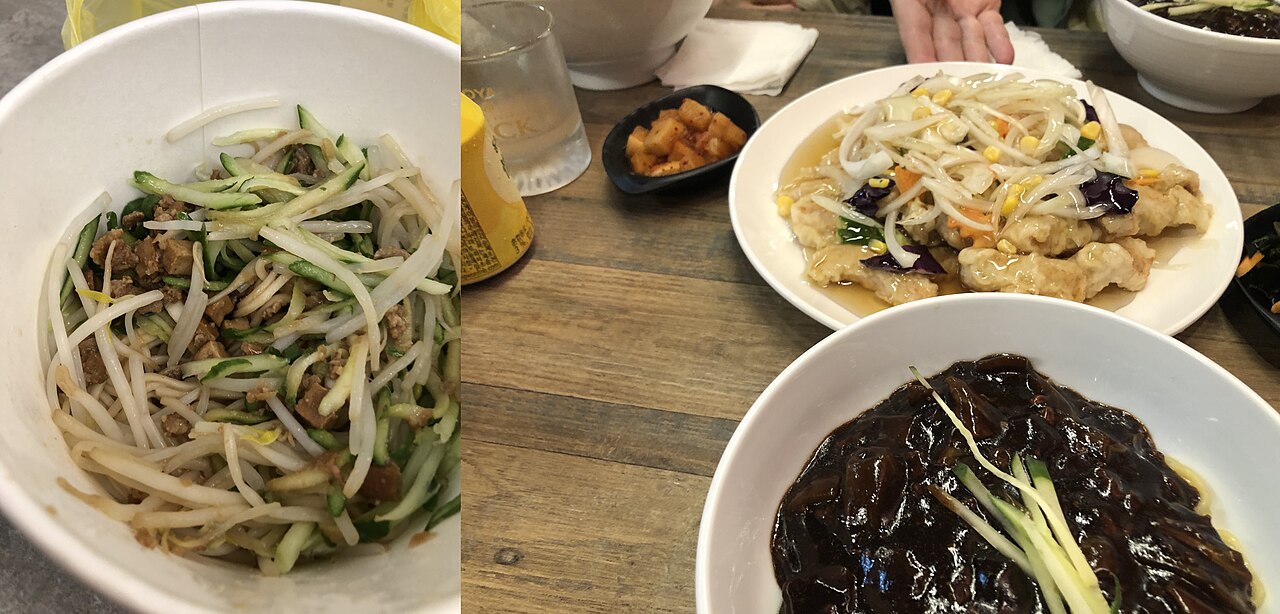
Jjajangmyeon: Korea's Beloved Black Bean Noodles
Jjajangmyeon is a Korean-Chinese noodle dish with thick wheat noodles smothered in a rich black bean paste sauce with pork and vegetables — one of Korea's most iconic and beloved comfort foods.
Photo: Wikipedia Commons
What Is Jjajangmyeon?
Jjajangmyeon (짜장면) consists of thick, chewy wheat noodles topped with a dark, glossy sauce made from chunjang (춘장) — a Korean-style fermented black bean paste — stir-fried with pork belly, onions, zucchini, and potatoes. The sauce is savory, slightly sweet, and deeply umami, coating the noodles in a rich, satisfying embrace. A few slices of pickled yellow radish (단무지) and raw onion slices are standard accompaniments, offering bright, refreshing contrasts. Jjajangmyeon is Korean-Chinese cuisine (한중 음식), developed by Chinese immigrants in Incheon in the early 20th century. It is a Korean adaptation of the Chinese dish zhájiàngmiàn (炸醬麵), but the Korean version is distinctly different — sweeter, less salty, with a thick, caramelized sauce. This transformation over a century of Korean cooking makes jjajangmyeon a uniquely Korean food despite its Chinese origins. Alongside jjamppong (짬뽕, spicy seafood noodle soup), jjajangmyeon is the defining dish of Korean-Chinese restaurants (중국집). The phrase '짜장 vs 짬뽕' captures an impossible dilemma Koreans face when ordering — the choice between the two has become a cultural shorthand for any difficult decision.
History & Origins
Jjajangmyeon traces its roots to Incheon's Chinatown (차이나타운), Korea's oldest and largest, established by Chinese immigrants in the late 19th century when Incheon served as a major trading port. Workers from Shandong Province, China, brought their noodle culture with them, and the dish evolved to suit Korean tastes over the following decades. The dish became deeply embedded in Korean culture during the rapid industrialization of the 1960s and 1970s, when Chinese-Korean restaurants became cheap, fast, and ubiquitous providers of hot meals. Jjajangmyeon became the go-to delivery food for moving days (이삿날), the first meal in a new home — a tradition so strong it persists to this day. In 2009, the Korean government added jjajangmyeon to the country's Cultural Heritage list, officially recognizing it as part of Korea's food identity. Incheon's Chinatown remains the spiritual home of jjajangmyeon, and the area has a museum dedicated to the dish's history.
How Koreans Eat It
Jjajangmyeon is often eaten as a quick, satisfying meal, particularly for delivery. It has specific customs and rituals around it.
- ·Mix the sauce into the noodles thoroughly before eating — jjajangmyeon is never eaten with the sauce sitting on top
- ·Alternate bites with the pickled radish (단무지) and raw onion slices dipped in chunjang paste to balance the richness of the sauce
- ·On moving day (이삿날), ordering jjajangmyeon delivery for the whole family is a beloved Korean custom — it is considered bad luck to cook on your first day in a new home
- ·Black Day (블랙데이) — April 14th — is an unofficial Korean holiday when single people eat jjajangmyeon alone to commiserate about not having received Valentine's or White Day gifts
Cultural Significance
Jjajangmyeon's place in Korean culture is outsized relative to its simplicity. It is perhaps the most ordered delivery food in Korea, and the sight of delivery drivers on motorcycles carrying stacks of metal bowls is part of Korean urban life. The dish evokes powerful nostalgia — its smell and flavor are tied to childhood memories, school lunches, and family meals for millions of Koreans. The dish also represents Korea's capacity to transform foreign influences into distinctly Korean cultural expressions. Jjajangmyeon is not Chinese food — it is Korean food with Chinese roots. This 'Koreanization' of a foreign dish, and Korea's pride in the result, reflects a broader cultural process that has made Korean food one of the world's most innovative and dynamic cuisines.
Tips
- 💡Visit Incheon Chinatown for the most historically authentic jjajangmyeon experience — many restaurants there have been operating for 50+ years with unchanged recipes
- 💡Look for restaurants that make handmade noodles (수타면, suta myeon) — the texture is markedly superior to machine-made noodles and worth seeking out
- 💡Jjajangmyeon sets (세트) at Korean-Chinese restaurants typically include both jjajangmyeon and jjamppong at a slight discount — ideal for sampling both classics
Last updated: April 1, 2026
You might also like
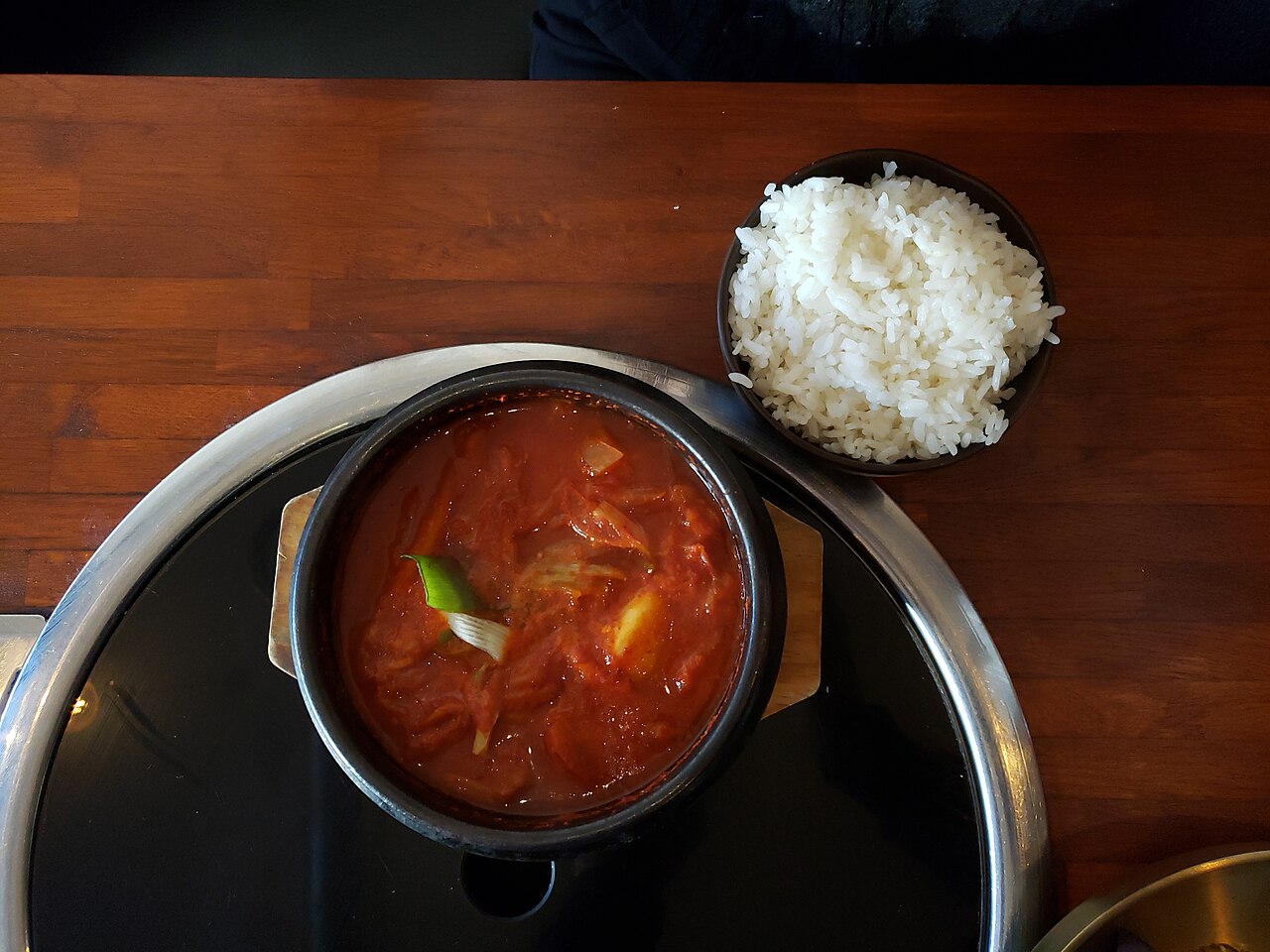
Kimchi Jjigae: Korea's Most Comforting Stew
Bubbling hot, deep red, and unmistakably Korean — kimchi jjigae is the stew that every Korean home smells like on a cold evening.
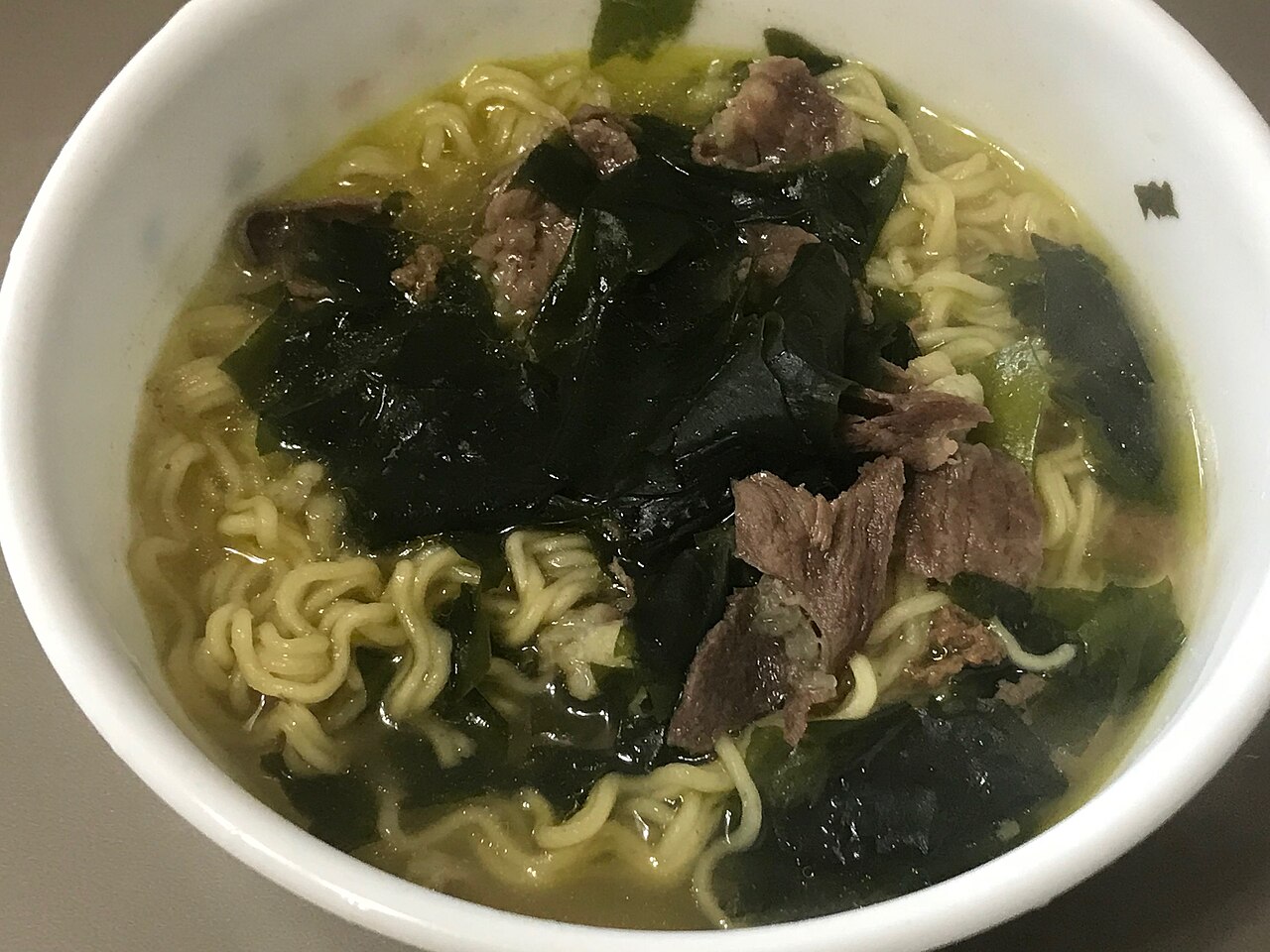
Miyeok-guk: The Birthday Soup That Is Really About Your Mother
Miyeok-guk is the seaweed soup every Korean eats on their birthday — a tradition that began as postpartum recovery food and became an annual act of gratitude to one's mother.
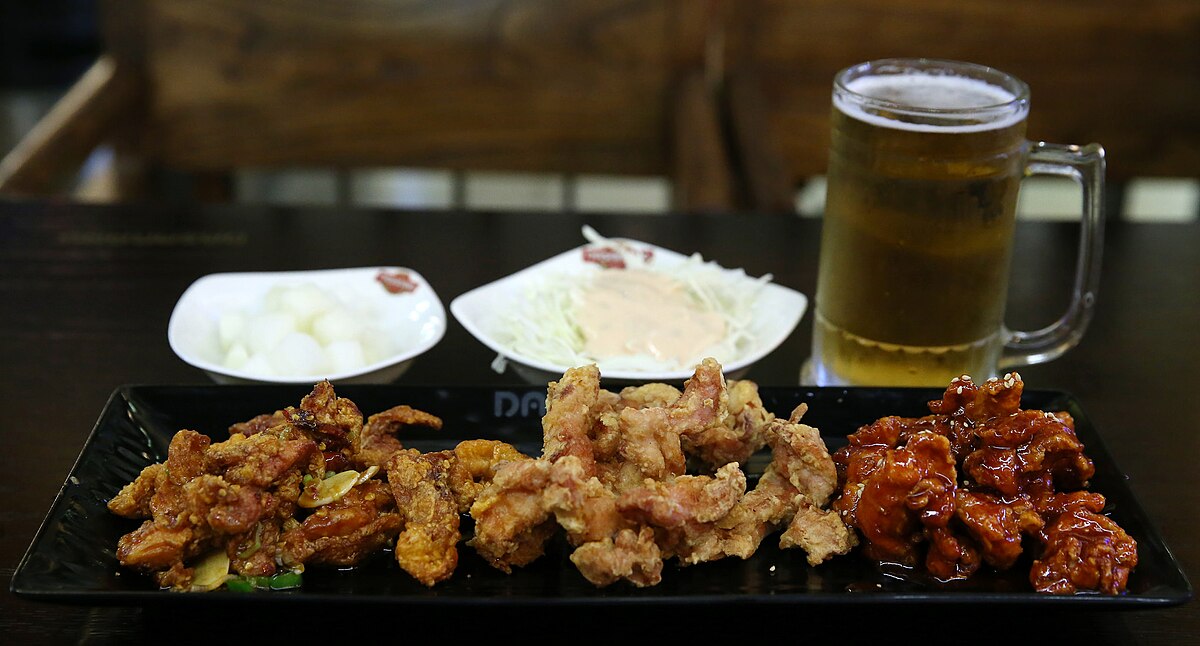
Chimaek: Why Korean Fried Chicken Is the World's Best
Korea has more fried chicken restaurants than McDonald's has locations worldwide. Here's the science and culture behind the crunch.