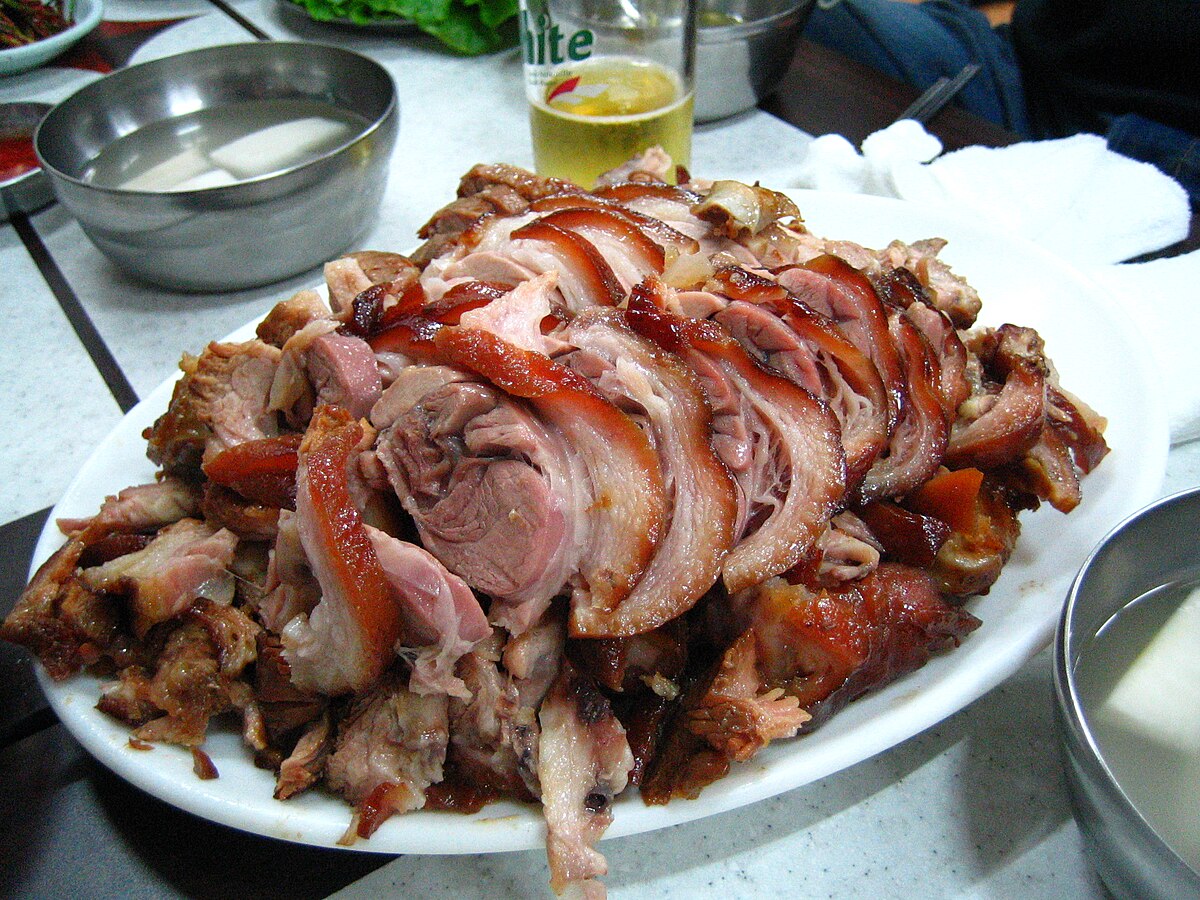
Jokbal: Korean Braised Pig's Trotters
Jokbal is a Korean delicacy of pig's trotters slow-braised in soy sauce, ginger, and spices until the meat is tender and the skin becomes glossy and rich with collagen.
Photo: Wikipedia Commons
What Is Jokbal?
Jokbal (족발) is a Korean dish made from pig's trotters — the feet and lower leg — that are cleaned, blanched, and then slow-braised for several hours in a fragrant mixture of soy sauce, doenjang, ginger, garlic, green onions, and various aromatic spices including cinnamon and star anise. The long braising transforms the tough, collagen-rich trotters into something remarkably tender and flavorful. The meat is typically served at room temperature, sliced thinly, with the skin on. The characteristic feature of good jokbal is the skin: it should be soft and gelatinous rather than rubbery, with a glossy, amber color from the braising liquid. The meat underneath is lean and firm. Jokbal is traditionally served with fresh lettuce or perilla leaves for wrapping, fermented shrimp paste (saeujeot), sliced radish, and ggakdugi (radish kimchi) for a complete and complex eating experience.
History & Origins
Jokbal has deep roots in Korean cooking traditions that predate the modern era. The technique of slow-braising tough cuts of meat in soy-based liquids (jangjorim style) is one of the fundamental methods in Korean cuisine, developed as a way to make nutritious use of parts of the animal that required extended cooking to become palatable. Jangchung-dong in central Seoul became the most famous jokbal district in Korea during the 20th century. The neighborhood's narrow lanes filled with jokbal restaurants became a destination for Koreans from all walks of life, and 'Jangchung-dong jokbal' is still considered a benchmark of quality by Korean food enthusiasts. Jokbal is also considered a 'collagen food' (콜라겐 음식) in Korean wellness culture — the rich gelatin content of the pig's trotters is believed to be beneficial for skin health, making it popular with women as a beauty food.
How Koreans Eat It
Jokbal is typically eaten as a late-night meal, often paired with alcohol. It is one of the most popular anju (drinking foods) in Korea and is frequently ordered alongside beer or soju.
- ·Wrap slices in lettuce with a dab of saeujeot (fermented shrimp paste) and garlic — this is the classic way to eat it
- ·The skin should be tender and gelatinous, not chewy — good jokbal has been braised long enough
- ·Pair with soju or beer for the classic Korean combination
- ·Visit Jangchung-dong in Seoul for the most famous jokbal experience in Korea — the street has dozens of competing restaurants
Cultural Significance
Jokbal occupies a culturally interesting space in Korea — it is both a homely, traditional food associated with old-school Korean eating culture, and simultaneously a food that has been embraced by food trends and wellness culture for its collagen content. Both grandmothers and beauty-conscious young women might order jokbal for very different reasons. The Jangchung-dong jokbal street in Seoul is one of the few remaining 'food streets' in Korea where a single dish dominates an entire neighborhood. Eating jokbal there is not just a culinary experience but a historical one — you are participating in a food tradition that has defined that neighborhood for over half a century.
Tips
- 💡Jangchung-dong in Seoul is the most famous jokbal district — the competition among restaurants there ensures high quality
- 💡Order 'bossam-jokbal set' to get both jokbal and bossam on one platter for a comprehensive experience
- 💡Saeujeot (fermented shrimp paste) is the essential condiment — do not skip it even if the smell is unfamiliar
Last updated: April 1, 2026
You might also like
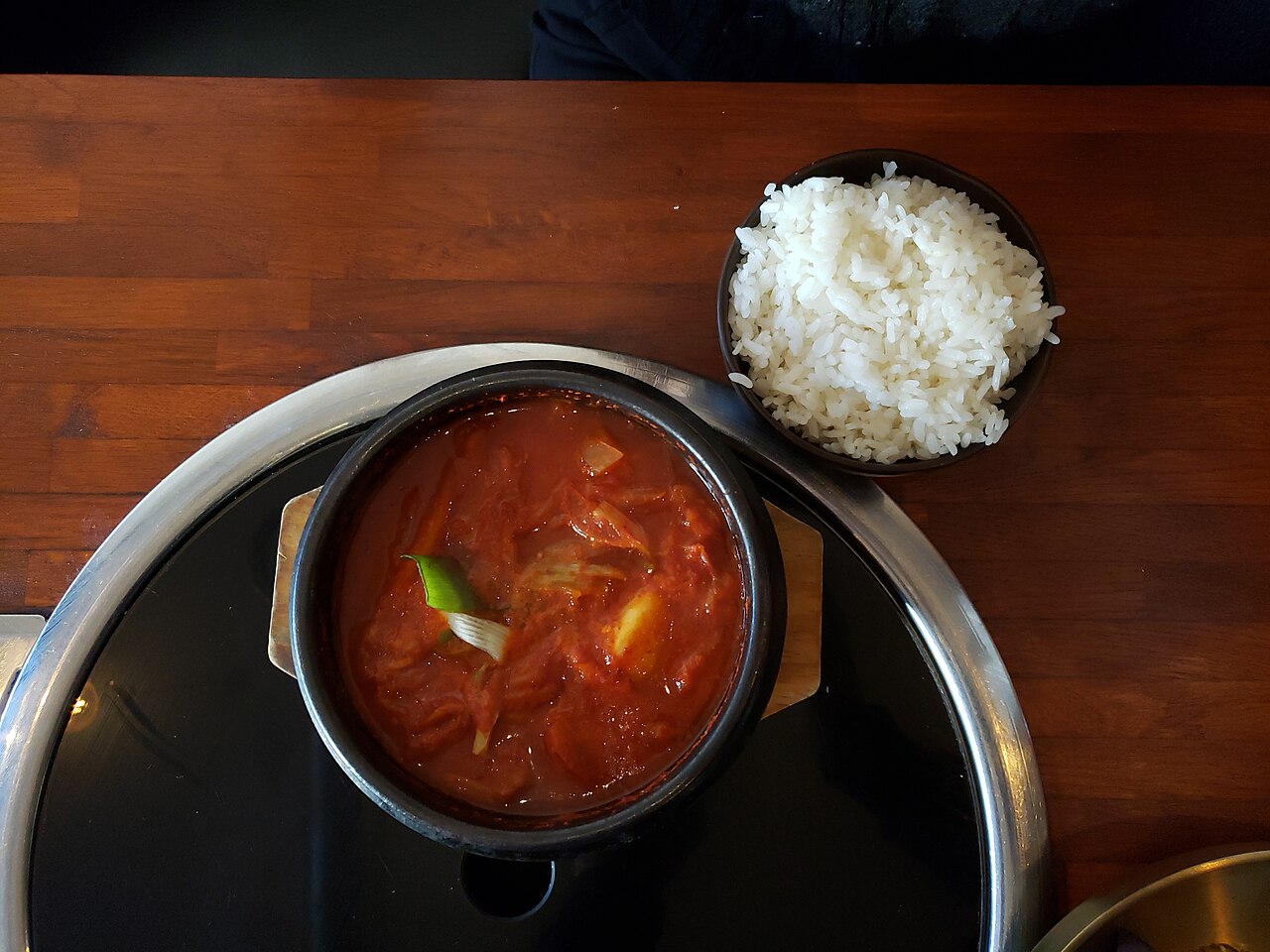
Kimchi Jjigae: Korea's Most Comforting Stew
Bubbling hot, deep red, and unmistakably Korean — kimchi jjigae is the stew that every Korean home smells like on a cold evening.
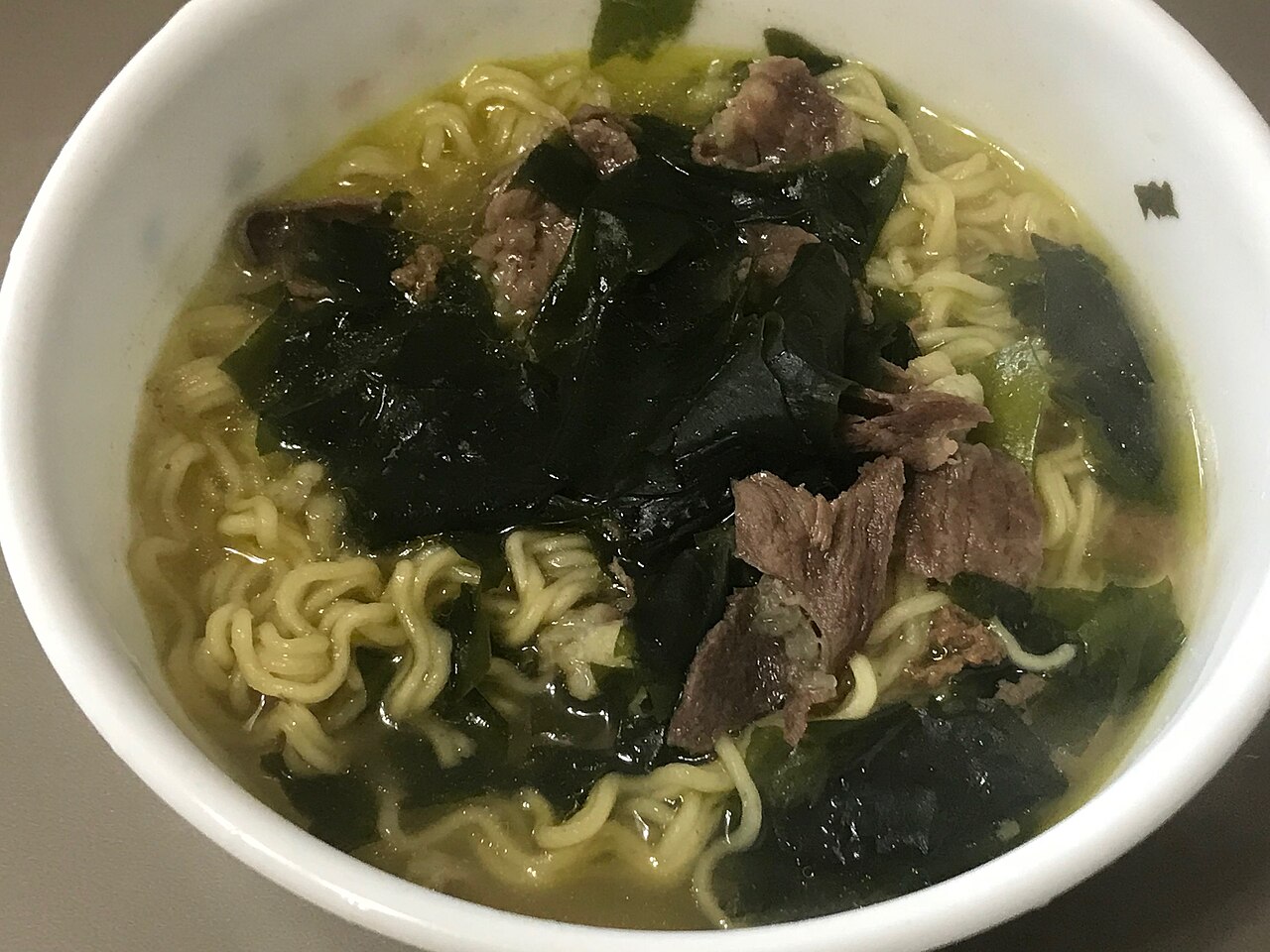
Miyeok-guk: The Birthday Soup That Is Really About Your Mother
Miyeok-guk is the seaweed soup every Korean eats on their birthday — a tradition that began as postpartum recovery food and became an annual act of gratitude to one's mother.
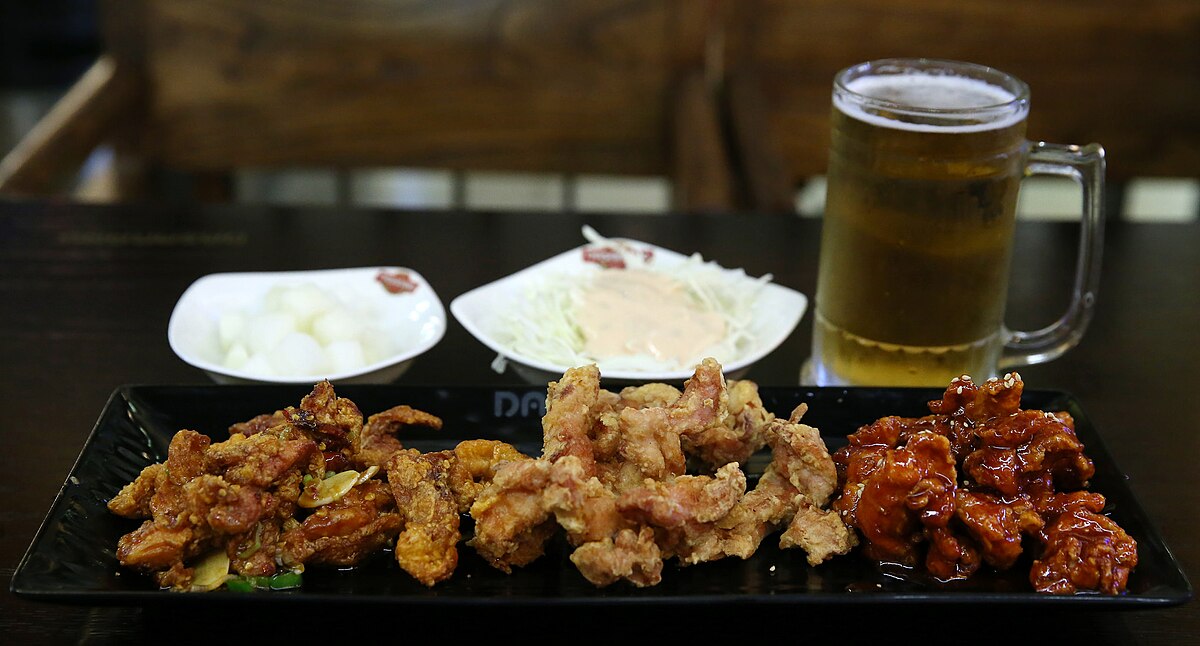
Chimaek: Why Korean Fried Chicken Is the World's Best
Korea has more fried chicken restaurants than McDonald's has locations worldwide. Here's the science and culture behind the crunch.