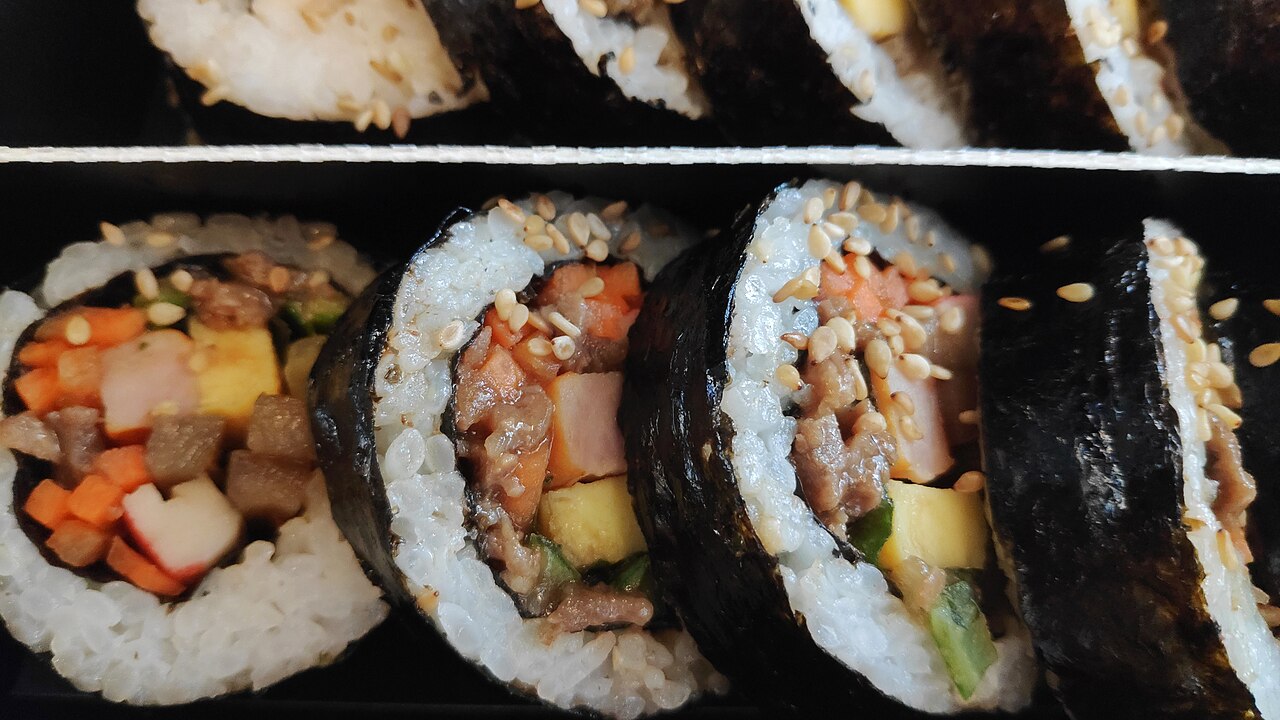
Kimbap: Korea's Everyday Roll
Sesame-fragrant rice rolls wrapped in seaweed — the portable, versatile staple of Korean picnics, school lunches, and street food.
Photo: Wikimedia Commons
What Is Kimbap?
Kimbap (김밥) — written gimbap in the revised romanization system — is Korea's most portable and ubiquitous food: steamed rice seasoned with sesame oil and salt, spread on a sheet of roasted seaweed (gim), layered with fillings, rolled tightly with a bamboo mat, and sliced into bite-sized rounds. The name comes directly from its two main components: gim (김, dried seaweed) and bap (밥, cooked rice). While visually similar to Japanese maki sushi, kimbap is distinctly Korean in character. The rice is seasoned with sesame oil rather than vinegar, giving it a nutty warmth rather than a tangy bite. The fillings reflect Korean pantry staples: stir-fried carrot, blanched spinach, pickled radish (danmuji), cooked egg strips, imitation crab, and variously ham, tuna, beef, or kimchi. Kimbap comes in a remarkable range of formats. Standard-size rolls are sliced into 2–3 cm rounds. Mini-kimbap (kkoma gimbap, 꼬마김밥) are slimmer rolls, just large enough for one bite — famously associated with Gwangjang Market's 'drug kimbap' (mayak gimbap, 마약김밥), a name derived from its reportedly addictive quality.
History & Origins
The origins of kimbap are debated and historically intertwined with Japanese influence. During the Japanese colonial period (1910–1945), Japanese norimaki (rice rolls wrapped in seaweed) were introduced to Korea. Korean cooks adapted the form using their own ingredients and flavoring methods — particularly the substitution of sesame oil for vinegar in the rice seasoning, which fundamentally changed the character of the dish. Kimbap became widely popularized in the 1960s–1970s as South Korea's economy grew and urban workers needed portable, shelf-stable lunches. The 'dosirak' (lunch box) culture of that era made kimbap the default packed meal: easy to prepare in the morning, compact enough to fit in a small box, filling, and tasty at room temperature. The modern kimbap boom has seen the dish evolve dramatically. Specialty kimbap restaurants (gimbap-jip, 김밥집) offer dozens of varieties. Convenience store triangular kimbap (samgak gimbap) has made it a round-the-clock snack option. Premium kimbap with ingredients like crab, avocado, or spicy tuna cater to contemporary tastes. Global recognition came partly through K-drama and K-pop cultural exports, where kimbap frequently appears as a beloved everyday food.
How Koreans Eat It
Kimbap's versatility means it fits almost any eating context, from formal picnic spreads to hurried street snacks.
- ·The picnic standard: Korean families heading to parks, beaches, or hiking trails almost always bring a large tray of kimbap, wrapped in foil and cut into rounds. It is the Korean equivalent of a sandwich lunch.
- ·Dipping sauces: Standard kimbap is eaten without dipping sauce. However, mayak gimbap (the Gwangjang Market mini version) is traditionally served with a soy-vinegar-mustard dipping sauce.
- ·Tuna mayo kimbap: One of the most popular convenience store varieties — tuna mixed with Japanese mayo, placed alongside seasoned rice and vegetables in a triangle package.
- ·Kimchi kimbap: Fermented kimchi as the main filling adds a pungent, sour note that contrasts nicely with the neutral rice.
- ·Straight off the roll: Street vendors and market stalls sometimes sell kimbap uncut — eaten by taking a bite directly off the full roll, which is a satisfyingly informal way to enjoy it.
Cultural Significance
Kimbap carries an almost universal emotional resonance for Koreans as the food of collective memory. The image of a Korean mother waking before dawn to prepare kimbap for a school field trip, sports day, or family outing represents a particular kind of parental love expressed through careful, practical care — the time and effort invested in rolling, filling, and cutting dozens of pieces before the household wakes. This association makes kimbap one of the most nostalgic Korean foods. Surveys consistently show it ranks among the foods Koreans most associate with happy childhood memories — not because it is the most refined or complex dish, but because of its presence at moments of shared joy: picnics, school trips, market visits, and sports days. Gwangjang Market in central Seoul, one of Korea's oldest and largest traditional markets, is home to a legendary row of kimbap vendors known for their mayak gimbap. Eating miniature kimbap at a cramped market table, dipping each piece in mustard sauce while surrounded by the bustle of a traditional Korean market, is considered one of the quintessential Seoul food experiences.
Tips
- 💡Visit Gwangjang Market (광장시장) in Jongno, Seoul for the famous mayak gimbap — small rolls served with a savory dipping sauce that has attracted queues for decades.
- 💡Convenience store samgak gimbap (triangular kimbap) is an excellent quick meal option — look for the tuna mayo (참치마요) or spicy pork (불고기) varieties.
- 💡Kimbap is best eaten within a few hours of making — the rice begins to harden in the refrigerator, so room temperature or slightly warm is optimal.
Last updated: April 1, 2026
You might also like
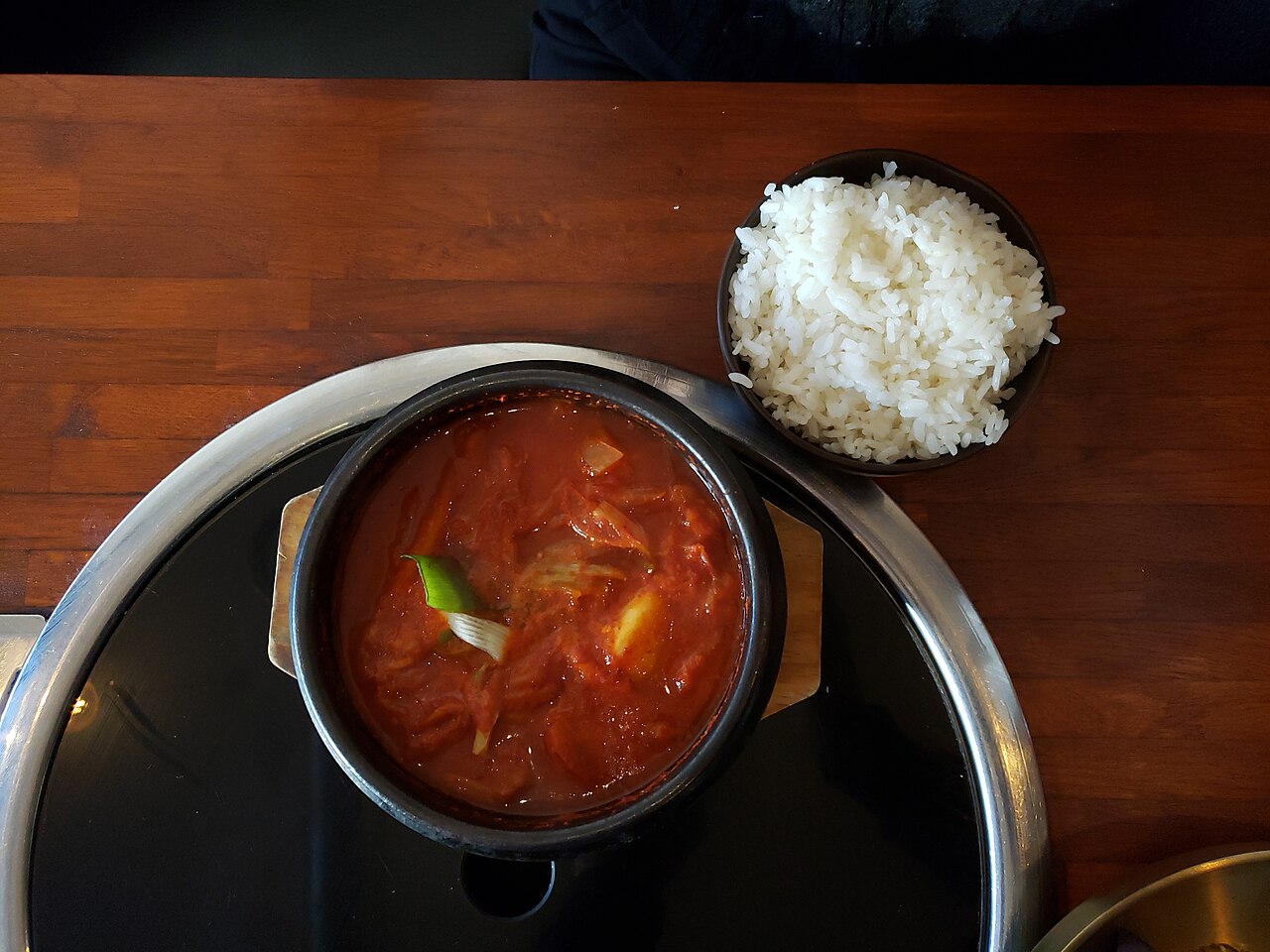
Kimchi Jjigae: Korea's Most Comforting Stew
Bubbling hot, deep red, and unmistakably Korean — kimchi jjigae is the stew that every Korean home smells like on a cold evening.
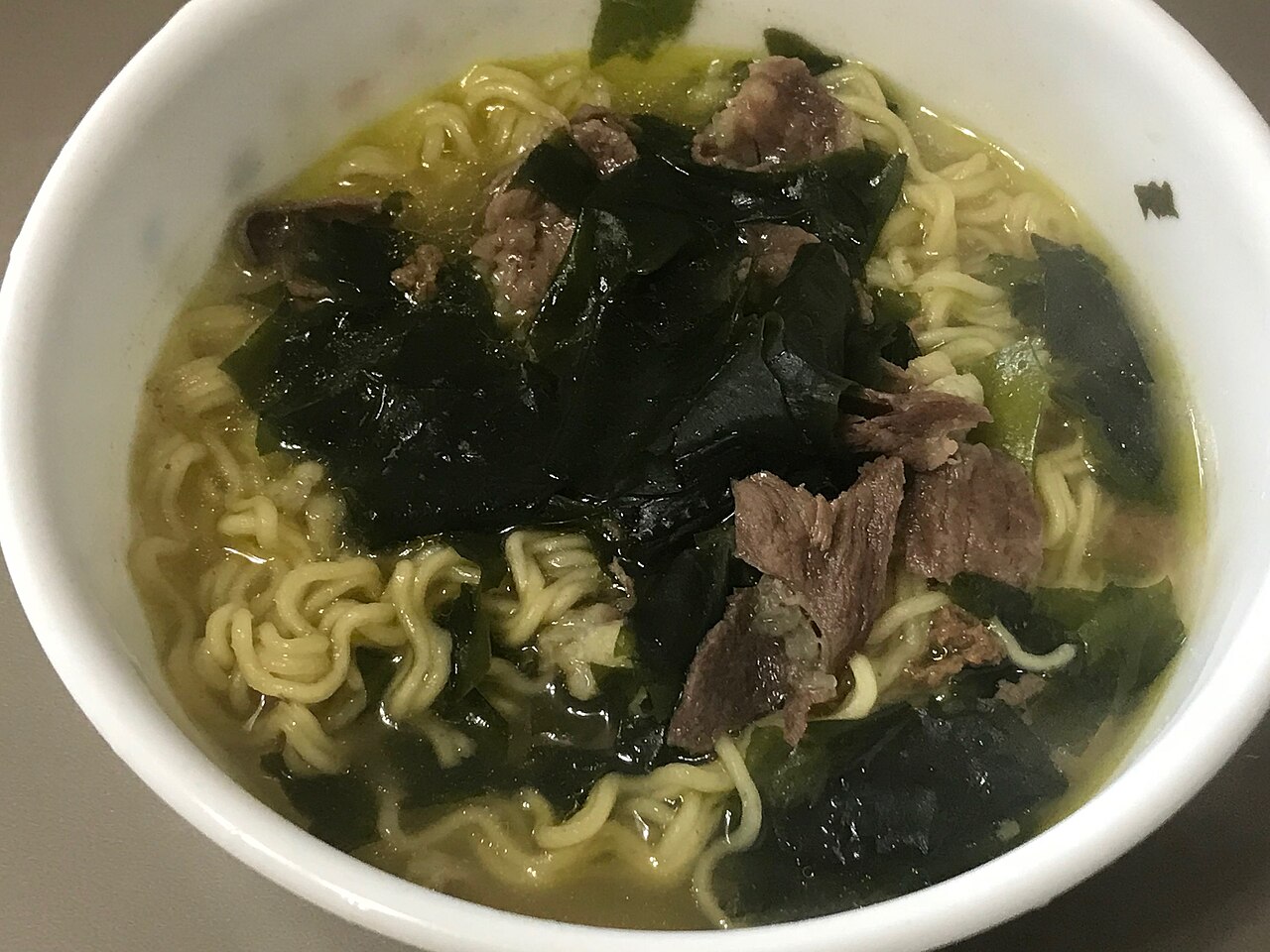
Miyeok-guk: The Birthday Soup That Is Really About Your Mother
Miyeok-guk is the seaweed soup every Korean eats on their birthday — a tradition that began as postpartum recovery food and became an annual act of gratitude to one's mother.
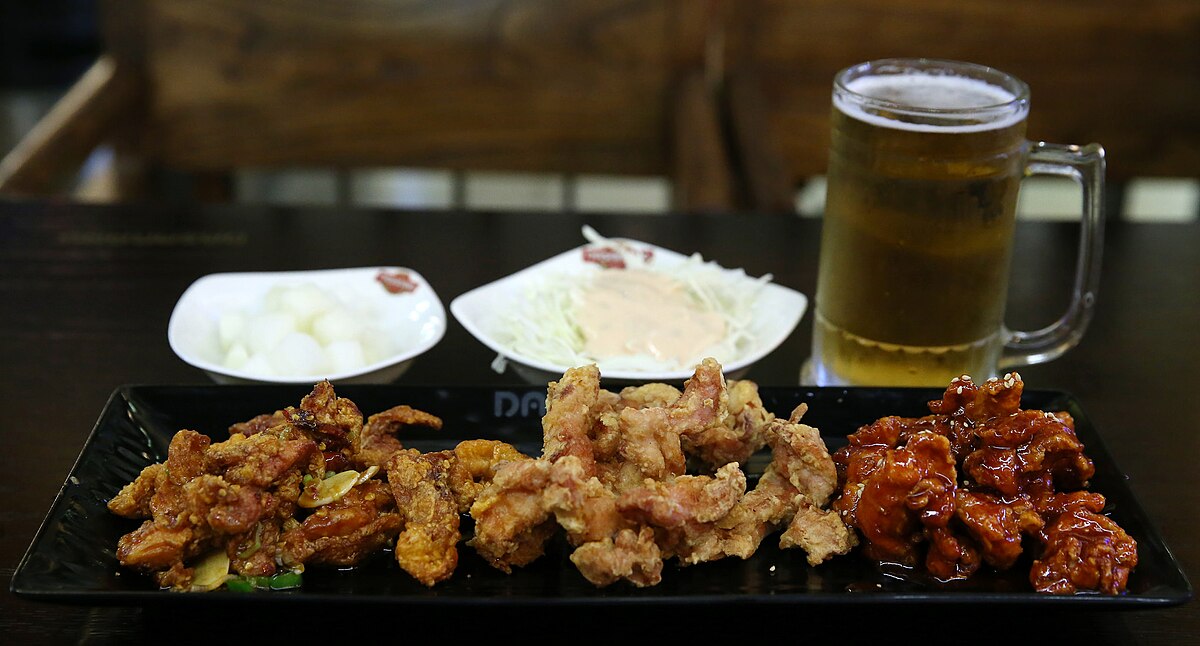
Chimaek: Why Korean Fried Chicken Is the World's Best
Korea has more fried chicken restaurants than McDonald's has locations worldwide. Here's the science and culture behind the crunch.