Makgeolli: Korea's Ancient Rice Wine Making a Modern Comeback
Makgeolli is Korea's oldest alcoholic drink — a milky, lightly sparkling rice wine with a tangy kick and growing global fanbase.
Photo: Wikipedia Commons
What Is Makgeolli?
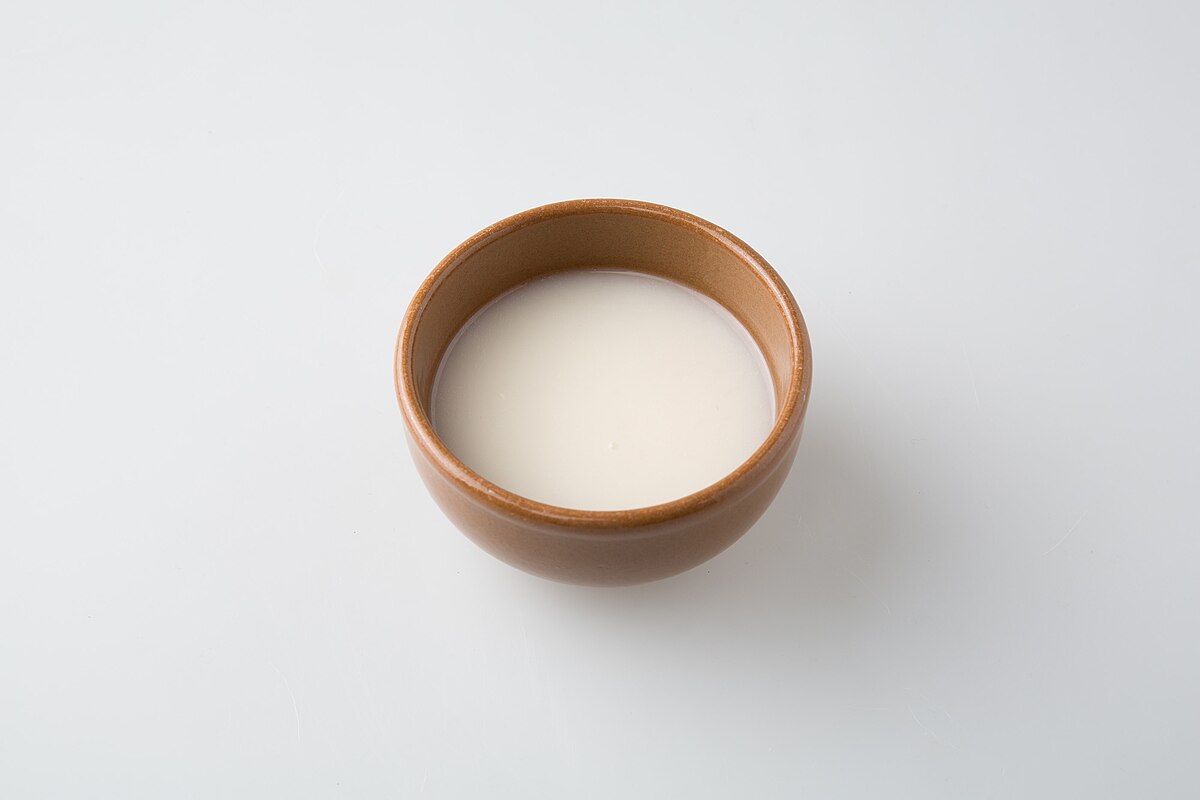
Makgeolli (막걸리) is Korea's oldest and most democratic alcoholic drink. The name combines mak (막), meaning 'just now' or 'rough', and georeu (거르), meaning 'to strain' — so makgeolli is literally 'just-strained' or 'roughly filtered' rice wine. The rough filtration is the point: unlike the clear, refined cheongju, makgeolli retains the chalky sediment of the fermentation, giving it a milky, off-white appearance and a cloudy complexity that refined rice wine lacks. At 6 to 9 percent alcohol by volume, it is one of the lower-proof traditional Korean drinks — lower than soju (20–25%), lower than beer (4–7%), and considerably less intense than spirits. This made it the drink of farmers and laborers for centuries, known as nongju (농주, 'farmer's wine'). You could drink a bowl of it at lunch and return to the rice fields. It powered harvests. The flavor is genuinely unlike anything in Western wine traditions. It is simultaneously sweet, tangy, slightly bitter, and faintly astringent — a complex interplay of fermentation byproducts and residual rice starches. There is also a mild natural carbonation from ongoing fermentation, which gives it a light fizz that makes it feel refreshing despite its density.
The Rain and Pajeon Ritual
There is a belief among Koreans — not superstition exactly, but something close to cultural consensus — that makgeolli tastes better on rainy days. The specific pairing is pajeon (파전), a savory green onion pancake, with a bowl of cold makgeolli. Ask any Korean why this combination exists on rainy days and you will get different answers: the sound of rain resembles the sizzle of the pancake batter hitting the oil; the gloomy weather calls for something warm and crispy; the combination simply tastes better when you have an excuse to stay indoors. This pairing is one of the more enduring pieces of Korean food culture. It appears in films, in novels, in song lyrics. Young Koreans who have never worked a farm and would never describe themselves as drinkers of 'farmer's wine' still observe the ritual, usually documented on social media with the hashtags for rain and pajeon alongside makgeolli. The cultural mechanics are interesting: makgeolli is positioned as humble, communal, and nostalgic — the opposite of status-signaling alcohol. In a country where soju is the standard social lubricant and imported whiskey signals success, makgeolli occupies a different emotional register. It is what you drink when you want to feel connected to something older and less performative.
How to Drink It
Traditional makgeolli service involves a shared bowl or large cup, poured from a kettle or earthenware jug. The sediment settles quickly — shake or stir before every pour. Modern bottled makgeolli usually instructs you to invert the bottle three times before opening, achieving the same distribution of solids. In traditional settings, makgeolli is drunk from a sagi (사기), a shallow ceramic bowl, passed between drinkers in a communal fashion. Modern bars and restaurants serve it in individual mugs or glasses, losing some of the communal character but making it more accessible. Some establishments serve it in a pewter bowl for visual drama. Bottled makgeolli in supermarkets is usually pasteurized for shelf stability, which kills the live cultures and removes some flavor complexity. If you can find unpasteurized draft makgeolli (saeng-makgeolli, 생막걸리), the difference is significant — it is more sour, more alive, and expires within a week. This is the version worth seeking.
- ·Always shake the bottle or stir the bowl before drinking — sediment settles fast
- ·Serve cold, ideally around 8–10°C, in ceramic or traditional vessels
- ·Drink it with food — its tanginess cuts through fatty dishes beautifully
- ·Saeng-makgeolli (생막걸리) is unpasteurized and far superior to bottled versions
- ·If it smells like vinegar, it has over-fermented — still safe but very sour
Makgeolli's Global Comeback
For much of the latter 20th century, makgeolli was considered old-fashioned in Korea — the drink of grandparents and construction workers. Soju modernized and became the default; beer arrived from the West; wine and whiskey carried prestige. Makgeolli retreated to pojangmacha (street stalls) and rural villages. The reversal began in the late 2000s, accelerated in Japan. In 2009, Korean exporters introduced makgeolli to Japan under the name makkori, and it became a significant trend — young Japanese women especially embraced it for its perceived health benefits and lower alcohol content. Korean producers scrambled to meet demand. In 2011, Japanese sake companies, including the prestigious Gekkeikan, launched their own makkori products, prompting alarm in Korea that the drink's Korean identity might be diluted. The subsequent decade saw craft makgeolli emerge as a serious segment. Small producers began experimenting with different rice varieties, fermentation timers, and additions — strawberry, banana, citrus, yuzu. The drinks are more refined and more expensive than supermarket bottles. Makgeolli tasting rooms in Seoul's Insadong and Hongdae neighborhoods now attract the same demographic that visits wine bars. The numbers tell a clear story. The global makgeolli market was valued at approximately $560 million in 2024, with projections reaching $2.16 billion by 2033 — a compound annual growth rate of 7.6%. South Korean exports grew 20.6% from 2019 levels, with the United States accounting for roughly 30% of all exports. Guksoondang, Korea's largest makgeolli exporter, recorded export revenues of $10.2 million in a single year. Seoul Jangsoo reported export growth of 41% after launching flavored and carbonated makgeolli variants. Latin America has recently emerged as the newest growth market, as K-culture consumption spreads well beyond East Asia.
Health Claims and Scientific Reality
Makgeolli is frequently marketed on health grounds, and some of the claims have genuine basis. Being unpasteurized (in its fresh form), it contains live lactic acid bacteria — the same general category as the cultures in yogurt and kimchi. These probiotics may support gut health, though the alcohol content complicates the picture. It also contains vitamins B1, B2, B6, and C, along with amino acids and fiber from the rice solids. The fermentation process produces compounds including organic acids that may have mild antimicrobial properties. A 2010 study by Korean researchers drew significant media attention by identifying proteins in makgeolli that inhibited the growth of cancer cells in lab conditions — results that were preliminary and contested but generated enormous enthusiasm for the drink in both Korea and Japan. The honest framing: makgeolli is probably healthier than many other alcoholic drinks of comparable strength, especially when consumed in the draft, unpasteurized form with active cultures. It is not a health food. But it is a fermented beverage with a thousand-year tradition, and the communities that drank it historically were not wrong to value it.
Makgeolli Cocktails and the DIY Homebrew Wave
Outside Korea, makgeolli is crossing into cocktail culture. The Mageollita — makgeolli combined with tequila, Cointreau, lime juice, and agave syrup — was invented at Vatos, a Korean-Mexican fusion restaurant in Seoul, and has since become a template copied by bartenders globally. Saveur magazine published a Makgeolli Old Fashioned recipe using rye whiskey and ginseng syrup. Gin, yuzu, and matcha combinations are common in Seoul cocktail bars. Simultaneously, a homebrew movement has quietly grown in Western food communities. Enthusiasts who cannot access fresh saeng-makgeolli — which expires within two weeks and is rarely exported — are making their own. The key ingredient is nuruk, a fermentation starter block, now available online internationally. The fermentation process is approachable: glutinous rice, nuruk, water, and 5–14 days at 18–26°C (65–78°F) produces a rough but authentic result. Maangchi, the Korean cooking YouTuber with 5.5 million subscribers, has been the primary entry point for many foreign homebrewers. Her makgeolli recipe video introduced the process to audiences who had never considered fermenting anything at home. The Brooklyn-based Hana Makgeolli now produces craft makgeolli commercially in the United States using traditional methods, a sign that the drink has achieved enough credibility to be produced and sold outside Korea.
- ·Mageollita: makgeolli + tequila + Cointreau + lime + agave syrup (Seoul origin)
- ·Makgeolli Old Fashioned: rye whiskey + ginseng syrup (Saveur recipe)
- ·Strawberry Makgeolli: makgeolli + strawberry juice + cream (most photogenic)
- ·Matcha Makgeolli: makgeolli + matcha powder (antioxidants + probiotics)
- ·Homebrew requires only nuruk (fermentation starter), rice, and water — 5–14 days fermentation
Tips
- 💡Try saeng-makgeolli (생막걸리) from a convenience store refrigerator — live cultures make it dramatically better than pasteurized bottles
- 💡Pair it with pajeon (파전) or buchimgae on a rainy day — the sound of rain and the sizzle of the pancake batter share the same frequency, which is why Koreans crave this combination when it rains
- 💡Shake the bottle gently 3 times before opening — sediment settles fast and the milky appearance is the point
- 💡If you find it too thick or sweet, adding a little cold water is completely normal and common practice
- 💡Visit a makgeolli bar in Insadong or Ikseon-dong, Seoul for craft versions made with local rice varieties you cannot find in supermarkets
- 💡Makgeolli continues fermenting after bottling — refrigerated bottles may expand over time; drink within 1–2 weeks of purchase
Last updated: April 1, 2026
You might also like
Kimchi Jjigae: Korea's Most Comforting Stew
Bubbling hot, deep red, and unmistakably Korean — kimchi jjigae is the stew that every Korean home smells like on a cold evening.
Miyeok-guk: The Birthday Soup That Is Really About Your Mother
Miyeok-guk is the seaweed soup every Korean eats on their birthday — a tradition that began as postpartum recovery food and became an annual act of gratitude to one's mother.
Chimaek: Why Korean Fried Chicken Is the World's Best
Korea has more fried chicken restaurants than McDonald's has locations worldwide. Here's the science and culture behind the crunch.