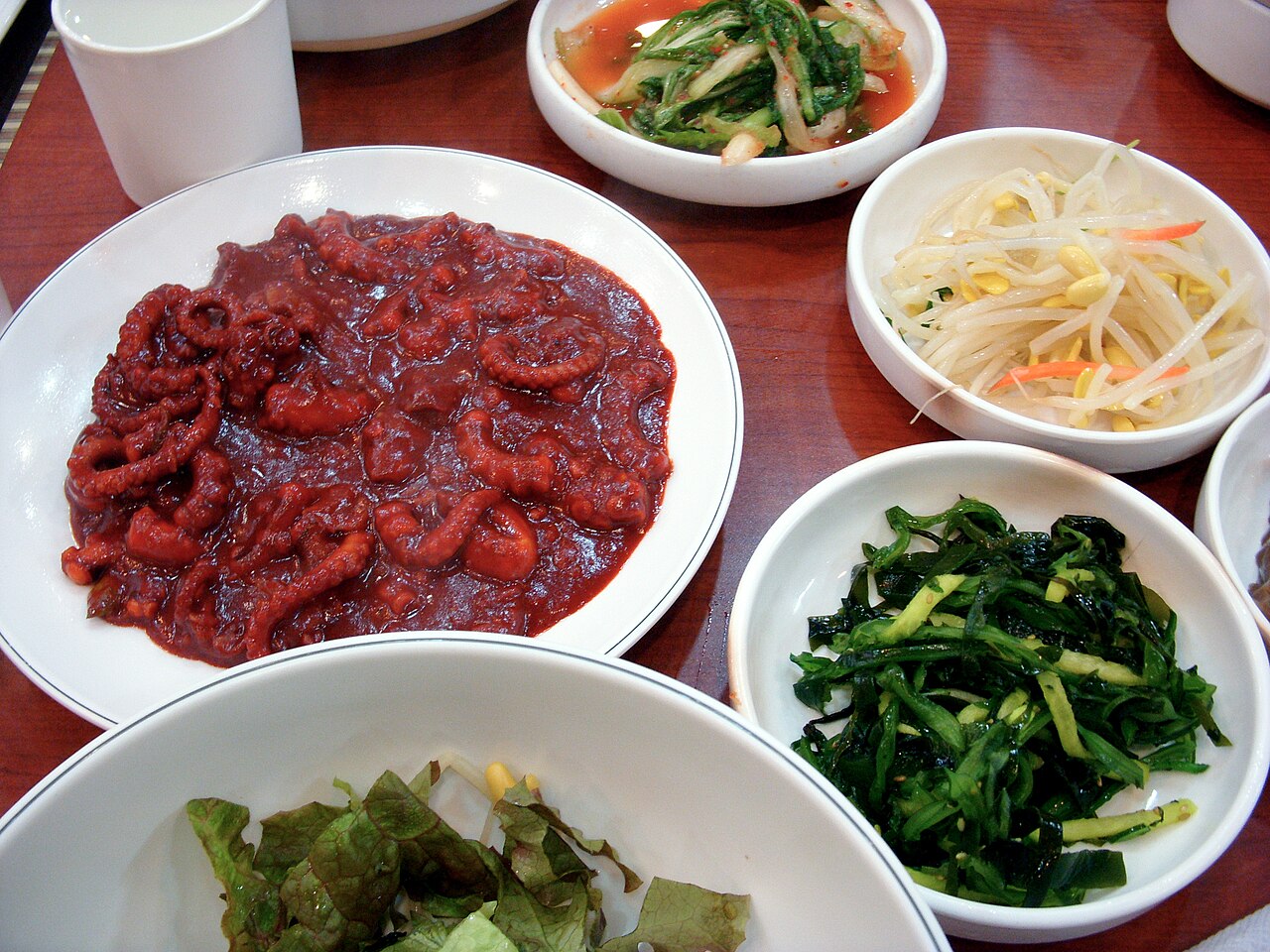
Nakji-bokkeum: Spicy Stir-fried Octopus
Nakji-bokkeum is a fiery Korean stir-fry of small octopus cooked in a gochujang-based sauce with vegetables — one of Korea's boldest and most intensely flavored dishes.
Photo: Wikipedia Commons
What Is Nakji-bokkeum?
Nakji-bokkeum (낙지볶음) is a Korean stir-fry made with nakji — small, tender octopus (different from the larger variety) — cooked over high heat in a bold sauce of gochujang (red chili paste), gochugaru (chili flakes), soy sauce, garlic, ginger, and a touch of sugar. The sauce clings to the octopus tentacles and creates a glossy, intensely red coating. Vegetables such as cabbage, green onions, and sometimes zucchini or bean sprouts are added to balance the heat. The dish is typically cooked in a large flat pan or wok and served with steamed rice, with the heat level ranging from assertive to throat-scorching depending on the restaurant. Nakji-bokkeum is considered one of the 'must-try' spicy dishes for Korean chili lovers and has a devoted following among those who crave intense heat and bold umami.
History & Origins
Octopus has been part of Korean coastal cuisine for centuries, particularly in fishing communities along the West Sea and South Sea coasts where nakji was abundantly caught. The combination of octopus with Korean chili-based sauces developed as red pepper became integral to Korean cooking after its introduction from the Americas in the 16th–17th centuries. The city of Incheon is particularly famous for nakji-bokkeum, and the dish became a signature of the port city's food culture. Sinpo International Market in Incheon is one of the most well-known places to eat it, with vendors who have been serving the same recipe for generations. The dish also holds a place in Korean folk medicine — octopus is believed to restore energy and vitality, making nakji-bokkeum a popular dish for people feeling physically drained.
How Koreans Eat It
Nakji-bokkeum is typically served sizzling in a pan, placed on a gas burner at the table to keep it hot. It is eaten with rice and often accompanied by a bowl of cold noodles or doenjang-jjigae to balance the heat.
- ·Have water or cold barley tea ready — the heat level can be extreme even by Korean standards
- ·Order cold noodles (naengmyeon) alongside to alternate between hot and cold, spicy and mild
- ·Mix rice into the remaining sauce in the pan at the end — this fried rice finish is one of the best parts
- ·At Sinpo Market in Incheon, look for stalls with visible piles of fresh nakji — freshness is critical for this dish
Cultural Significance
Nakji-bokkeum occupies a special place in Korean food culture as a dish that tests your tolerance for heat while rewarding you with extraordinary depth of flavor. It is a dish that Koreans are proud of — something genuinely, authentically Korean that does not water itself down for outside tastes. In Korean folk belief, nakji (octopus) is considered a stamina food (보양식, boyangshik) — a food believed to restore physical energy and vitality. This adds a dimension of health belief to the eating of nakji-bokkeum beyond pure pleasure. The dish is sometimes eaten as a recovery meal or before physically demanding activity.
Tips
- 💡Incheon's Sinpo International Market is the most famous place in Korea to eat nakji-bokkeum — go with an empty stomach
- 💡If you are sensitive to spice, ask for 'eomae' (mild) level — most restaurants can adjust the heat
- 💡The octopus should be slightly chewy but not rubbery — this indicates it was cooked quickly at high heat
Last updated: April 1, 2026
You might also like
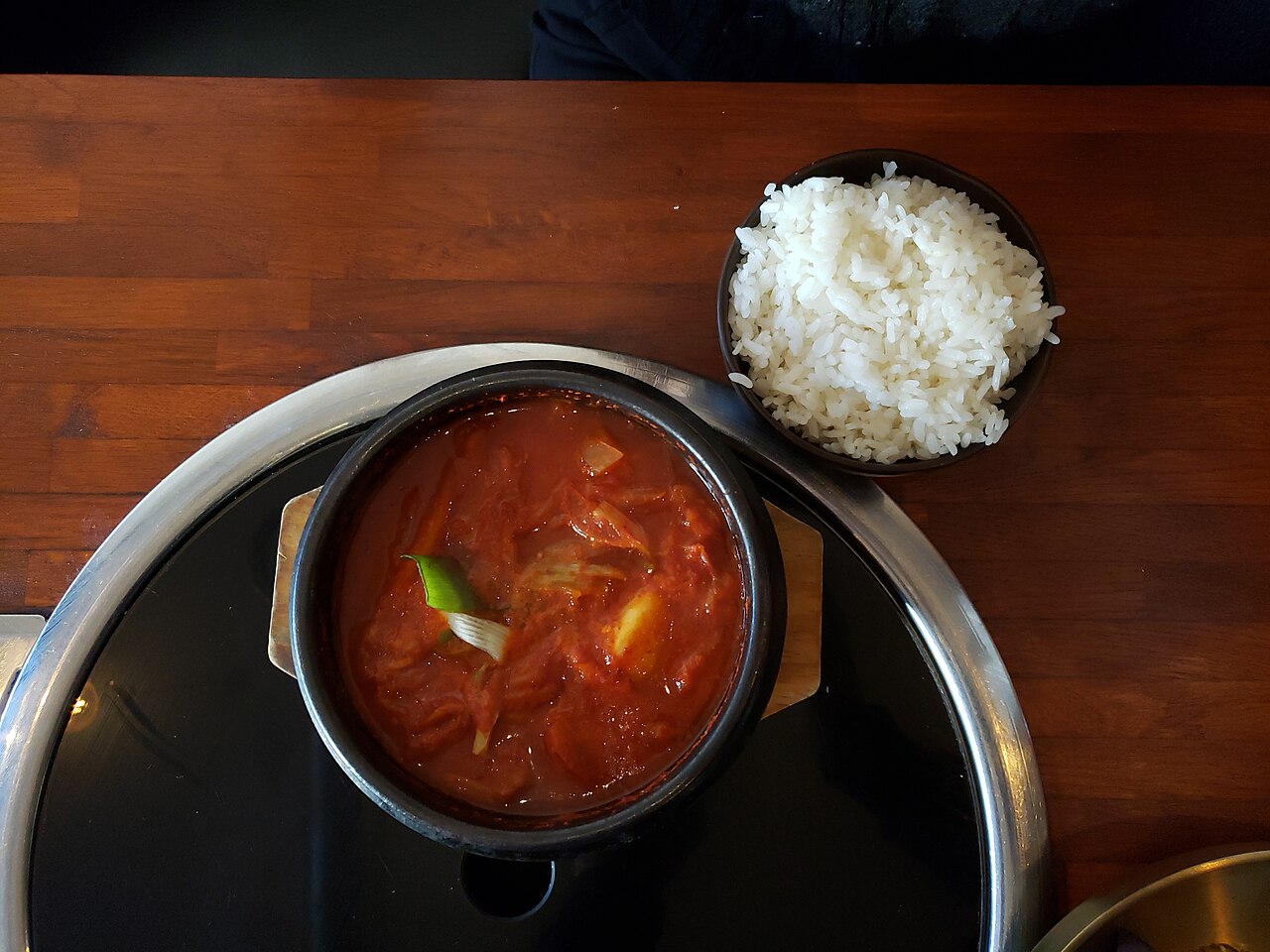
Kimchi Jjigae: Korea's Most Comforting Stew
Bubbling hot, deep red, and unmistakably Korean — kimchi jjigae is the stew that every Korean home smells like on a cold evening.
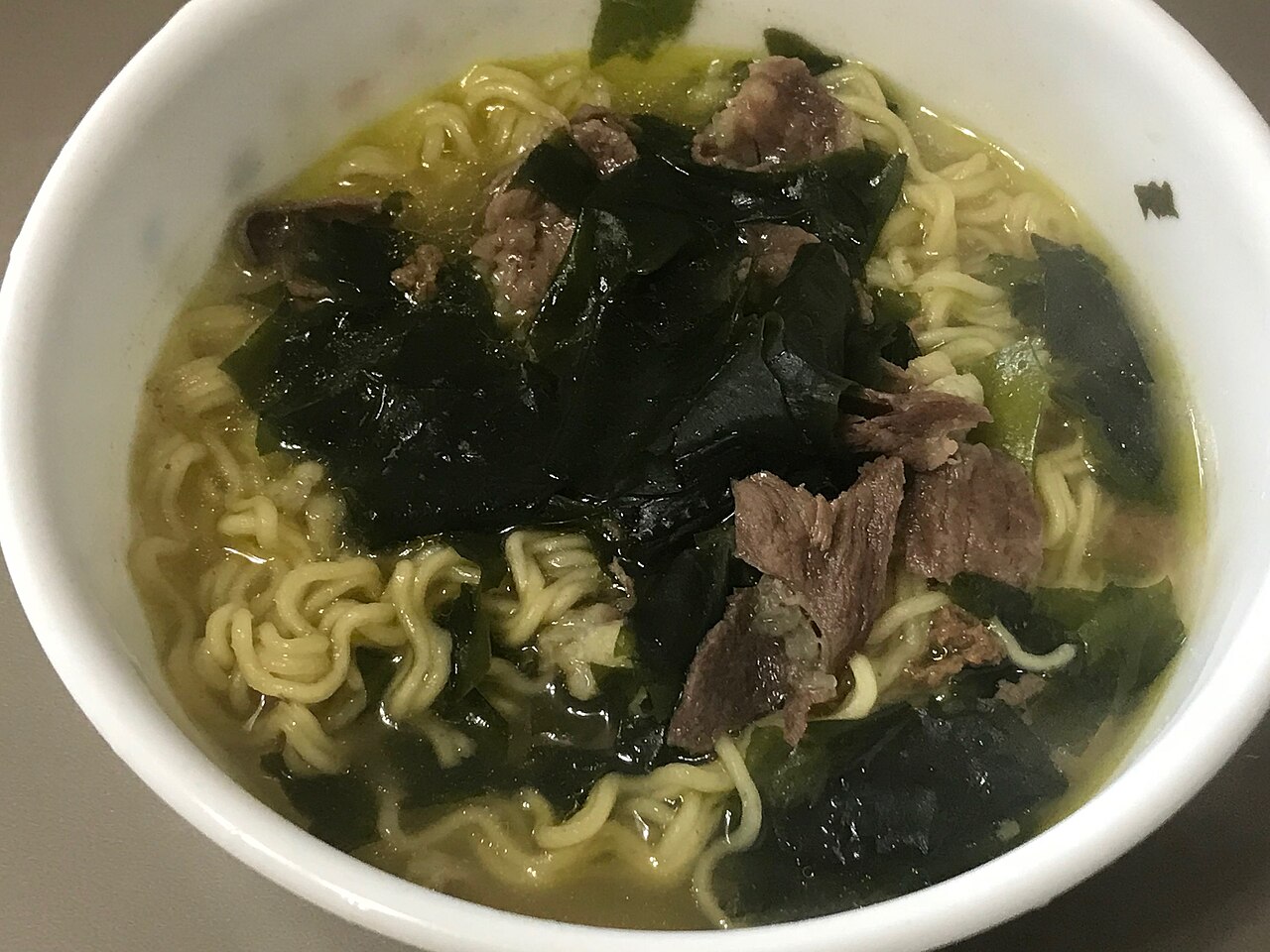
Miyeok-guk: The Birthday Soup That Is Really About Your Mother
Miyeok-guk is the seaweed soup every Korean eats on their birthday — a tradition that began as postpartum recovery food and became an annual act of gratitude to one's mother.
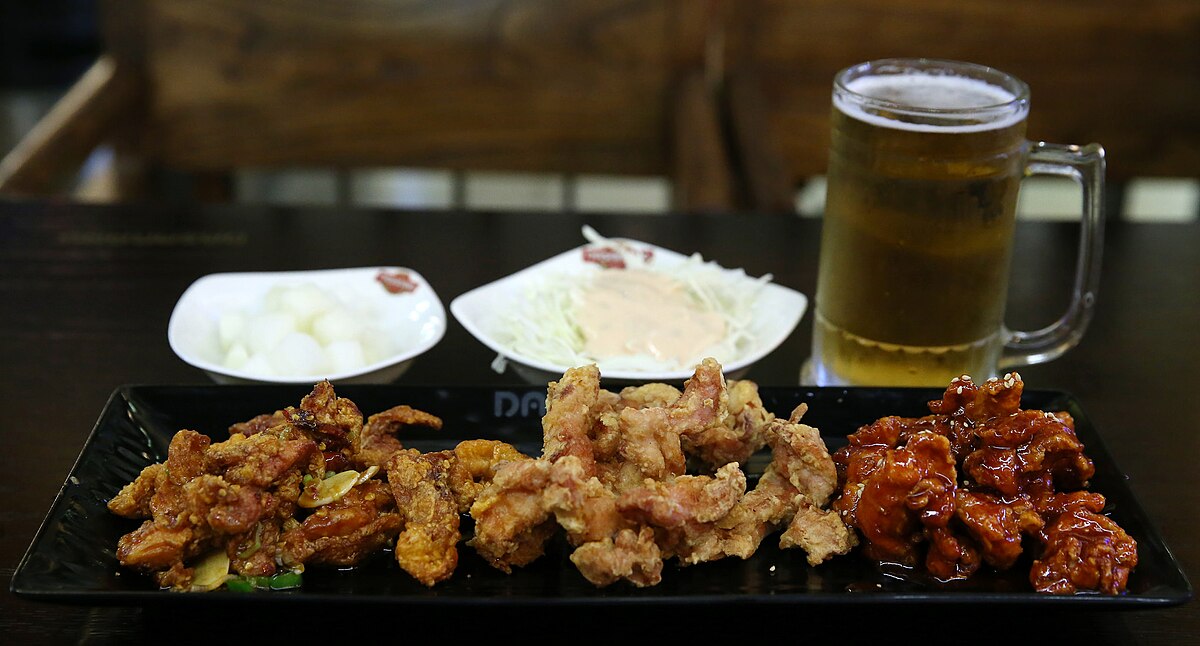
Chimaek: Why Korean Fried Chicken Is the World's Best
Korea has more fried chicken restaurants than McDonald's has locations worldwide. Here's the science and culture behind the crunch.