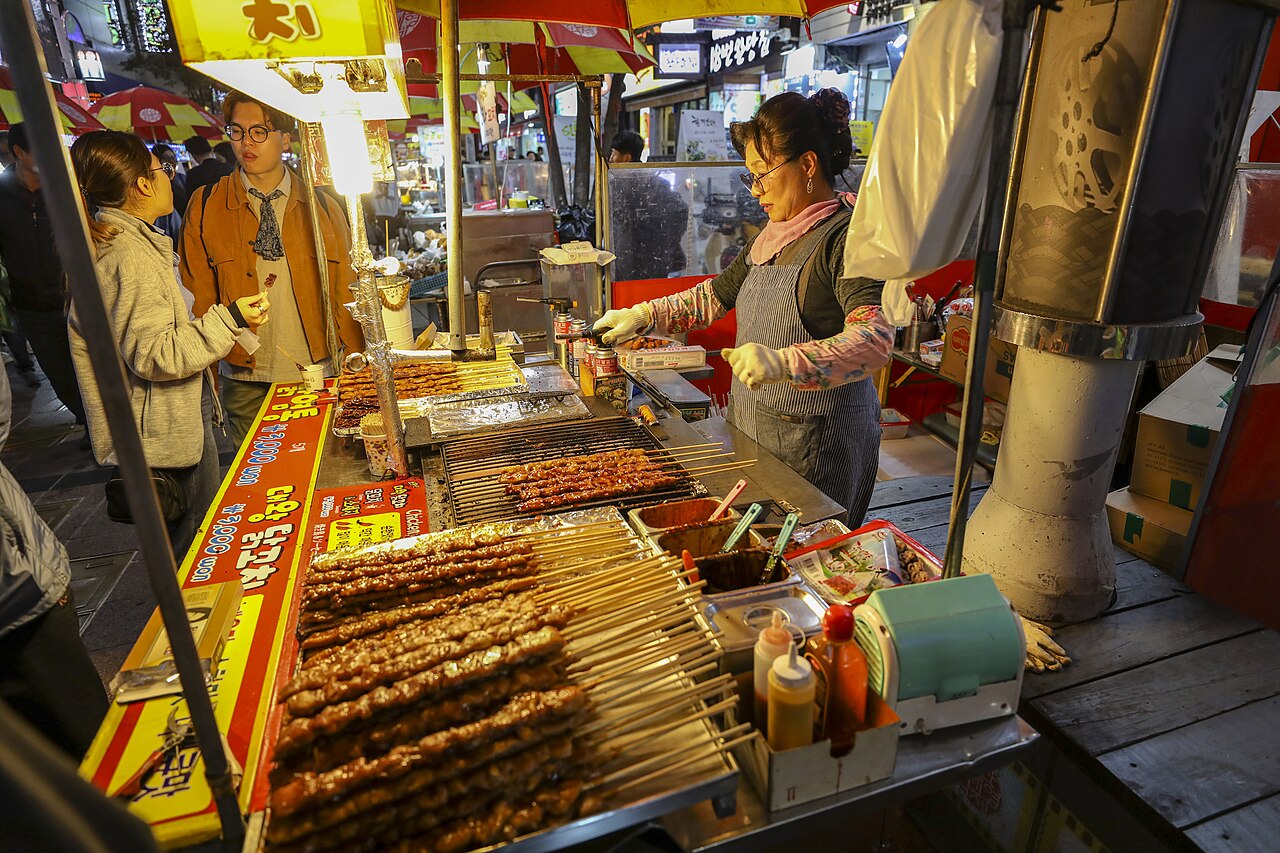
Korean Street Food: The Complete Bunsik Guide
From fish cakes in winter fog to cheese-pulling corn dogs — Korean street food is one of the world's great outdoor eating cultures.
Photo: Wikipedia Commons
What Is Bunsik?
Bunsik (분식) literally means 'flour-based food' but has expanded to encompass all inexpensive, satisfying Korean street snacks and quick meals. Tteokbokki, sundae, eomuk, twigim (fried items), gimbap — these are bunsik. The bunsik stall is usually small, sometimes just a cart with a gas burner and a few trays of food under heat lamps. It is cheap (most items under 3,000 won), immediate, and unmistakably Korean. The social context of bunsik is as important as the food itself. For Korean students, the bunsik stall outside the school gate — a 30-minute window between class and hagwon (private academy) — is the social institution of adolescence. The combination of tteokbokki, sundae, and twigim (떡순튀, tteok-sun-twi) eaten standing at a stall with friends represents a specific Korean coming-of-age experience that cuts across decades. Adults who haven't attended school in twenty years describe the smell of tteokbokki as transporting them immediately back to that specific time and place. For international visitors, bunsik provides a street-level entry into Korean food culture that restaurants cannot replicate. The experience is participatory, immediate, and unhierarchical — anyone can stand at a stall, point, and eat.
- ·떡볶이 (Tteokbokki): spicy rice cake stew — the anchor of Korean street food
- ·순대 (Sundae): Korean blood sausage — not sweet, savory and earthy
- ·어묵/오뎅 (Eomuk): fish cake skewers in warm broth — essential in winter
- ·튀김 (Twigim): assorted fritters — sweet potato, squid, vegetables
- ·김밥 (Gimbap): seaweed rice rolls — the Korean portable meal
The Korean Corn Dog: TikTok's Most Viral Food
If one item exemplifies Korean street food's global moment, it is the Korean corn dog (한국식 핫도그). This is not the American corn dog — a sausage on a stick in yellow cornmeal batter. The Korean version involves a sausage and/or mozzarella cheese filling, coated in yeasted rice flour batter, sometimes rolled in french fry cubes, panko breadcrumbs, or ramen noodle pieces, deep-fried, then finished with mustard, ketchup, and — the visual signature — a dusting of sugar. The aesthetic achievement is the cheese pull. When the corn dog is broken open, mozzarella stretches dramatically, producing footage that is essentially algorithmically optimized for social media. The hashtag #koreancorndog has accumulated 34.6 million TikTok views. It went viral initially in 2021, when a creator's first-taste reaction video ignited a global wave of search and imitation. The commercial impact has been substantial. Myungrang Hot Dog, founded in 2016 near Busan, had 730 locations within one year of opening. It now operates in 7 countries including the US and UK, with Costco partnerships in 18 locations. Two Hands Corn Dogs, US-based, grew 900% from 2019 to 2023 and operates 45 locations. Mochinut, combining Korean corn dogs with mochi donuts, has 42 open locations with 72 in development.
Gwangjang Market: Netflix Made It Famous, Food Makes It Worth It
Gwangjang Market (광장시장), founded in 1905, is Korea's oldest permanent market and Seoul's premier street food destination. It receives approximately 65,000 visitors daily. The Netflix original series Street Food: Asia (2019) devoted an episode to the market, focusing on a bindaetteok (mung bean pancake) vendor who has worked the same stall for decades. The episode transformed the vendor into an international celebrity and the market into a global bucket-list item. The market's food core is dense and overwhelming in the best way. Bindaetteok sizzle on cast iron, sending up clouds of steam. Mayak gimbap (마약김밥, 'narcotic gimbap') — tiny seaweed rice rolls, so called because you cannot stop eating them — are assembled and sold in portions by the tray. Yukhoe (육회, Korean steak tartare) is seasoned with sesame oil, pear, and pine nuts and served over rice in the adjacent raw-beef section. Sundae, tteokbokki, and mandu (dumplings) occupy the surrounding rows. The market functions as a living museum of Korean food culture — techniques, ingredients, and combinations that have been refined across decades in a specific physical space. Eating here is different from eating at a restaurant that serves the same food, in the way that seeing live music is different from a recording.
- ·Bindaetteok (빈대떡): mung bean pancake, the market's signature — order it fresh from the oil
- ·Mayak Gimbap (마약김밥): tiny rice rolls with sesame and radish — eat a whole tray
- ·Yukhoe (육회): raw beef tartare with sesame oil, pear, and pine nuts
- ·Sundae (순대): pork blood sausage — brave and worth it
- ·Location: Jongno 5-ga station, exit 8 — the food stalls are in the central covered area
Seasonal Street Food: Bungeoppang and Hotteok
Some of Korean street food's most beloved items are seasonal — available only in winter, which gives them a ritual significance and an emotional weight that year-round availability would dissolve. Bungeoppang (붕어빵, 'crucian carp bread') is a fish-shaped waffle pastry filled with red bean paste or, in newer variations, custard cream, Nutella, or sweet potato. The fish shape has nothing to do with the filling — it is a historical accident of mold design. Bungeoppang is made on a cast-iron press at street stalls and sold fresh and hot. The smell of bungeoppang cooking is so distinctly associated with winter in Korea that its appearance in neighborhoods marks the turning of the season more reliably than the calendar. The concept of 'bungeoppang proximity' — bungsegwon (붕세권) — has entered Korean internet culture as a semi-serious real estate metric: proximity to a bungeoppang cart as a residential amenity worth noting. Kakao Maps and neighborhood app Danggeun Market have operated bungeoppang vendor mapping services to address the seasonal scarcity. Hotteok (호떡) is a wheat flour pancake stuffed with brown sugar, cinnamon, and crushed nuts, pressed flat on an oiled griddle until caramelized on both sides. It arrived in Korea via Chinese traders in the late 19th century and was popularized in Busan after the Korean War. The premium version — ssiat hotteok (씨앗호떡) — adds sunflower seeds and pumpkin seeds to the filling, and is the specific version most sought by international visitors in Myeongdong.
Tips
- 💡The Tteok-Sun-Twi (떡순튀) combo — tteokbokki + sundae + twigim — is the canonical bunsik order. Order this at any stall if you don't know where to start.
- 💡Gwangjang Market is best on weekday mornings before the tourist crowds build — go before 11am
- 💡Bungeoppang and hotteok are only available October through March — if you see them, eat them immediately
- 💡Korean corn dogs are best eaten within 3 minutes of frying — the cheese pull diminishes rapidly
- 💡Fish cake broth (어묵 국물) is served free at most eomuk stalls — it is deeply comforting on cold days and you are expected to drink it
Last updated: April 1, 2026
You might also like
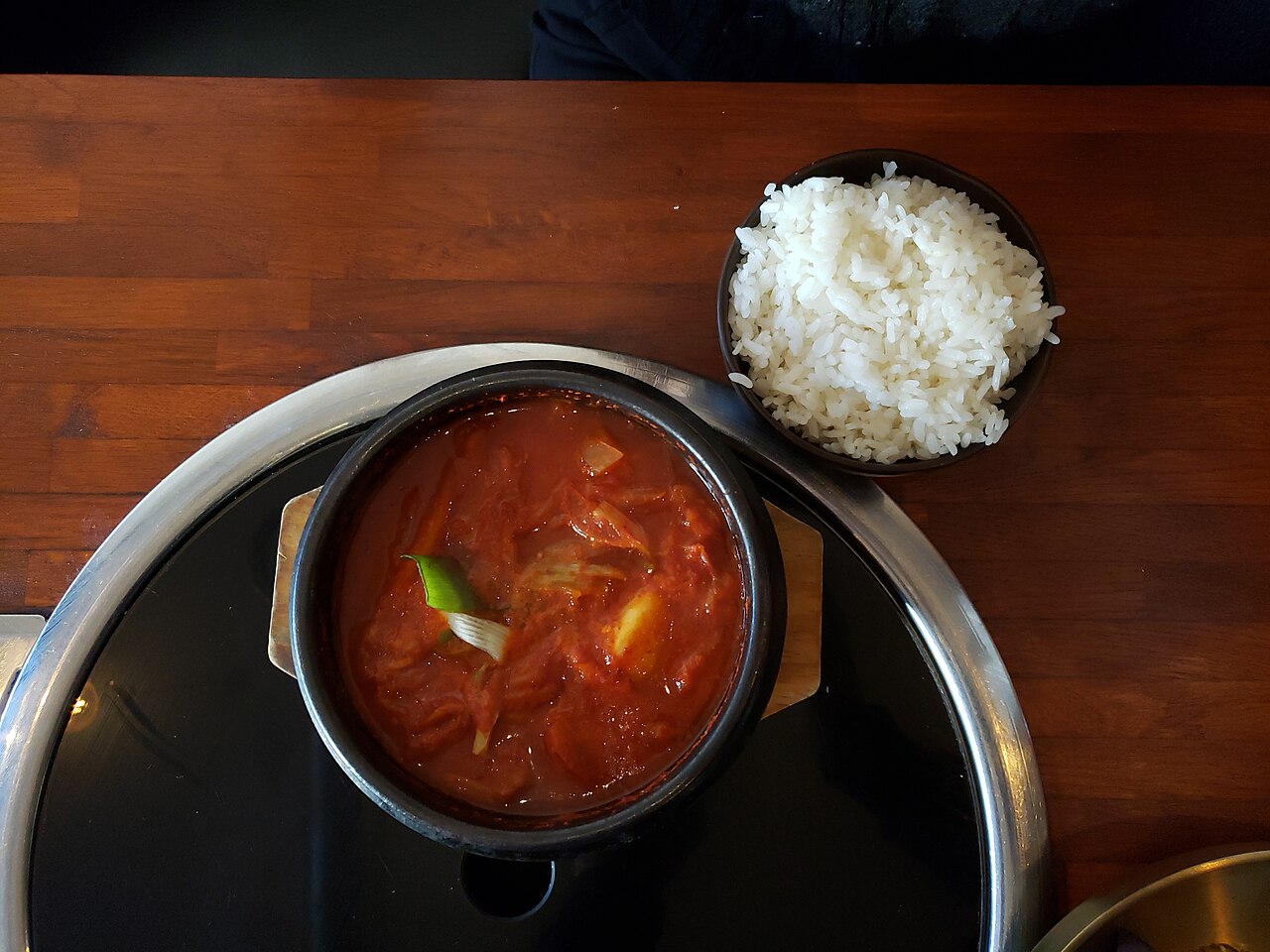
Kimchi Jjigae: Korea's Most Comforting Stew
Bubbling hot, deep red, and unmistakably Korean — kimchi jjigae is the stew that every Korean home smells like on a cold evening.
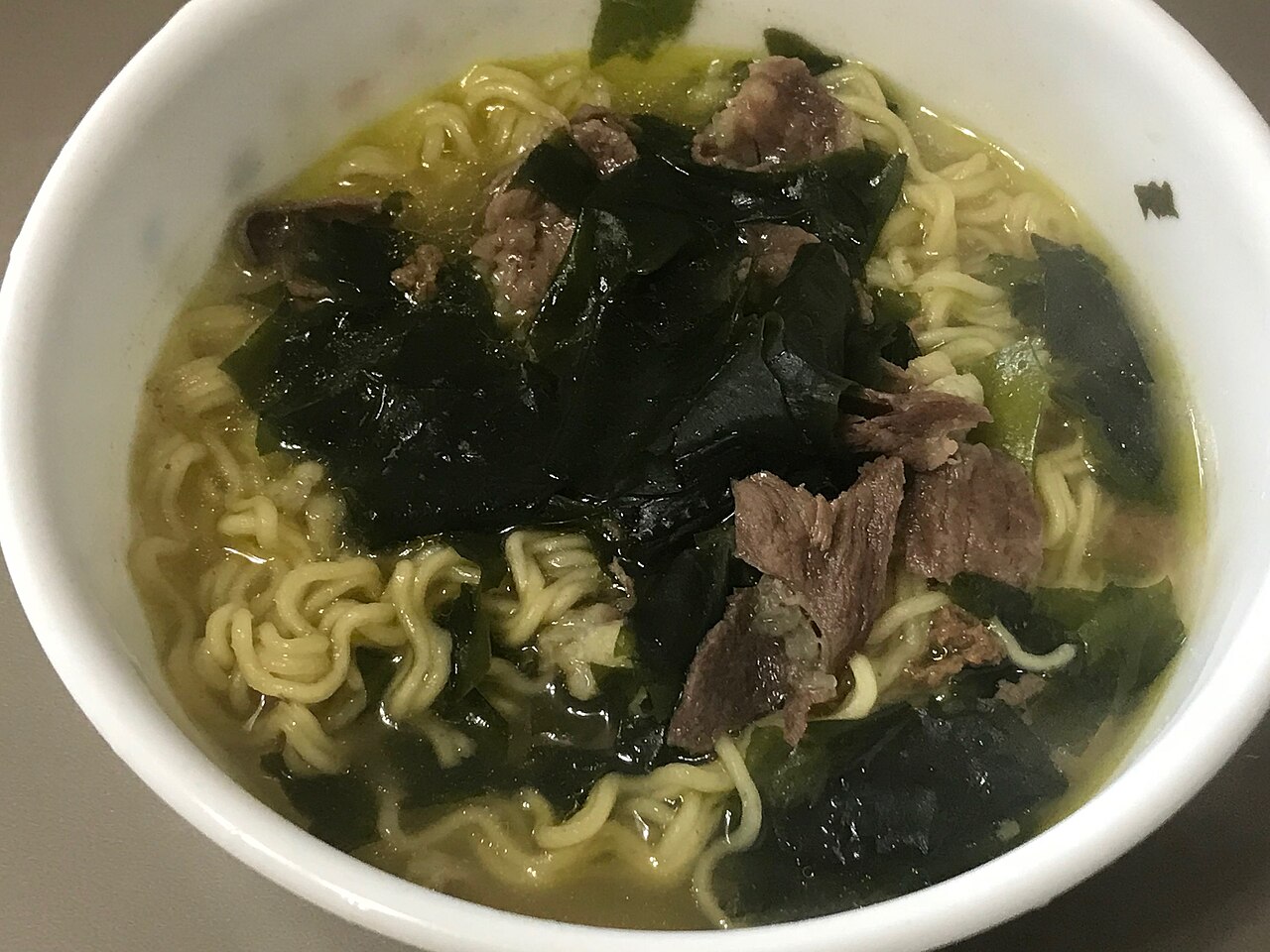
Miyeok-guk: The Birthday Soup That Is Really About Your Mother
Miyeok-guk is the seaweed soup every Korean eats on their birthday — a tradition that began as postpartum recovery food and became an annual act of gratitude to one's mother.
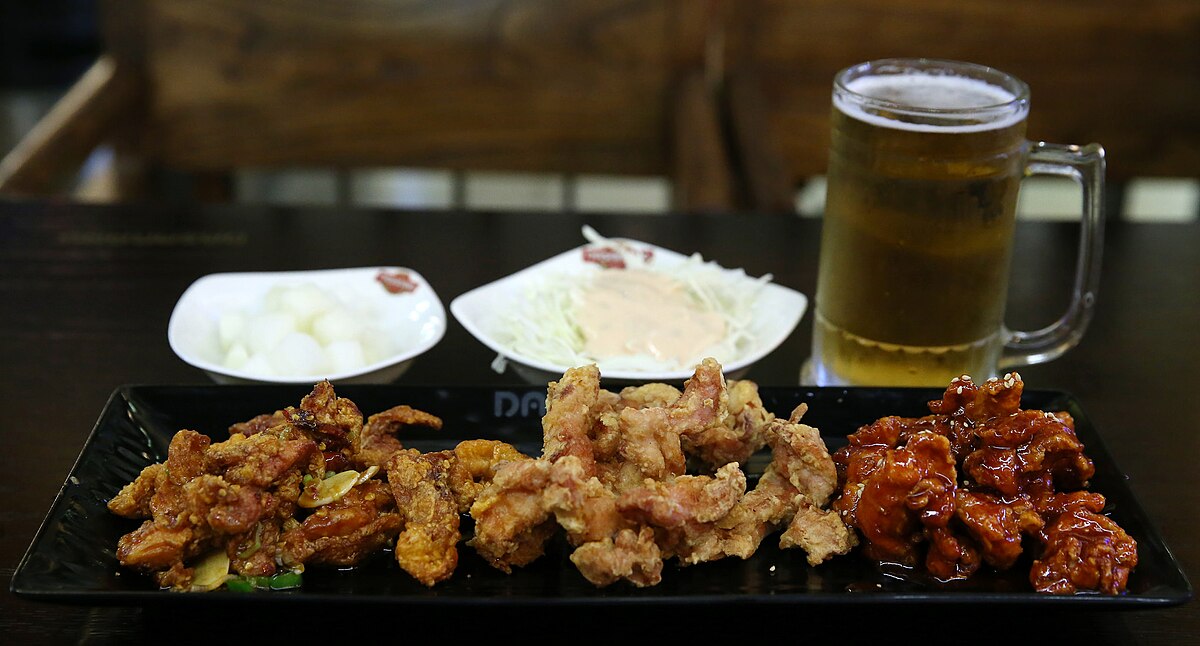
Chimaek: Why Korean Fried Chicken Is the World's Best
Korea has more fried chicken restaurants than McDonald's has locations worldwide. Here's the science and culture behind the crunch.