Twigim: Korea's Street-Style Fried Foods
Batter-fried Korean snacks from squid to sweet potato — the essential companion to tteokbokki at Korean street food stalls.
Photo: Wikipedia Commons
What Is Twigim?
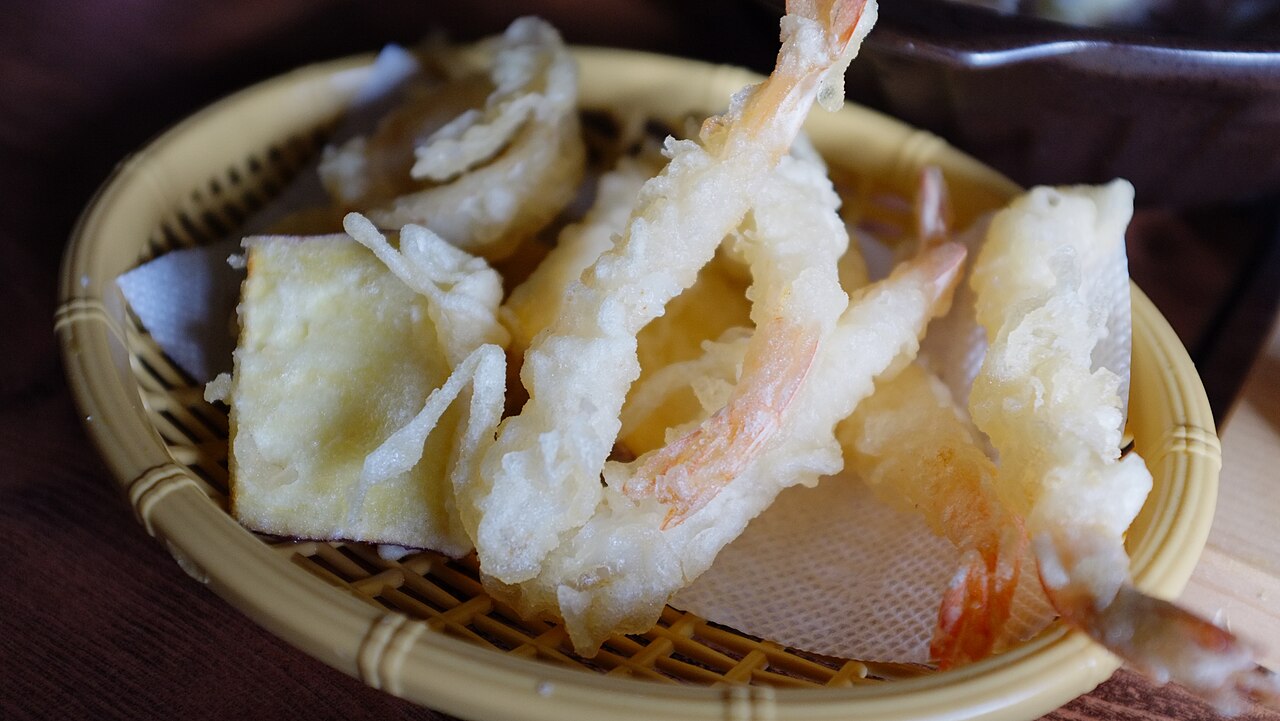
Twigim (튀김) is the Korean term for deep-fried foods — a broad category of street snacks made by coating various ingredients in a thick wheat flour batter and frying them in hot oil until golden, puffy, and crisp. Unlike Japanese tempura, from which it partially derives, Korean twigim tends to have a thicker, more substantial batter coating and a slightly chewier texture. The result is a heartier, more filling snack with a pronounced crunch. The range of ingredients used for twigim is wide: sweet potato (고구마튀김, goguma twigim) produces a sweet, fluffy interior; squid (오징어튀김, ojingeo twigim) offers a chewy seafood core; and kimari (김말이튀김), perhaps the most distinctly Korean of all twigim varieties, is a roll of glass noodles (dangmyeon) wrapped in dried seaweed (gim) and fried — the noodles inside become sticky and translucent while the seaweed wrapper crisps up around them. All twigim is best eaten immediately from the fryer. The batter softens rapidly as it cools and absorbs the steam from the hot interior, making timing critical. The vendors at market stalls are typically expert at pacing production to ensure maximum freshness.
History & Origins
The technique of battering and deep-frying foods was introduced to Korea through Japanese influence, particularly during the colonial period (1910–1945) when Japanese tempura (天ぷら) culture spread alongside other culinary practices. However, Korean cooks were not passive recipients — they modified the technique significantly, developing their own batter formulations, ingredient choices, and serving customs. By the 1950s and 1960s, twigim had become a fixture of bunsik (분식, flour-based snack food) stalls that multiplied across Korean cities during the period of rapid urbanization. These small food stands offered affordable, filling snacks for workers, students, and anyone who needed a quick bite without sitting down in a restaurant. Twigim, alongside tteokbokki and eomuk, formed the triumvirate of Korean street food that has remained consistent for over sixty years. Today, twigim appears not only at outdoor stalls but in dedicated bunsik restaurants (분식집), convenience store hot food displays, and even some upscale restaurants that offer elevated versions using premium ingredients and refined frying techniques. The fundamentals, however, have changed little from the postwar street stall origins.
Essential Twigim Varieties
A well-stocked twigim stall will typically offer a selection of the following items, priced individually at 500–1,500 won each.
- ·Goguma twigim (고구마튀김): Sweet potato twigim — the gateway variety for newcomers. The natural sweetness of Korean sweet potato pairs beautifully with the savory batter and makes this the most universally appealing option.
- ·Kimari (김말이): Glass noodle and seaweed roll — perhaps the most uniquely Korean of all twigim. The translucent dangmyeon noodles inside become sticky and richly flavored; the outer seaweed wrapper adds a maritime umami note.
- ·Ojingeo twigim (오징어튀김): Squid twigim — a ring or whole small squid coated in batter and fried. The squid inside stays tender if fresh; chewy and rubbery if overcooked or reheated.
- ·Mandu twigim (만두튀김): Fried dumpling — a standard mandu (Korean dumpling) battered and fried, creating a double-fried exterior and a steam-pocket interior.
- ·Haemul twigim (해물튀김): Mixed seafood fritter containing shrimp, squid, and vegetables in a single large flat patty — more substantial and filling than individual items.
Cultural Significance
Twigim's cultural meaning is inseparable from the broader world of bunsik — the Korean category of inexpensive, satisfying flour-based street and snack foods that includes tteokbokki, eomuk, kimbap, and ramyeon. Bunsik is a social equalizer in Korean food culture: it is eaten by students, workers, and retirees alike, at school gates, market stalls, roadside carts, and neighborhood restaurants with identical enthusiasm. The classic trio of twigim + tteokbokki + eomuk eaten at a market stall with the broth ladled from the eomuk pot is considered by many Koreans to be the ultimate expression of Korean comfort food — familiar, affordable, communal, and deeply connected to a specific urban landscape that has remained recognizable across generations. Namdaemun Market and Gwangjang Market in Seoul are particularly celebrated for their twigim stalls, where vendors have been perfecting their craft for decades. Watching a skilled vendor work several different batters and temperatures simultaneously — ensuring each item comes out at exactly the right moment of crispness — is itself a form of street performance worth observing.
Tips
- 💡Always eat twigim immediately — ask the vendor to fry fresh if items look like they have been sitting for a while.
- 💡Dip in the accompanying soy-based sauce for a savory contrast, or eat plain to appreciate the batter's own seasoning.
- 💡Goguma (sweet potato) twigim is the best starting point for anyone unfamiliar with Korean fried snacks — the sweetness is approachable and the texture is reliably good.
Last updated: April 1, 2026
You might also like
Kimchi Jjigae: Korea's Most Comforting Stew
Bubbling hot, deep red, and unmistakably Korean — kimchi jjigae is the stew that every Korean home smells like on a cold evening.
Miyeok-guk: The Birthday Soup That Is Really About Your Mother
Miyeok-guk is the seaweed soup every Korean eats on their birthday — a tradition that began as postpartum recovery food and became an annual act of gratitude to one's mother.
Chimaek: Why Korean Fried Chicken Is the World's Best
Korea has more fried chicken restaurants than McDonald's has locations worldwide. Here's the science and culture behind the crunch.